


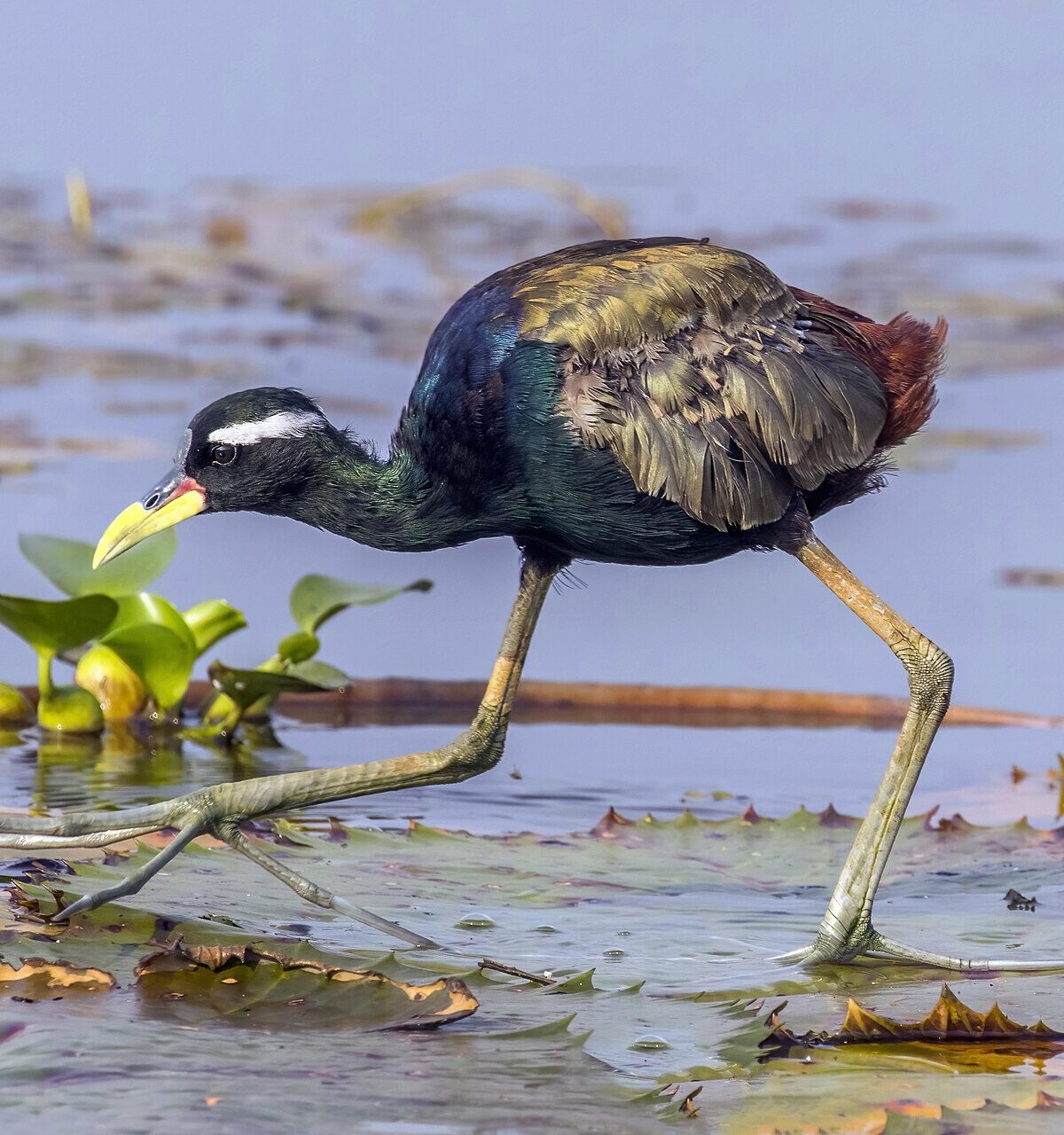
BRONZE-WINGED PLOVER
Metopidius indicus
DESCRIPTION
Bronze-Winged Plover (Metopidius indicus) is a medium-sized wader known for its striking bronze-colored wings and distinctive black and white facial markings. This species is often found in open grasslands and wetlands, where it forages for food. It exhibits a unique behavior of running quickly and then stopping to scan for predators or food, making it an agile and alert bird.
FUN FACTS
- Bronze-Winged Plovers are known for their unique courtship displays, which include elaborate aerial flights and vocalizations to attract mates
- They are also quite adaptable and can thrive in various habitats, including agricultural fields, which allows them to coexist with human activities.| These plovers are often seen in pairs during the breeding season, but they can also be found foraging in small groups outside of this period
- Their ability to blend into their surroundings makes them fascinating subjects for birdwatchers and photographers
QUICK INFO
Lifespan5-10 years in the wild
Average Weight150-200 g
Average Length25-30 cm
Diet TypeInsectivore
Social Structuresolitary or in pairs, occasionally in small groups during foraging
Activity PatternDiurnal
Breeding SeasonMonsoon season (June-September)
- Habitat
- This species prefers open grasslands, agricultural fields, and wetlands where it can find ample food and nesting sites. It is often seen in areas with short vegetation that allows for easy movement and visibility.
- Biomes
- Grassland, Wetland
- Native Range
- The Bronze-Winged Plover is native to the Indian subcontinent, particularly found in India, Nepal, and parts of Southeast Asia.
- Continent
- Asia
- Countries
- India, Nepal, Bangladesh, Myanmar
- Diet
- The Bronze-Winged Plover primarily feeds on insects and small invertebrates found in its habitat. It uses its sharp eyesight to spot food while foraging on the ground.
- Diet Type
- Insectivore
- Favorite Food
- insects, small invertebrates
- Social Structure
- solitary or in pairs, occasionally in small groups during foraging
- Activity Pattern
- Diurnal
- Group Size
- 1-5
- Territorial
- 1

 VU
VU
150-200 g
Weight
25-30 cm
Length
- Coloration
- The plumage is predominantly brown with a striking bronze sheen on the wings and a white belly.
- Sexual Dimorphism
- Males and females are similar in appearance, but males may have slightly brighter coloration during the breeding season.
- Lifespan
- 5-10 years in the wild
- Offspring per Birth
- 3-4 eggs
- Sexual Maturity
- 1 year
- Breeding Season
- Monsoon season (June-September)
LC
Least Concern
IUCN Red List Status
- Population Status
- The population of Bronze-Winged Plovers is currently stable, but habitat loss poses a potential threat.
- Wild Population Estimate
- 50,000-100,000
- Population Trend
- Stable
- Endangered
- 0
- Threats
- Main threats include habitat destruction due to agricultural expansion and urbanization. Additionally, pollution and climate change may impact their breeding and foraging habitats.
- Predators
- Foxes, birds of prey, and domestic cats are known to prey on Bronze-Winged Plovers.
- Defense Mechanisms
- They often rely on their camouflage to avoid detection and may perform distraction displays to lead predators away from their nests.
- Found in Zoos
- Rare