


BROWN BROCKET
Mazama gouazoubira
DESCRIPTION
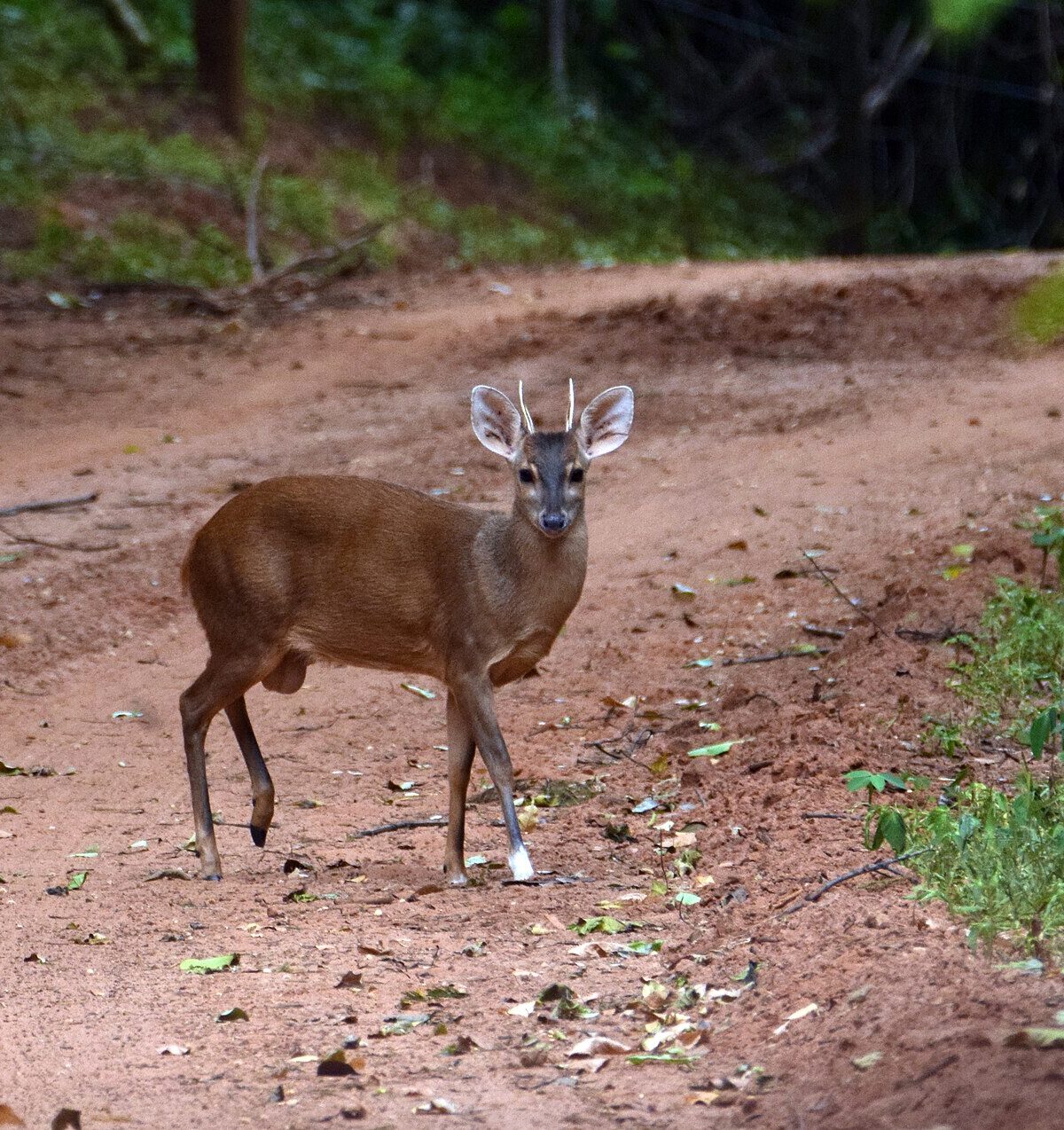
Brown Brocket (Mazama gouazoubira) is a medium-sized deer characterized by its reddish-brown coat, which can vary in shade depending on the individual and habitat. This species is known for its elusive nature, often found in dense forests and underbrush, making it difficult to observe in the wild. Brown Brocket is primarily solitary, although they may be seen in pairs during the breeding season, and they are adept at navigating their forested environments, using their keen senses to detect predators.
FUN FACTS
- Brown Brocket is known for its unique vocalizations, which include a series of grunts and whistles used for communication, especially during mating season
- These sounds can carry through dense forest, helping individuals locate each other despite the thick vegetation
- | Unlike many other deer species, Brown Brocket does not form large herds, which allows them to be more adaptable to their solitary lifestyle
- This behavior helps them avoid competition for food and reduces the risk of predation
QUICK INFO
Lifespan10-15 years in the wild, up to 20 in captivity
Average Weight40-90 kg
Average Length1.2-1.5 m
Diet TypeHerbivore
Social Structuresolitary, occasionally seen in pairs during breeding season
Activity PatternCrepuscular
Breeding SeasonYear-round, with peaks depending on the region
- Habitat
- Brown Brocket inhabits dense tropical and subtropical forests, often favoring areas with thick undergrowth. They are also found in secondary forests and forest edges, where they can find ample food and cover.
- Biomes
- Tropical Rainforest, Subtropical Forest
- Native Range
- The Brown Brocket is native to South America, primarily found in the Amazon Basin and surrounding regions.
- Continent
- South America
- Countries
- Brazil, Bolivia, Paraguay, Argentina
- Diet
- Brown Brocket primarily feeds on leaves, fruits, and other vegetation found in their forest habitat. They are selective feeders, often choosing specific plants based on availability and nutritional value.
- Diet Type
- Herbivore
- Favorite Food
- leaves, fruits, and tender shoots
- Social Structure
- solitary, occasionally seen in pairs during breeding season
- Activity Pattern
- Crepuscular
- Group Size
- 1-2
- Territorial
- 0
 NT
NT

 VU
VU
40-90 kg
Weight
1.2-1.5 m
Length
0.8-1.0 m at shoulder
Height (Shoulder)
- Coloration
- reddish-brown coat with lighter underparts
- Sexual Dimorphism
- males are generally larger than females
- Lifespan
- 10-15 years in the wild, up to 20 in captivity
- Gestation Period
- 210 days
- Offspring per Birth
- 1
- Sexual Maturity
- 1-2 years
- Breeding Season
- Year-round, with peaks depending on the region
LC
Least Concern
IUCN Red List Status
- Population Status
- The population of Brown Brocket is currently stable, although habitat loss poses a potential threat.
- Wild Population Estimate
- unknown
- Population Trend
- Stable
- Endangered
- 0
- Threats
- Main threats include habitat destruction due to deforestation and hunting. These factors can lead to localized declines in their populations.
- Predators
- jaguars, pumas, and large birds of prey
- Defense Mechanisms
- Brown Brocket relies on its excellent camouflage and ability to remain still to avoid detection by predators.
- Found in Zoos
- Uncommon