


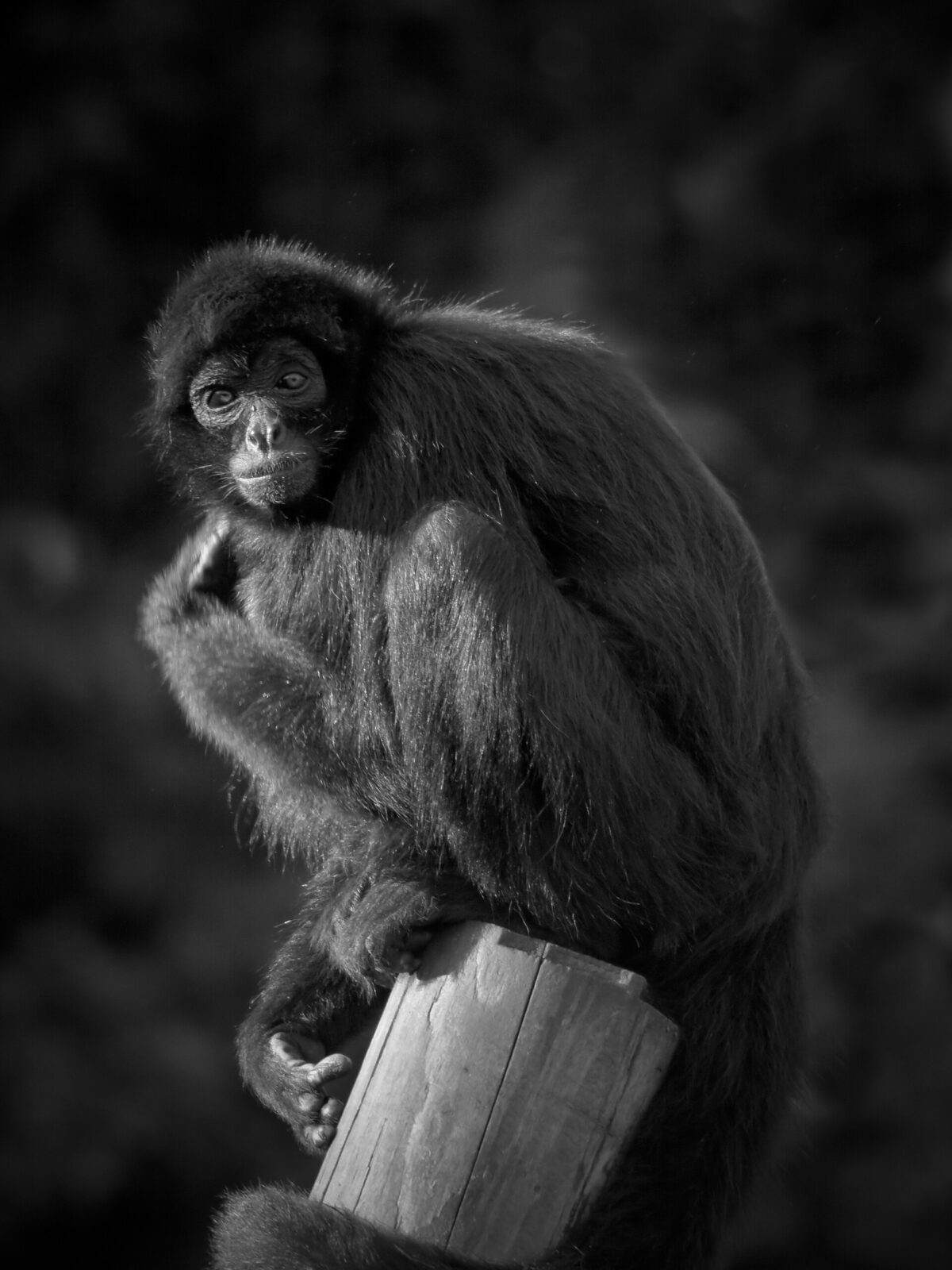
BROWN-HEADED SPIDER MONKEY
Ateles fusciceps rufiventris
DESCRIPTION
Brown-headed spider monkey (Ateles fusciceps rufiventris) is also known as the Red-faced spider monkey due to its distinctive facial coloration. This primate is characterized by its long limbs, prehensile tail, and a brownish head that contrasts with its lighter body. They are highly social animals, often found in groups, and are known for their acrobatic abilities in the treetops of their forest habitats.
FUN FACTS
- Brown-headed spider monkeys are known for their remarkable agility and can leap distances of up to 30 feet between trees
- They play a crucial role in their ecosystem as seed dispersers, helping to maintain the health of their forest habitats.| These monkeys have a unique social structure where females often remain in their natal groups while males may disperse
- This behavior helps maintain genetic diversity and social bonds within their communities
QUICK INFO
Lifespan20-30 years in the wild, up to 40 in captivity
Average Weight15-20 kg
Average Length50-70 cm
Diet TypeHerbivore
Social StructureThey live in groups, typically consisting of 10-30 individuals, which are often matriarchal.
Activity PatternDiurnal
Breeding SeasonYear-round, with peaks depending on food availability
- Habitat
- Brown-headed spider monkeys inhabit tropical rainforests and moist lowland forests. They prefer areas with abundant fruiting trees, which are crucial for their diet.
- Biomes
- Tropical Rainforest
- Native Range
- They are native to the tropical forests of Central America, particularly in regions of Colombia and Panama.
- Continent
- North America, South America
- Countries
- Colombia, Panama
- Diet
- They primarily consume fruits, leaves, and flowers, making them important seed dispersers in their ecosystem. Their diet can vary seasonally based on food availability.
- Diet Type
- Herbivore
- Favorite Food
- Fruits, leaves
- Social Structure
- They live in groups, typically consisting of 10-30 individuals, which are often matriarchal.
- Activity Pattern
- Diurnal
- Group Size
- 10-30
- Territorial
- 1
 VU
VU
 NT
NT
15-20 kg
Weight
50-70 cm
Length
- Coloration
- They have a brownish head with a lighter body and a long, prehensile tail.
- Sexual Dimorphism
- Males are generally larger than females.
- Lifespan
- 20-30 years in the wild, up to 40 in captivity
- Gestation Period
- 230-240 days
- Offspring per Birth
- 1
- Sexual Maturity
- 4-5 years
- Breeding Season
- Year-round, with peaks depending on food availability
EN
Endangered
IUCN Red List Status
- Population Status
- The population is currently declining due to habitat loss and hunting.
- Wild Population Estimate
- Less than 10,000
- Population Trend
- Decreasing
- Endangered
- 1
- Threats
- Main threats include deforestation, habitat fragmentation, and hunting. These factors have significantly impacted their populations and habitat availability.
- Predators
- Large birds of prey, jaguars, and humans are known predators.
- Defense Mechanisms
- They use vocalizations to warn others of danger and can flee quickly through the trees.
- Compatible Animals
- Other spider monkeys, capuchin monkeys, tamarins
- Found in Zoos
- Uncommon