


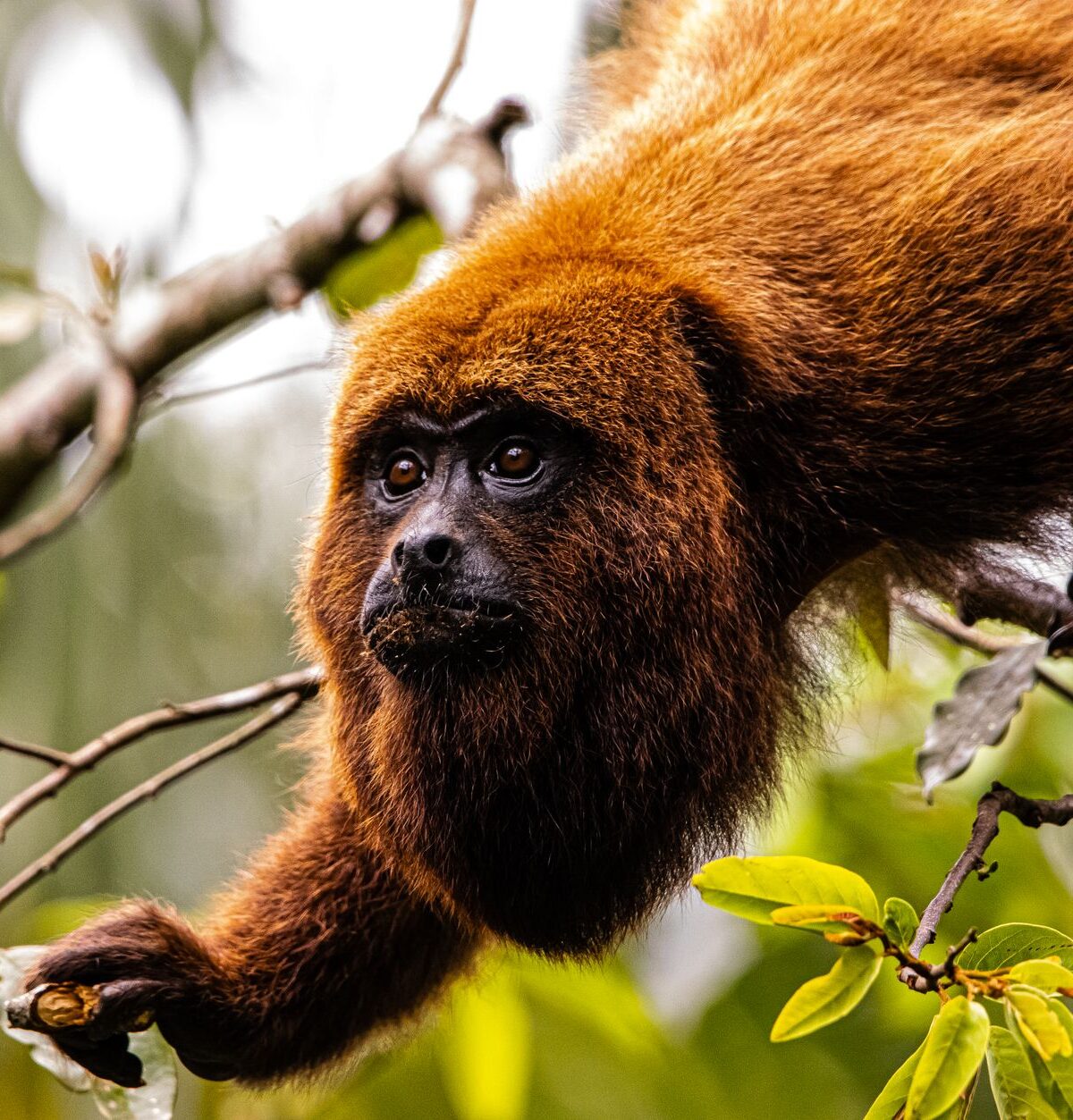
BROWN HOWLER MONKEY
Alouatta guariba
DESCRIPTION
Brown Howler Monkey (Alouatta guariba) is commonly known as Guariba and Howler Monkey. This species is characterized by its robust body, long limbs, and a distinctive prehensile tail that aids in climbing. They are known for their loud howling calls, which can be heard over long distances, serving as a means of communication and territory marking.
FUN FACTS
- Brown Howler Monkeys are known for their impressive vocal abilities, with their howls being among the loudest of any land mammal, capable of reaching up to 3 miles in distance
- Additionally, they play a vital role in their ecosystem as seed dispersers, helping to maintain the health of their forest habitats
QUICK INFO
Lifespan15-20 years in the wild, up to 25 in captivity
Average Weight6-10 kg
Average Length50-70 cm
Diet TypeHerbivore
Social StructureThey typically live in groups, which can range from 5 to 15 individuals, often led by a dominant male.
Activity PatternDiurnal
Breeding SeasonYear-round, with peaks depending on environmental conditions
- Habitat
- Brown Howler Monkeys inhabit tropical and subtropical forests, often found in the canopy layer. They prefer areas with abundant foliage to support their herbivorous diet.
- Biomes
- Tropical Rainforest, Subtropical Forest
- Native Range
- They are native to the Atlantic Forest of Brazil, as well as parts of Paraguay and Argentina.
- Continent
- South America
- Countries
- Brazil, Paraguay, Argentina
- Diet
- They primarily consume leaves, fruits, and flowers, with a preference for young leaves due to their higher nutritional value. This folivorous diet is supplemented with seasonal fruits when available.
- Diet Type
- Herbivore
- Favorite Food
- leaves, fruits, flowers
- Social Structure
- They typically live in groups, which can range from 5 to 15 individuals, often led by a dominant male.
- Activity Pattern
- Diurnal
- Group Size
- 5-15
- Territorial
- 1
 VU
VU
 NT
NT
6-10 kg
Weight
50-70 cm
Length
- Coloration
- They have a dark brown to black fur coloration, with lighter underparts.
- Sexual Dimorphism
- Males are generally larger than females, with more pronounced throat sacs used for vocalization.
- Lifespan
- 15-20 years in the wild, up to 25 in captivity
- Gestation Period
- 180 days
- Offspring per Birth
- 1
- Sexual Maturity
- 3-4 years
- Breeding Season
- Year-round, with peaks depending on environmental conditions
EN
Endangered
IUCN Red List Status
- Population Status
- The population is currently declining due to habitat loss and fragmentation.
- Wild Population Estimate
- 10,000-20,000
- Population Trend
- Decreasing
- Endangered
- 1
- Threats
- Main threats include deforestation, habitat destruction, and hunting. These factors have significantly impacted their populations and habitat availability.
- Predators
- Large birds of prey, jaguars, and other large carnivores may prey on young or vulnerable individuals.
- Defense Mechanisms
- They use loud vocalizations to warn off potential threats and can also flee into the treetops to escape predators.
- Compatible Animals
- Other primates, such as capuchins and spider monkeys, in controlled environments like zoos.
- Found in Zoos
- Uncommon