


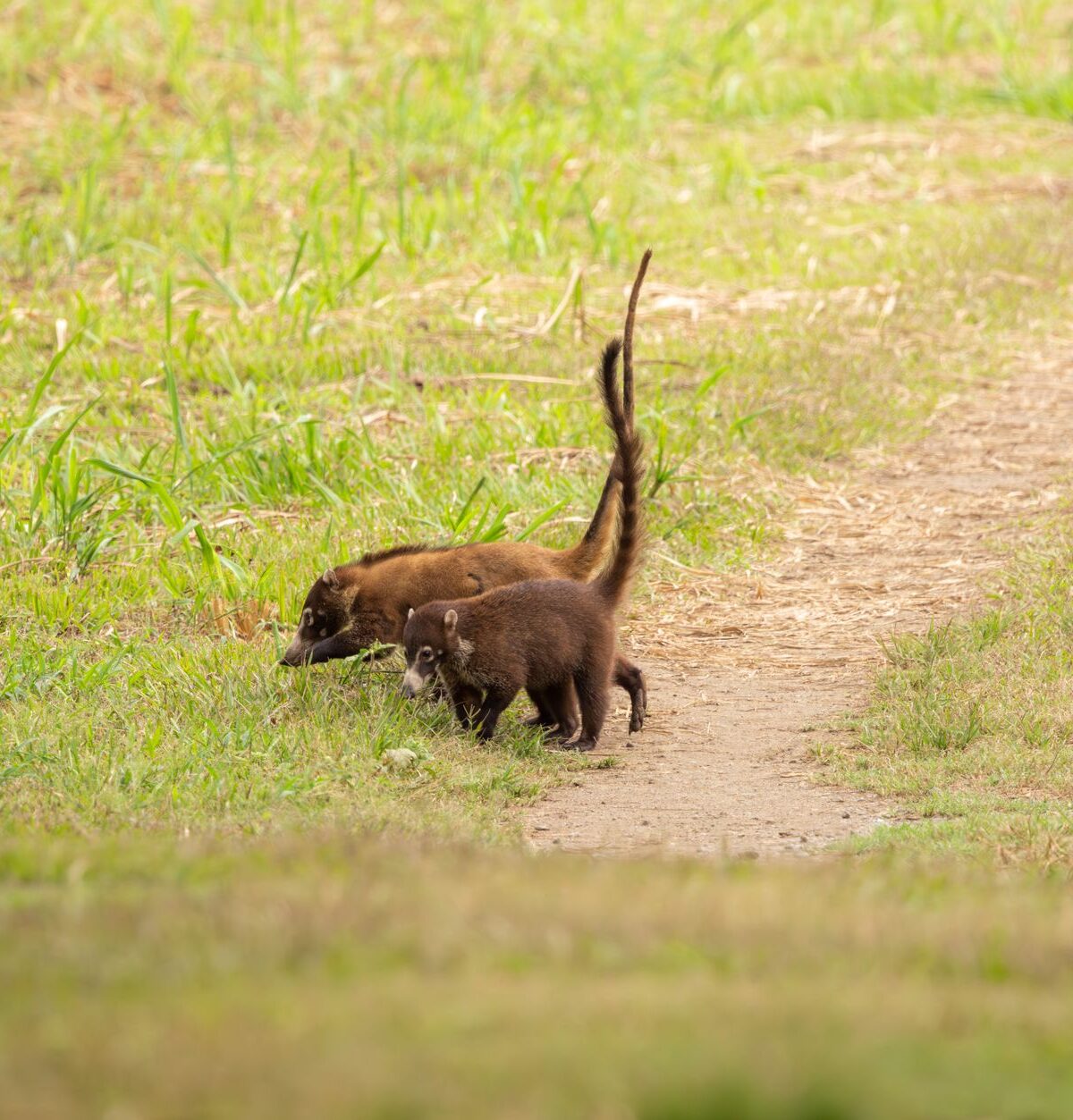
BROWN-NOSED COATI
DESCRIPTION
Also called Coati and Coatimundi, the Brown-Nosed Coati is a medium-sized mammal known for its distinctive long snout and ringed tail. They have a brownish coat with a lighter underbelly and a characteristic white face with dark markings around the eyes. Brown-Nosed Coatis are social animals, often found in groups, and are known for their playful behavior and curiosity.
FUN FACTS
- Brown-Nosed Coatis have a unique social structure where females and their young form groups, while males often live alone or join groups only during mating season
- They are known for their intelligence and problem-solving abilities, often using tools to access food
- | These animals have a highly developed sense of smell, which they use to locate food, and they are also known to stand on their hind legs to get a better view of their surroundings
- Their playful nature makes them a favorite among zoo visitors
QUICK INFO
Lifespan7-14 years in the wild, up to 18 years in captivit
Average Weight4-10 kg
Average Length60-70 cm
Diet TypeOmnivore
Social StructureThey are social animals that live in groups, typically consisting of females and their young, while adult males may be solitary or join groups during mating season.
Activity PatternDiurnal
Breeding SeasonSpring (March-May)
- Habitat
- Brown-Nosed Coatis inhabit a range of environments, including tropical forests, savannas, and scrublands. They prefer areas with dense vegetation for shelter and foraging.
- Biomes
- Tropical Rainforest, Savanna, Scrubland
- Native Range
- The Brown-Nosed Coati is native to Central and South America, ranging from southern Mexico to western Ecuador.
- Continent
- North America, South America
- Countries
- Mexico, Guatemala, Honduras, Nicaragua, Costa Rica, Panama, Colombia, Ecuador
- Diet
- Brown-Nosed Coatis are omnivorous, feeding on a variety of foods including fruits, insects, and small vertebrates. They are known to forage on the ground and in trees, using their long snouts to dig for food.
- Diet Type
- Omnivore
- Favorite Food
- fruits, insects, small vertebrates
- Social Structure
- They are social animals that live in groups, typically consisting of females and their young, while adult males may be solitary or join groups during mating season.
- Activity Pattern
- Diurnal
- Group Size
- 5-30
- Territorial
- 0
 NT
NT

 VU
VU
 LC
LC
4-10 kg
Weight
60-70 cm
Length
- Coloration
- brownish coat with a lighter underbelly and a white face with dark markings
- Sexual Dimorphism
- Males are generally larger than females.
- Lifespan
- 7-14 years in the wild, up to 18 years in captivit
- Gestation Period
- 77-84 days
- Offspring per Birth
- 2-7
- Sexual Maturity
- 1-2 years
- Breeding Season
- Spring (March-May)
LC
Least Concern
IUCN Red List Status
- Population Status
- The population of Brown-Nosed Coatis is currently stable, but they face habitat loss in some areas.
- Wild Population Estimate
- Unknown
- Population Trend
- Stable
- Endangered
- 0
- Threats
- Main threats include habitat destruction due to deforestation and hunting in some regions. They are also affected by road traffic and human encroachment.
- Predators
- Jaguars, pumas, large birds of prey, and snakes.
- Defense Mechanisms
- Brown-Nosed Coatis use their agility to escape predators and can also climb trees to evade threats.
- Found in Zoos
- Common