


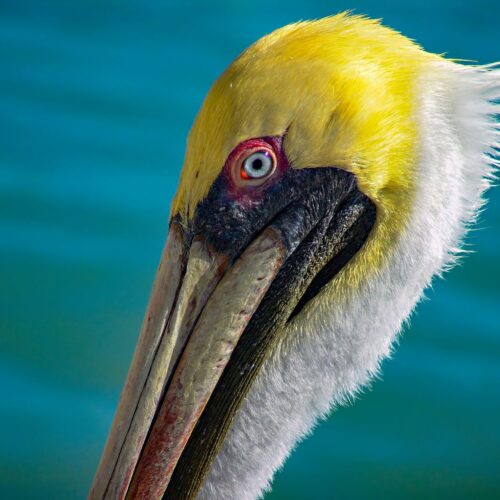
BROWN PELICAN
Pelecanus occidentalis
DESCRIPTION
The Brown Pelican is a large coastal bird known for its distinctive long bill and large throat pouch. It is recognized for its striking appearance and impressive diving skills when hunting for fish.
FUN FACTS
- Brown Pelicans can dive from heights of up to 30 feet | They have a unique throat pouch that can hold up to three gallons of water | They are the only pelican species that dives for food
QUICK INFO
Lifespan10-25 years in the wild
Average Weight3-6.8 kg
Average Length1.1-1.8 m
Diet TypePiscivore
Social Structuregroup — they often forage and roost in large colonies.
Activity PatternDiurnal
Breeding SeasonSpring to early summer
- Habitat
- They inhabit coastal regions, including beaches, estuaries, and lagoons. Brown Pelicans are often seen near the ocean or large bodies of water.
- Biomes
- Coastal, Marine
- Native Range
- The Brown Pelican is native to the coastal areas of the Americas, from the United States to South America.
- Continent
- North America, South America
- Countries
- United States, Mexico, Brazil, Venezuela, Colombia
- Diet
- Brown Pelicans primarily feed on fish, which they catch by diving into the water from the air. They may also consume small invertebrates occasionally.
- Diet Type
- Piscivore
- Favorite Food
- fish
- Social Structure
- group — they often forage and roost in large colonies.
- Activity Pattern
- Diurnal
- Group Size
- 5-100
- Territorial
- 0
 DD
DD
 LC
LC
3-6.8 kg
Weight
1.1-1.8 m
Length
- Coloration
- They have a brownish body with a white head and neck, and a distinctive yellowish patch on the head.
- Sexual Dimorphism
- Males and females are similar in appearance, but males are generally larger.
- Lifespan
- 10-25 years in the wild
- Offspring per Birth
- 1-3
- Sexual Maturity
- 3-5 years
- Breeding Season
- Spring to early summer
LC
Least Concern
IUCN Red List Status
- Population Status
- The population is currently stable, but local declines have been observed in some areas.
- Wild Population Estimate
- 200,000-300,000
- Population Trend
- Stable
- Endangered
- 0
- Threats
- Main threats include habitat loss, pollution, and entanglement in fishing gear. Climate change also poses a risk to their coastal habitats.
- Predators
- Large raptors and some mammals may prey on eggs and chicks.
- Compatible Animals
- other seabirds, shorebirds
- Found in Zoos
- Uncommon