


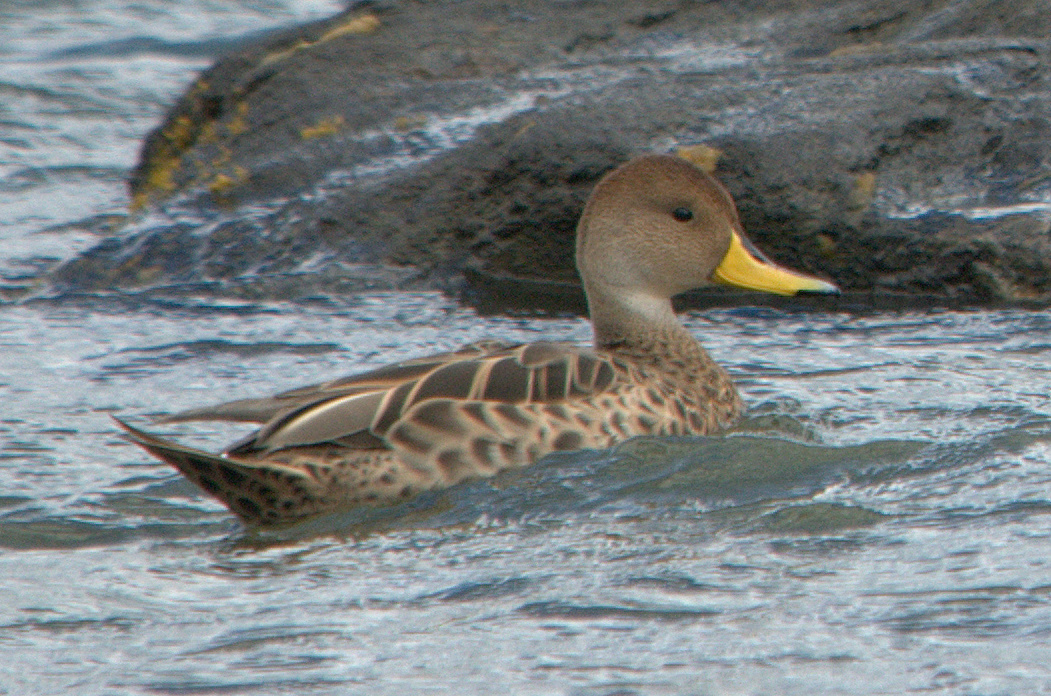
BROWN PINTAIL
Anas georgica spinicauda
DESCRIPTION
Brown pintail (Anas georgica spinicauda) is also known as the Georgian pintail, characterized by its slender neck and elongated body. This species exhibits a distinctive brown plumage with a lighter underbelly and a long, pointed tail, which is particularly prominent in males. Brown pintails are often found in wetlands and are known for their graceful swimming and dabbling behavior, foraging for food in shallow waters.
FUN FACTS
- Brown pintails are known for their impressive migratory journeys, often traveling long distances between breeding and wintering grounds
- They are also highly social during the non-breeding season, often forming large flocks that can be seen dabbling together in wetlands.| The Brown pintail's long, pointed tail is not just for show; it plays a crucial role in their flight dynamics, allowing for agile maneuvers while flying and swimming
QUICK INFO
Lifespan5-10 years in the wild
Average Weight0.8-1.2 kg
Average Length50-60 cm
Diet TypeOmnivore
Social StructureThey are often seen in pairs or small groups, especially during the breeding season.
Activity PatternDiurnal
Breeding SeasonSpring (August-December)
- Habitat
- Brown pintails inhabit freshwater wetlands, marshes, and shallow lakes. They prefer areas with abundant vegetation for foraging and nesting.
- Biomes
- Wetlands, Freshwater
- Native Range
- The native range of the Brown pintail includes parts of South America, particularly in countries like Argentina and Chile.
- Continent
- South America
- Countries
- Argentina, Chile, Uruguay
- Diet
- Brown pintails primarily feed on aquatic plants, seeds, and small invertebrates. They are known to dabble in the water to reach their food sources.
- Diet Type
- Omnivore
- Favorite Food
- aquatic plants, seeds, small invertebrates
- Social Structure
- They are often seen in pairs or small groups, especially during the breeding season.
- Activity Pattern
- Diurnal
- Group Size
- 2-10
- Territorial
- 0

 LC
LC
 VU
VU
0.8-1.2 kg
Weight
50-60 cm
Length
- Coloration
- The Brown pintail has a rich brown coloration with lighter underparts and a distinctive long tail.
- Sexual Dimorphism
- Males are generally more colorful with a longer tail compared to females.
- Lifespan
- 5-10 years in the wild
- Offspring per Birth
- 6-12
- Sexual Maturity
- 1 year
- Breeding Season
- Spring (August-December)
LC
Least Concern
IUCN Red List Status
- Population Status
- The population of Brown pintails is currently stable, but habitat loss poses a potential threat.
- Wild Population Estimate
- Unknown
- Population Trend
- Stable
- Endangered
- 0
- Threats
- Main threats include habitat destruction due to agriculture and urban development. Pollution and hunting also pose risks to their populations.
- Predators
- Foxes, raccoons, birds of prey, and larger fish can pose threats to Brown pintails, especially to their eggs and young.
- Defense Mechanisms
- They rely on their ability to quickly take flight and their camouflage to avoid predators.
- Compatible Animals
- Other waterfowl species, such as ducks and geese
- Found in Zoos
- Uncommon