


BROWN TORTOISE
DESCRIPTION
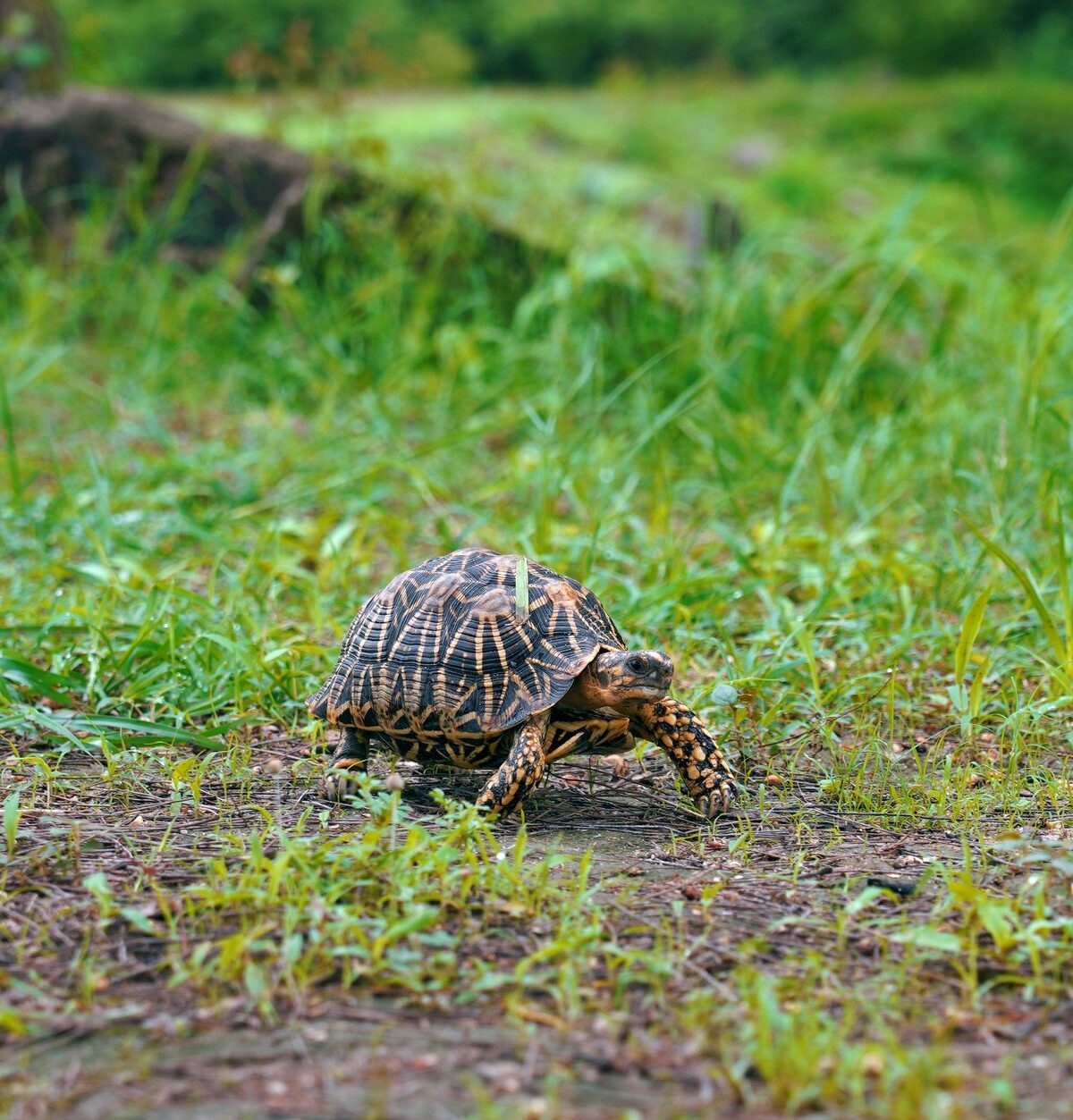
Brown Tortoise, also known as the Indian Star Tortoise, is a medium-sized tortoise characterized by its high-domed shell and star-like patterns on its carapace. This species exhibits a brown coloration with yellow markings, which helps it blend into its dry, arid habitat. Brown Tortoises are primarily terrestrial and are known for their slow movement and long lifespan, often living for several decades in the wild.
FUN FACTS
- Brown Tortoises can live for over 80 years, making them one of the longest-living reptiles
- They are also known for their unique star-patterned shells, which not only provide camouflage but also help in thermoregulation by reflecting sunlight.|These tortoises have a fascinating social behavior during mating season, where males engage in head-bobbing displays and may even push each other to compete for females
- Their slow metabolism allows them to survive on limited food resources, making them well-suited for their arid habitats
QUICK INFO
Lifespan30-80 years in the wild
Average Weight4-6 kg
Average Length30-40 cm
Diet TypeHerbivore
Social Structuresolitary, typically found alone except during mating season
Activity PatternDiurnal
Breeding SeasonSpring (March-May)
- Habitat
- These tortoises inhabit dry, scrubby areas and grasslands, often preferring sandy or rocky substrates. They are well-adapted to arid environments and can be found in regions with limited water sources.
- Biomes
- Savanna, Grassland
- Native Range
- Brown Tortoises are native to the Indian subcontinent, particularly found in India and Sri Lanka.
- Continent
- Asia
- Countries
- India, Sri Lanka
- Diet
- Brown Tortoises are herbivores, primarily feeding on a variety of grasses, leaves, and fruits. They may also consume flowers and other plant materials.
- Diet Type
- Herbivore
- Favorite Food
- grasses, leaves, fruits
- Social Structure
- solitary, typically found alone except during mating season
- Activity Pattern
- Diurnal
- Group Size
- 1
- Territorial
- 0

 VU
VU
4-6 kg
Weight
30-40 cm
Length
- Coloration
- brown shell with yellow star-like patterns
- Sexual Dimorphism
- males are generally smaller with a concave plastron, while females are larger and have a flatter plastron
- Lifespan
- 30-80 years in the wild
- Offspring per Birth
- 3-10
- Sexual Maturity
- 5-7 years
- Breeding Season
- Spring (March-May)
EN
Endangered
IUCN Red List Status
- Population Status
- The population of Brown Tortoises is declining due to habitat loss and illegal trade.
- Wild Population Estimate
- unknown
- Population Trend
- Decreasing
- Endangered
- 1
- Threats
- Main threats include habitat destruction due to agriculture and urbanization, as well as poaching for the pet trade. These factors have significantly impacted their populations in the wild.
- Conservation Program
- Various local conservation efforts are in place to protect their habitats and prevent illegal trade.
- Predators
- Dogs, birds of prey, and humans are known predators of Brown Tortoises.
- Defense Mechanisms
- Brown Tortoises can retract into their hard shells to protect themselves from predators.
- Found in Zoos
- Common