


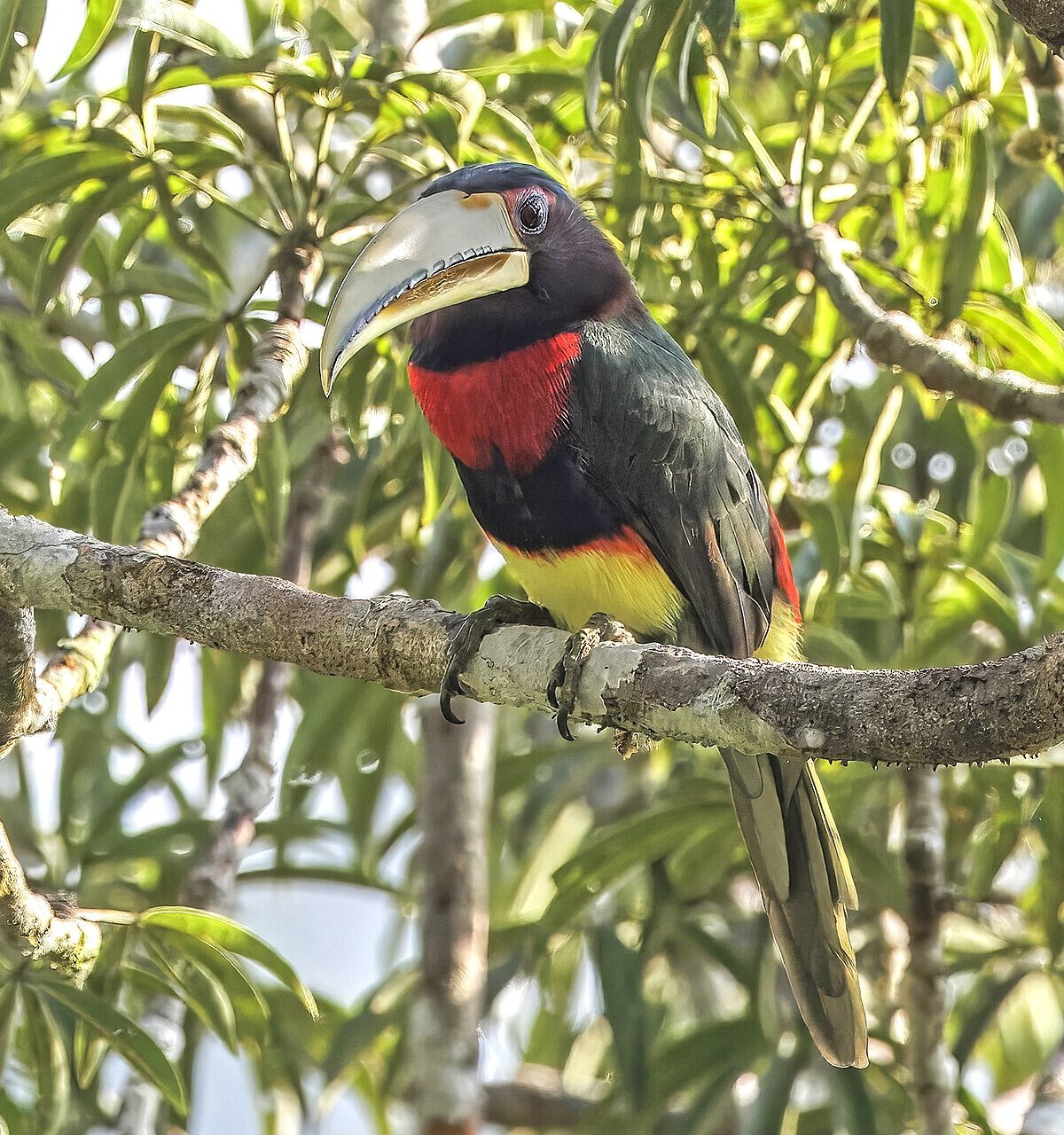
BROWN-TUFTED ARACARI
Pteroglossus mariae
DESCRIPTION
Brown-Tufted Aracari (Pteroglossus mariae) is a striking bird known for its vibrant plumage and distinctive tufted head. It features a combination of black, yellow, and brown colors, with a prominent yellow patch on its chest and a long, curved bill that is typical of the toucan family. This species is often found in pairs or small groups, displaying social behaviors such as vocalizations and playful interactions among its members.
FUN FACTS
- Brown-Tufted Aracaris are known for their unique vocalizations, which include a variety of whistles and squawks that they use to communicate with each other
- These birds play a crucial role in their ecosystem as seed dispersers, helping to maintain the health of their forest habitats
- | Their striking appearance and social behavior make them a favorite among birdwatchers and nature enthusiasts, often drawing attention in the wild and in captivity
QUICK INFO
Lifespan10-15 years in the wild, up to 20 years in captivi
Average Weight150-200 g
Average Length40-50 cm
Diet TypeOmnivore
Social StructureThey are typically found in small groups or pairs, often forming loose social structures.
Activity PatternDiurnal
Breeding SeasonSpring (March-May)
- Habitat
- This species inhabits tropical and subtropical forests, particularly favoring areas with abundant fruiting trees. It is often found in the mid to upper canopy layers of the forest.
- Biomes
- Tropical Rainforest
- Native Range
- The Brown-Tufted Aracari is native to the Amazon Basin, specifically found in parts of Brazil, Colombia, and Peru.
- Continent
- South America
- Countries
- Brazil, Colombia, Peru
- Diet
- The Brown-Tufted Aracari primarily feeds on fruits, but it also consumes insects and small vertebrates. Its strong bill allows it to reach and manipulate food items in the canopy.
- Diet Type
- Omnivore
- Favorite Food
- fruits, insects
- Social Structure
- They are typically found in small groups or pairs, often forming loose social structures.
- Activity Pattern
- Diurnal
- Group Size
- 2-10
- Territorial
- 0
 LC
LC
 VU
VU
150-200 g
Weight
40-50 cm
Length
- Coloration
- The bird has a predominantly black body with a bright yellow chest and a distinctive brown tuft on its head.
- Sexual Dimorphism
- Males and females are similar in appearance, with no significant differences in coloration.
- Lifespan
- 10-15 years in the wild, up to 20 years in captivi
- Offspring per Birth
- 2-4
- Sexual Maturity
- 2-3 years
- Breeding Season
- Spring (March-May)
LC
Least Concern
IUCN Red List Status
- Population Status
- The population of Brown-Tufted Aracari is currently stable, but habitat loss poses a potential threat.
- Wild Population Estimate
- unknown
- Population Trend
- Stable
- Endangered
- 0
- Threats
- The main threats to the Brown-Tufted Aracari include habitat destruction due to deforestation and fragmentation of their forest habitat. Additionally, they may be affected by the illegal pet trade.
- Predators
- Snakes, large birds of prey, and mammals such as monkeys may prey on Brown-Tufted Aracaris.
- Defense Mechanisms
- They often rely on their agility and ability to hide among the foliage to evade predators.
- Found in Zoos
- Uncommon