


BRUCE'S GREEN PIGEON
Treron waalia
DESCRIPTION
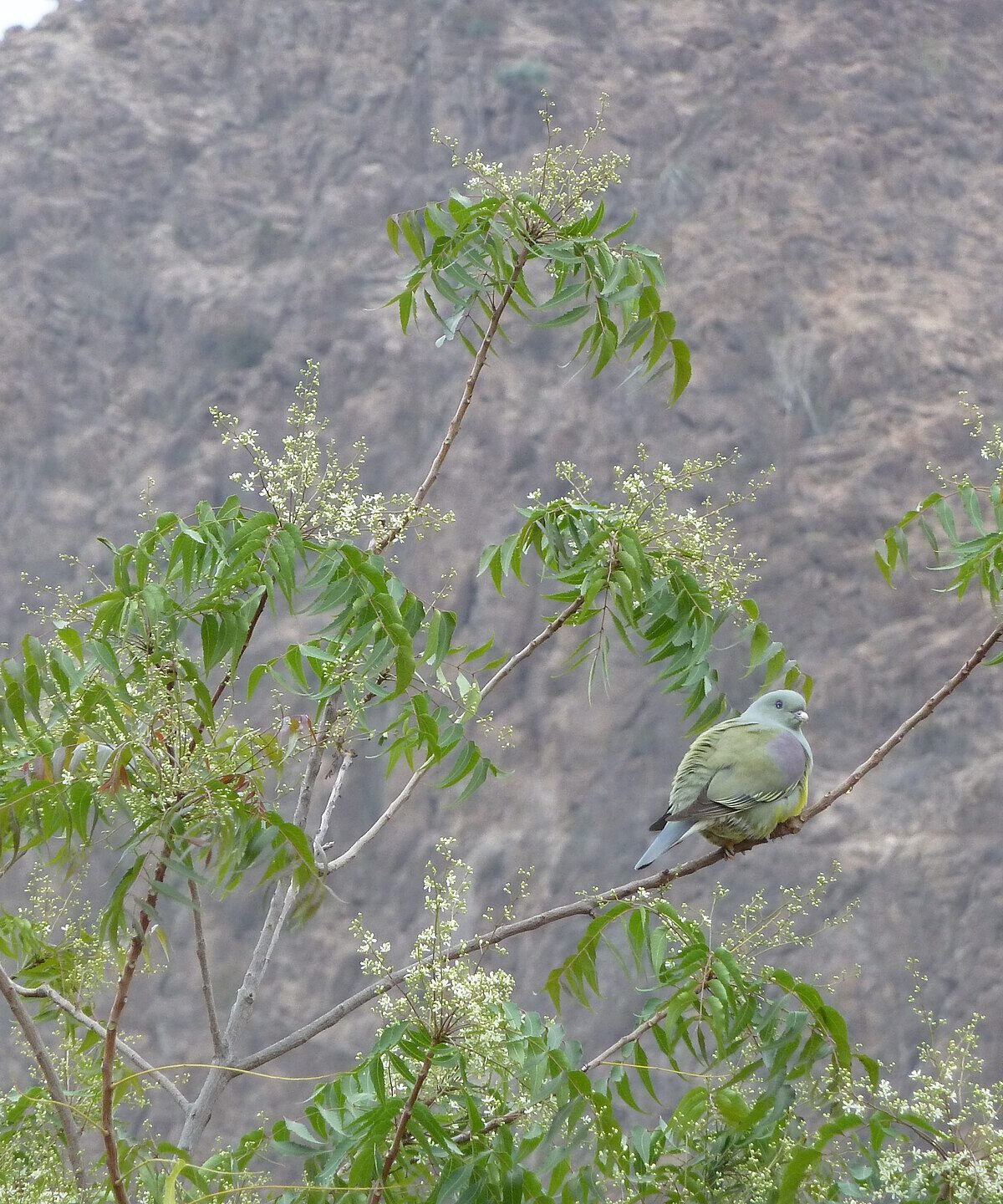
Bruce's Green Pigeon (Treron waalia), also known as the Waalia Green Pigeon, is a medium-sized bird characterized by its vibrant green plumage, which provides excellent camouflage in its forest habitat. This species exhibits a distinctive yellowish patch on its wings and a pale blue-grey head, making it visually striking among the foliage. Typically found in pairs or small groups, Bruce's Green Pigeon is known for its gentle cooing calls and its preference for feeding on fruits and seeds in the canopy of tropical forests.
FUN FACTS
- Bruce's Green Pigeon is known for its unique feeding behavior, often seen hanging upside down to reach fruits on the underside of branches
- This adaptation not only helps it access food but also minimizes competition with other frugivorous birds that may not be as agile
- | The species plays a vital ecological role in its habitat as a seed disperser, helping to maintain the health and diversity of the forest ecosystem
- By consuming fruits and excreting the seeds, Bruce's Green Pigeon contributes to the growth of new plants, ensuring the continuation of its forest home
QUICK INFO
LifespanUp to 10 years in the wild.
Average Weight150-200 g
Average Length25-30 cm
Diet TypeHerbivore
Social StructureTypically found in pairs or small groups, Bruce's Green Pigeon exhibits a social structure that allows for cooperative foraging and protection.
Activity PatternDiurnal
Breeding SeasonVariable, often coinciding with fruit availability.
- Habitat
- This species inhabits tropical and subtropical forests, often favoring areas with dense canopy cover. It is typically found at elevations ranging from lowland forests to montane regions.
- Biomes
- Tropical Rainforest, Subtropical Forest
- Native Range
- Bruce's Green Pigeon is native to parts of West and Central Africa, particularly in countries with suitable forest habitats.
- Continent
- Africa
- Countries
- Ghana, Nigeria, Cameroon, Gabon, Republic of the Congo
- Diet
- Bruce's Green Pigeon primarily feeds on fruits, seeds, and berries, which it forages from trees. Its diet plays a crucial role in seed dispersal within its habitat.
- Diet Type
- Herbivore
- Favorite Food
- Fruits and seeds
- Social Structure
- Typically found in pairs or small groups, Bruce's Green Pigeon exhibits a social structure that allows for cooperative foraging and protection.
- Activity Pattern
- Diurnal
- Group Size
- 2-10
- Territorial
- 0
 LC
LC
150-200 g
Weight
25-30 cm
Length
- Coloration
- Vibrant green plumage with yellowish wing patches and a pale blue-grey head.
- Lifespan
- Up to 10 years in the wild.
- Offspring per Birth
- 1-2
- Sexual Maturity
- 1-2 years
- Breeding Season
- Variable, often coinciding with fruit availability.
LC
Least Concern
IUCN Red List Status
- Population Status
- The population of Bruce's Green Pigeon is currently stable, although habitat loss poses a potential threat.
- Wild Population Estimate
- Unknown
- Population Trend
- Stable
- Endangered
- 0
- Threats
- The main threats to Bruce's Green Pigeon include habitat destruction due to logging and agricultural expansion. Additionally, hunting in some areas poses a risk to local populations.
- Predators
- Predators of Bruce's Green Pigeon include various raptors and snakes, which may prey on both adults and their eggs.
- Defense Mechanisms
- Bruce's Green Pigeon relies on its excellent camouflage to avoid detection by predators, often remaining still among the leaves.
- Found in Zoos
- Uncommon