


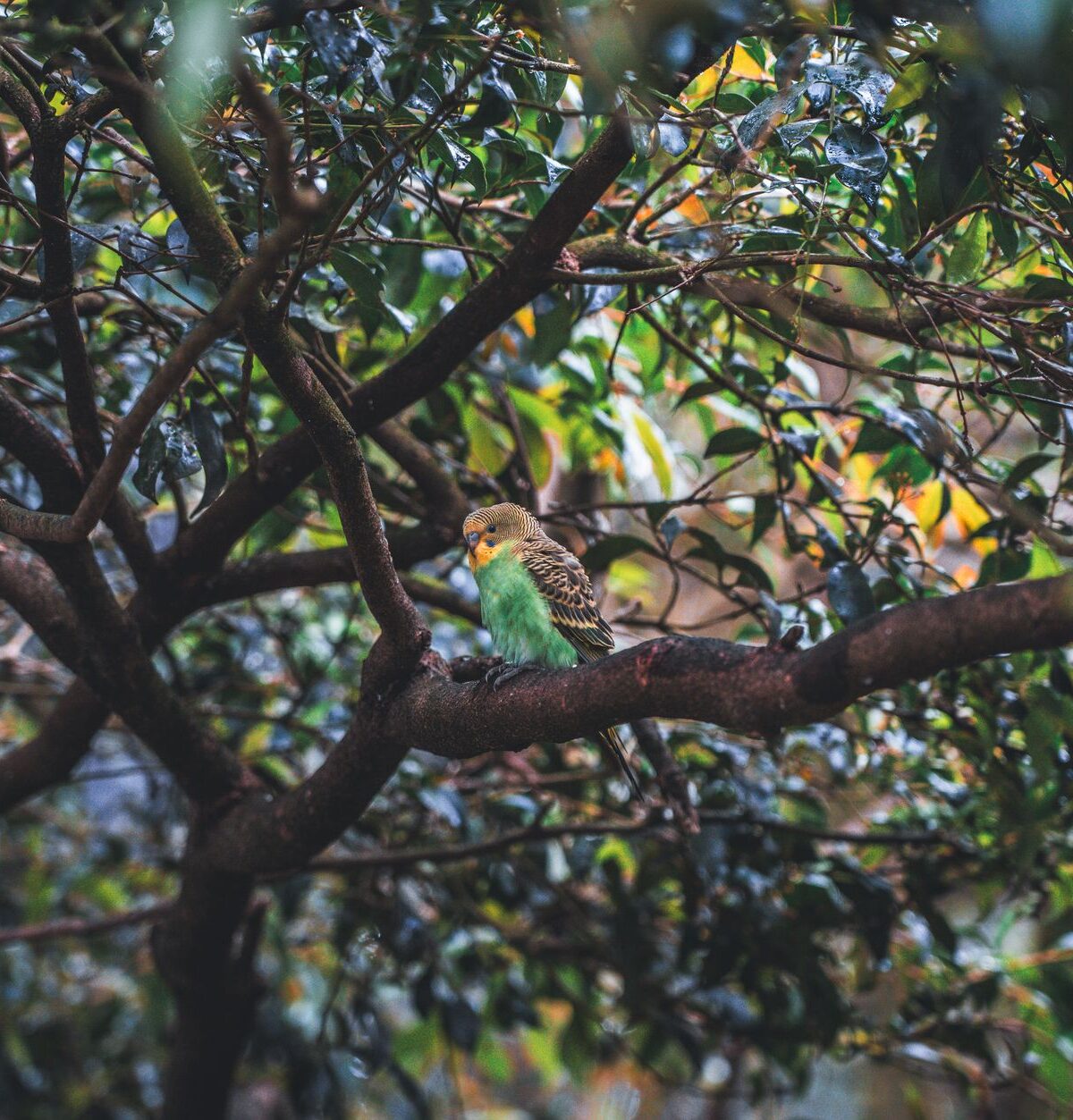
BUDGERIGAR
Melopsittacus undulatus
DESCRIPTION
Also called budgies and parakeets, Budgerigar is a small, colorful parrot native to Australia. They are known for their vibrant plumage, which can range from bright green to blue, yellow, and white, often with distinctive markings on their heads. Budgerigars are highly social birds, often found in flocks, and are known for their playful behavior and ability to mimic sounds and human speech.
FUN FACTS
- Budgerigars are one of the most popular pet birds in the world, known for their friendly nature and ability to learn tricks
- They can develop strong bonds with their owners and are often seen playing with toys or mimicking sounds around the house.|In the wild, Budgerigars can travel long distances in search of food and water, sometimes covering over 100 kilometers in a single day
- Their ability to adapt to various environments has contributed to their success as a species
QUICK INFO
Lifespan5-10 years in the wild, up to 15 years in captivit
Average Weight30-40 g
Average Length18-20 cm
Diet TypeHerbivore
Social Structuregroup — Budgerigars are typically found in flocks, which can range from a few individuals to hundreds.
Activity PatternDiurnal
Breeding SeasonSpring to early summer
- Habitat
- Budgerigars inhabit open grasslands, scrublands, and woodlands in Australia. They prefer areas with abundant food sources and places to nest, such as tree hollows.
- Biomes
- Grassland, Savanna
- Native Range
- Budgerigars are native to Australia, where they are found throughout the continent, particularly in the interior regions.
- Continent
- Australia
- Countries
- Australia
- Diet
- Budgerigars primarily feed on seeds, fruits, and vegetables. They have a particular affinity for millet and can also enjoy leafy greens.
- Diet Type
- Herbivore
- Favorite Food
- millet, seeds, fruits
- Social Structure
- group — Budgerigars are typically found in flocks, which can range from a few individuals to hundreds.
- Activity Pattern
- Diurnal
- Group Size
- 5-100
- Territorial
- 0
 CR
CR
 LC
LC
30-40 g
Weight
18-20 cm
Length
- Coloration
- Budgerigars display a range of colors, including green, blue, yellow, and white, often with black markings on their heads.
- Sexual Dimorphism
- Males typically have a blue cere (the fleshy area above the beak), while females have a brown or tan cere.
- Lifespan
- 5-10 years in the wild, up to 15 years in captivit
- Offspring per Birth
- 4-6
- Sexual Maturity
- 6 months
- Breeding Season
- Spring to early summer
LC
Least Concern
IUCN Red List Status
- Population Status
- Budgerigars are abundant in the wild and are commonly kept as pets worldwide.
- Wild Population Estimate
- millions
- Population Trend
- Stable
- Endangered
- 0
- Threats
- The main threats to Budgerigars include habitat loss due to agriculture and urban development. However, they are not currently considered endangered.
- Predators
- hawks, snakes, feral cats, foxes
- Defense Mechanisms
- Budgerigars rely on their flocking behavior for safety, using their numbers to confuse predators and escape quickly.
- Compatible Animals
- other small parrots, canaries, finches
- Found in Zoos
- Common