


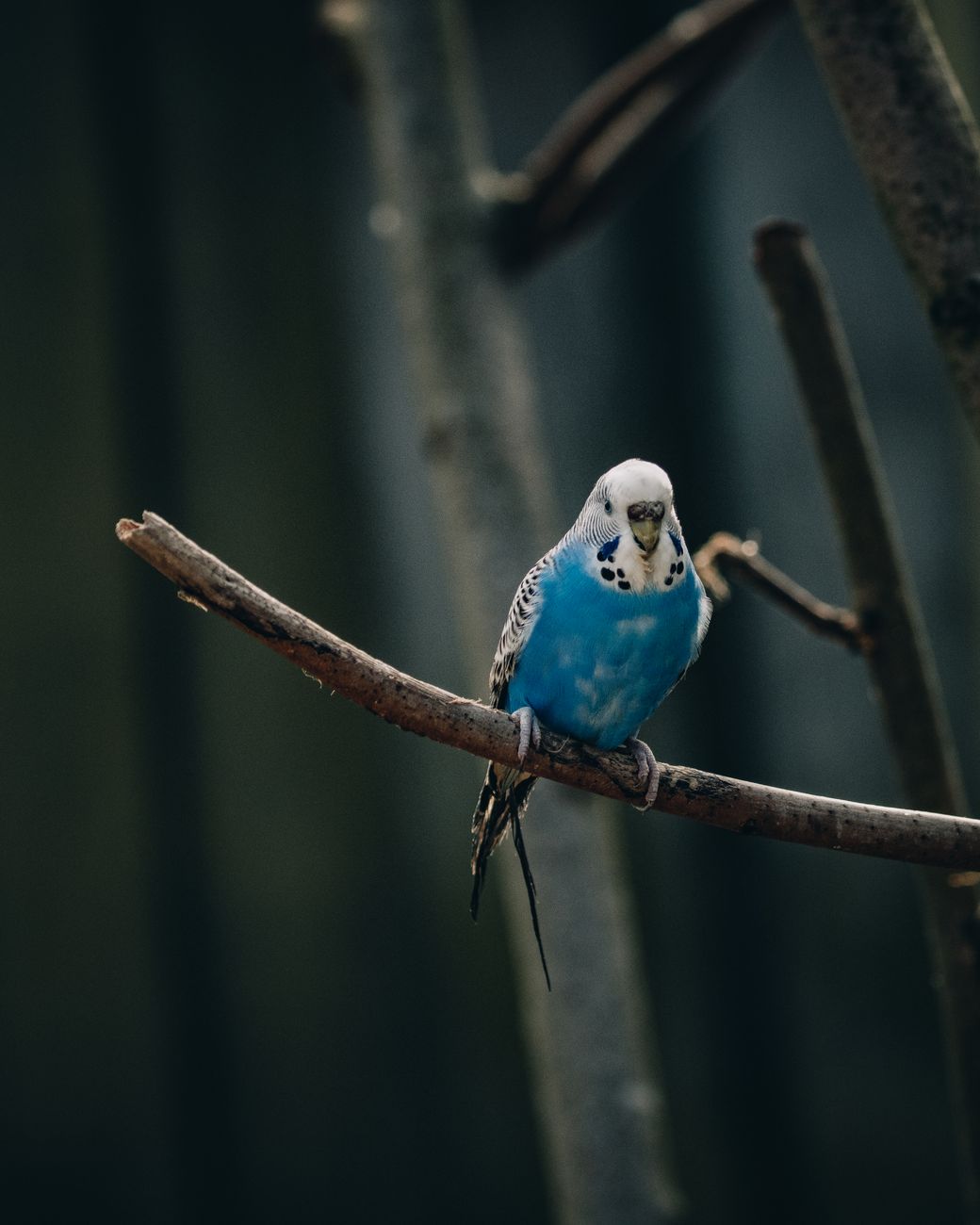
BUDGIE
Melopsittacus undulatus
DESCRIPTION
Budgie (Melopsittacus undulatus) is commonly known as the parakeet or shell parakeet. This small, colorful bird is characterized by its vibrant plumage, which can range from bright greens and yellows to blues and whites, often with distinctive markings on the head. Budgies are social creatures, known for their playful behavior and ability to mimic sounds, making them popular pets worldwide.
FUN FACTS
- Budgies are one of the most popular pet birds in the world, known for their ability to learn and mimic human speech
- They can develop a vocabulary of over 100 words and phrases, making them entertaining companions
- | In the wild, budgies are known to travel in large flocks, sometimes numbering in the thousands
- This social behavior helps them find food and avoid predators, as there is safety in numbers
QUICK INFO
Lifespan5-10 years in the wild, up to 15 years in captivit
Average Weight30-40 g
Average Length18-20 cm
Diet TypeHerbivore
Social Structuregroup — Budgies are very social birds that thrive in flocks, often forming strong bonds with their companions.
Activity PatternDiurnal
Breeding SeasonSpring to early summer
- Habitat
- Budgies are typically found in open grasslands, woodlands, and scrublands. They prefer areas with plenty of vegetation for foraging and nesting.
- Biomes
- Grassland, Savanna
- Native Range
- Budgies are native to Australia, where they inhabit a wide range of environments across the continent.
- Continent
- Australia
- Countries
- Australia
- Diet
- Budgies primarily feed on seeds, fruits, and vegetables, with a preference for millet and grass seeds. They also require a variety of fresh foods to maintain their health.
- Diet Type
- Herbivore
- Favorite Food
- millet, seeds, fruits, vegetables
- Social Structure
- group — Budgies are very social birds that thrive in flocks, often forming strong bonds with their companions.
- Activity Pattern
- Diurnal
- Group Size
- 5-100
- Territorial
- 0
 CR
CR
 LC
LC
30-40 g
Weight
18-20 cm
Length
- Coloration
- Budgies display a variety of colors, including green, yellow, blue, and white, often with black markings on the head.
- Sexual Dimorphism
- Males typically have a blue cere, while females have a brown or tan cere, especially when in breeding condition.
- Lifespan
- 5-10 years in the wild, up to 15 years in captivit
- Offspring per Birth
- 3-8
- Sexual Maturity
- 6 months
- Breeding Season
- Spring to early summer
LC
Least Concern
IUCN Red List Status
- Population Status
- Budgies are abundant and widespread in their native range, with a stable population.
- Wild Population Estimate
- millions
- Population Trend
- Stable
- Endangered
- 0
- Threats
- While not currently endangered, habitat loss and competition with invasive species can pose threats to local populations. Additionally, illegal trapping for the pet trade can impact certain areas.
- Predators
- Hawks, snakes, feral cats, and other birds of prey are known predators of budgies.
- Defense Mechanisms
- Budgies often rely on their flocking behavior to evade predators, using their agility and speed to escape.
- Compatible Animals
- other small birds, canaries, finches
- Found in Zoos
- Common