


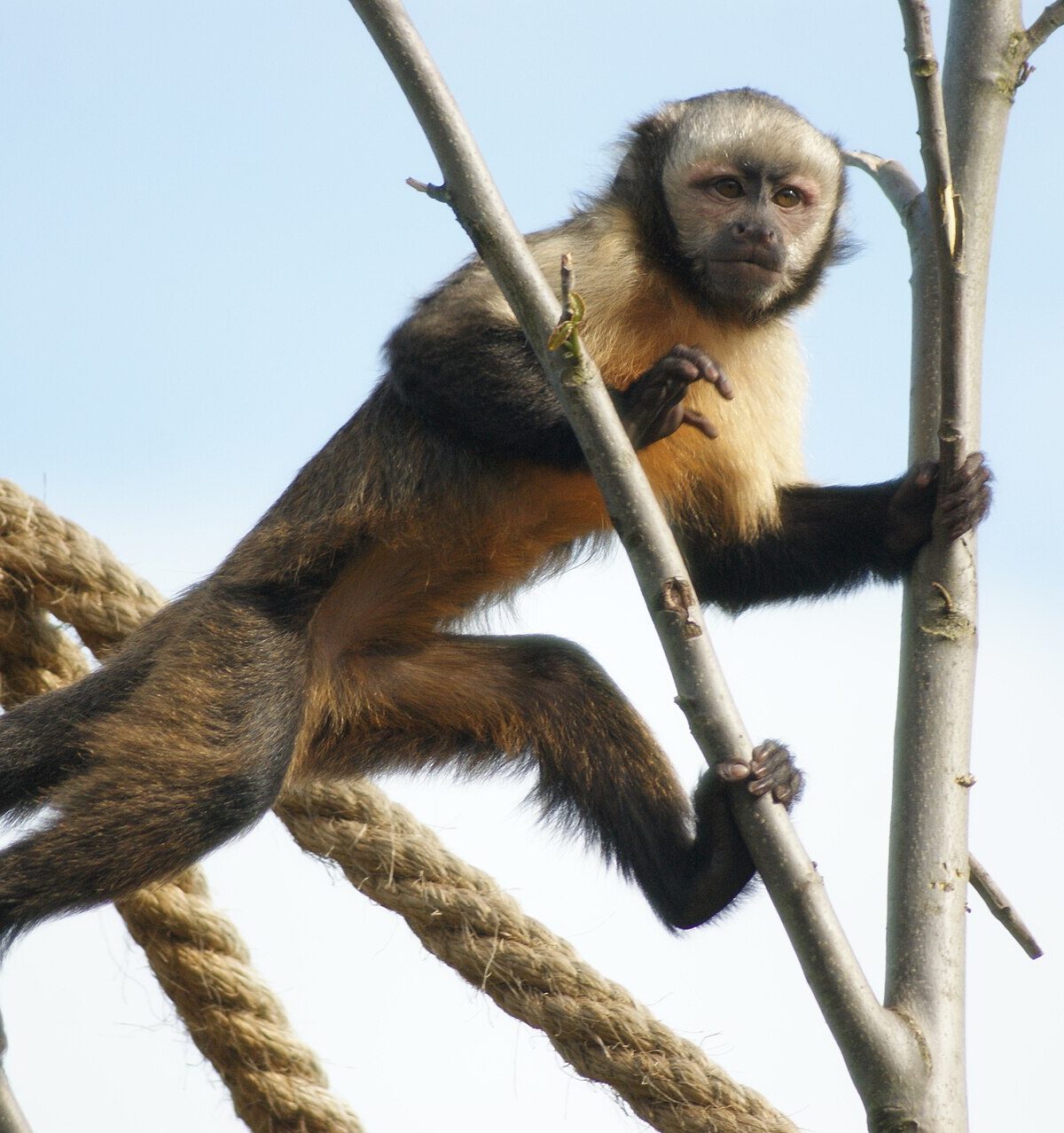
BUFF-HEADED CAPUCHIN
Cebus xanthosternos
DESCRIPTION
Buff-headed Capuchin (Cebus xanthosternos) is also known as the Yellow-browed Capuchin due to its distinctive coloration. This species is characterized by its buff-colored head and a darker body, which helps it blend into the forest canopy. They are highly social animals, often found in groups, and are known for their intelligence and problem-solving abilities, which they use to navigate their complex environment.
FUN FACTS
- Buff-headed Capuchins are known for their remarkable intelligence, often using tools to obtain food, such as using sticks to extract insects from tree bark
- They also exhibit complex social behaviors, including forming strong bonds with family members and engaging in cooperative care of young monkeys.| These monkeys have a unique way of communicating, using a variety of vocalizations and facial expressions to convey different messages
- Their social interactions are crucial for maintaining group dynamics and ensuring the survival of their young
QUICK INFO
Lifespan15-25 years in the wild, up to 30 in captivity
Average Weight3-4 kg
Average Length40-55 cm
Diet TypeOmnivore
Social StructureThey live in groups, typically consisting of 10-30 individuals, which helps them protect against predators and find food more efficiently.
Activity PatternDiurnal
Breeding SeasonYear-round, with peaks depending on local conditions
- Habitat
- These monkeys inhabit tropical rainforests, particularly in areas with dense vegetation. They are arboreal, spending most of their time in trees, which provides them with food and protection from predators.
- Biomes
- Tropical Rainforest
- Native Range
- Buff-headed Capuchins are native to the Atlantic Forest of Brazil, specifically in the states of Bahia and Minas Gerais.
- Continent
- South America
- Countries
- Brazil
- Diet
- Buff-headed Capuchins are omnivorous, feeding on a variety of fruits, seeds, insects, and small vertebrates. Their diet is diverse, allowing them to adapt to different food availability in their habitat.
- Diet Type
- Omnivore
- Favorite Food
- fruits, seeds, insects
- Social Structure
- They live in groups, typically consisting of 10-30 individuals, which helps them protect against predators and find food more efficiently.
- Activity Pattern
- Diurnal
- Group Size
- 10-30
- Territorial
- 1
 LC
LC

3-4 kg
Weight
40-55 cm
Length
- Coloration
- Buff-colored head with a darker body and lighter underparts.
- Sexual Dimorphism
- Males are generally larger than females.
- Lifespan
- 15-25 years in the wild, up to 30 in captivity
- Gestation Period
- 160-170 days
- Offspring per Birth
- 1-2
- Sexual Maturity
- 3-4 years
- Breeding Season
- Year-round, with peaks depending on local conditions
EN
Endangered
IUCN Red List Status
- Population Status
- The population of Buff-headed Capuchins is currently declining due to habitat loss and fragmentation.
- Wild Population Estimate
- Unknown, but considered to be decreasing
- Population Trend
- Decreasing
- Endangered
- 1
- Threats
- The main threats to Buff-headed Capuchins include habitat destruction due to logging and agriculture, as well as hunting. These pressures have led to significant declines in their populations.
- Predators
- Main predators include large birds of prey and snakes, as well as felids like jaguars and pumas.
- Defense Mechanisms
- They use vocalizations to alert the group of potential threats and can also flee to the safety of trees.
- Found in Zoos
- Uncommon