


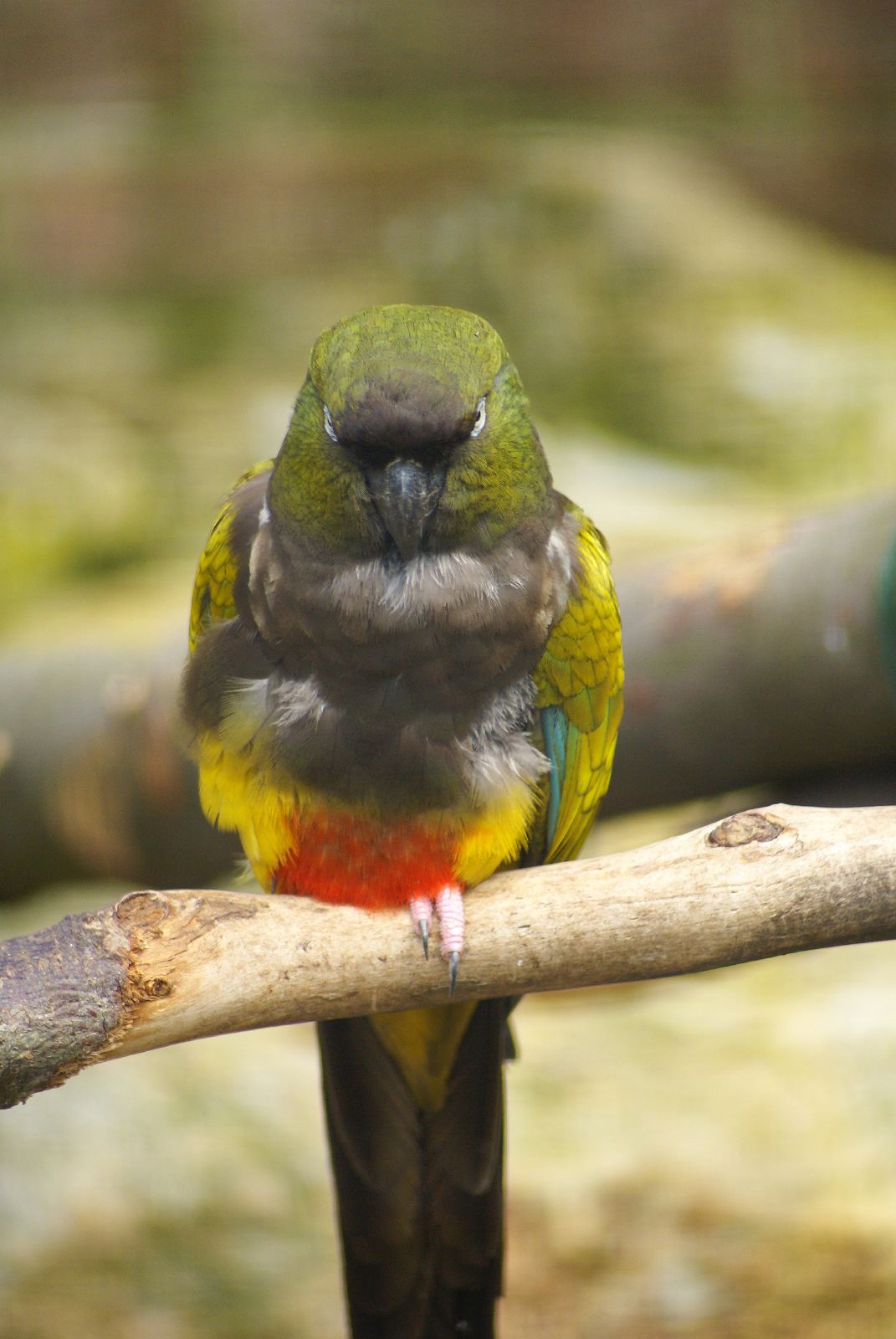
BURROWING PARROT
Cyanoliseus patagonus
DESCRIPTION
The Burrowing Parrot, also known as Cyanoliseus patagonus, is a medium-sized parrot native to South America. It has a distinctive appearance with a predominantly green body, accented by blue and yellow on the wings and face. These parrots are known for their social behavior, often seen in flocks, and they exhibit a unique nesting behavior by burrowing into the ground, which is uncommon among parrots.
FUN FACTS
- Burrowing Parrots are unique among parrots for their burrowing behavior, which they use for nesting
- They dig extensive tunnels in the ground, which can be several meters long, providing safety for their young from predators
- | These parrots are known for their vocal abilities and can mimic a variety of sounds, including human speech
- Their social nature makes them excellent companions, and they often engage in playful antics that entertain their keepers
QUICK INFO
Lifespan15-20 years in the wild, up to 30 in captivity
Average Weight150-200 g
Average Length30-35 cm
Diet TypeHerbivore
Social Structuregroup — they are typically found in flocks that can number in the hundreds.
Activity PatternDiurnal
Breeding SeasonSpring (September-November)
- Habitat
- Burrowing Parrots inhabit open grasslands and scrublands, often near water sources. They prefer areas with loose soil for burrowing and nesting.
- Biomes
- Grassland, Savanna
- Native Range
- The native range of the Burrowing Parrot includes parts of Argentina, Bolivia, and Chile.
- Continent
- South America
- Countries
- Argentina, Bolivia, Chile
- Diet
- Burrowing Parrots primarily feed on seeds, fruits, and nuts, foraging in their natural habitat. They are known to enjoy a variety of plant materials, which they skillfully crack open with their strong beaks.
- Diet Type
- Herbivore
- Favorite Food
- seeds, fruits, nuts
- Social Structure
- group — they are typically found in flocks that can number in the hundreds.
- Activity Pattern
- Diurnal
- Group Size
- 20-100
- Territorial
- 0
 CR
CR
 LC
LC
 VU
VU
150-200 g
Weight
30-35 cm
Length
- Coloration
- The Burrowing Parrot has a vibrant green body with blue and yellow accents on the wings and face.
- Lifespan
- 15-20 years in the wild, up to 30 in captivity
- Offspring per Birth
- 3-5
- Sexual Maturity
- 2-3 years
- Breeding Season
- Spring (September-November)
LC
Least Concern
IUCN Red List Status
- Population Status
- The population of Burrowing Parrots is currently stable, but they face habitat loss.
- Wild Population Estimate
- 50,000-100,000
- Population Trend
- Stable
- Endangered
- 0
- Threats
- Main threats include habitat destruction due to agriculture and urban development. Additionally, they are sometimes captured for the pet trade.
- Predators
- hawks, snakes, feral cats, and other birds of prey
- Defense Mechanisms
- Burrowing Parrots use their burrows for protection against predators and can also exhibit aggressive behavior when threatened.
- Compatible Animals
- other parrot species, small mammals
- Found in Zoos
- Uncommon