


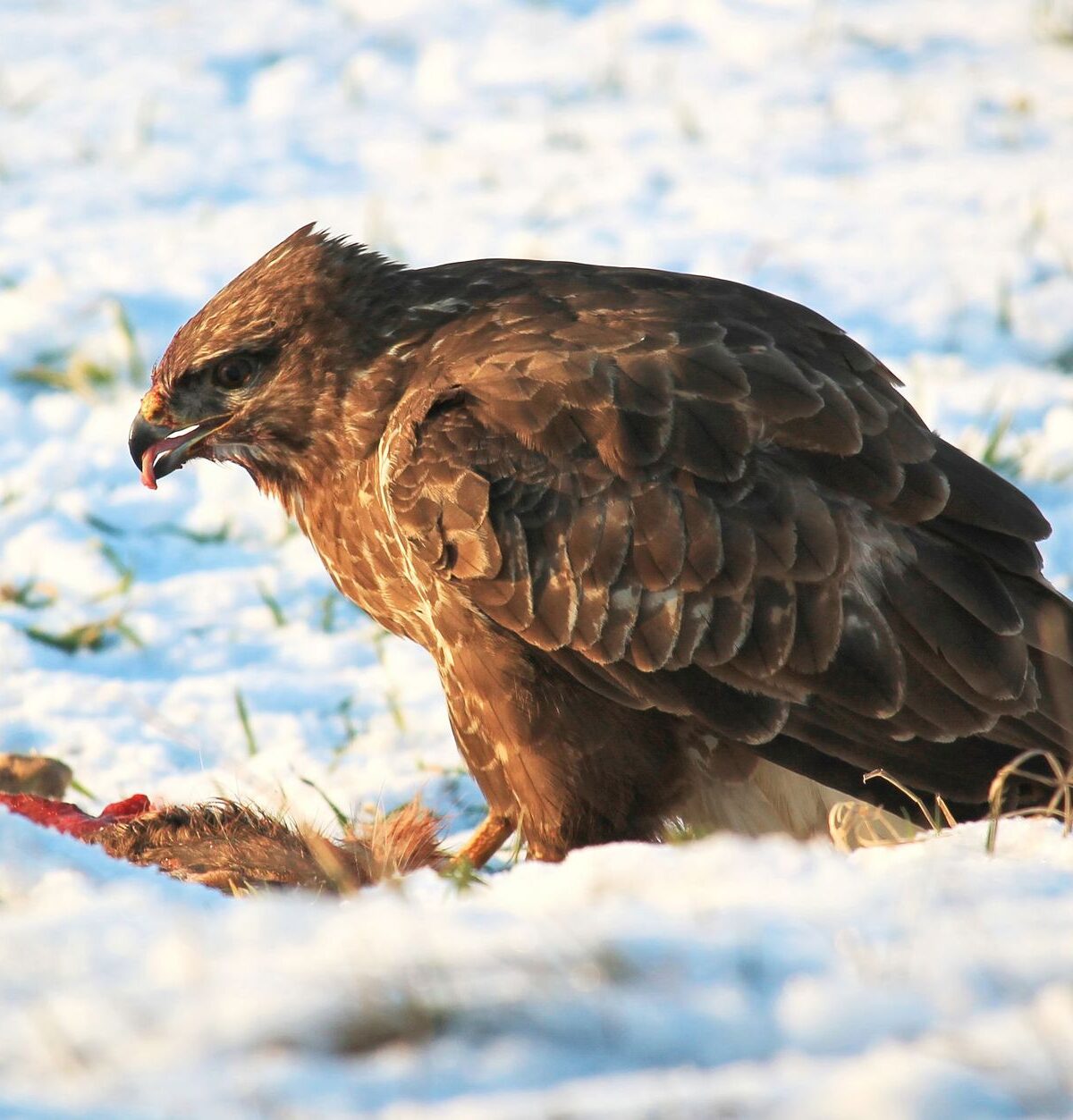
BUZZARD
DESCRIPTION
Also called the Common Buzzard, this bird of prey is known for its robust build and broad wings. It typically has a brown plumage with variations that can include lighter and darker morphs, making it adaptable to different environments. Buzzards are often seen soaring in the sky or perched on trees, where they scan the ground for potential prey.
FUN FACTS
- Buzzards are known for their impressive soaring abilities, often gliding on thermals for hours without flapping their wings
- They have a unique hunting technique where they will often wait patiently on a perch before swooping down to catch their prey
- | In some cultures, Buzzards are seen as symbols of freedom and strength, often featured in folklore and mythology
- Their ability to adapt to various habitats has allowed them to thrive in both rural and urban environments
QUICK INFO
Lifespan10-15 years in the wild, up to 25 in captivity
Average Weight0.8-1.5 kg
Average Length0.5-0.6 m
Diet TypeCarnivore
Social Structuresolitary or pair, often seen alone or in mated pairs during breeding season
Activity PatternDiurnal
Breeding SeasonSpring (March-May)
- Habitat
- Buzzards inhabit a variety of environments, including woodlands, grasslands, and agricultural areas. They prefer open spaces for hunting but require trees or cliffs for nesting.
- Biomes
- Temperate Forest, Grassland, Agricultural
- Native Range
- Buzzards are found across Europe, parts of Asia, and North Africa.
- Continent
- Europe, Asia, Africa
- Countries
- United Kingdom, Germany, France, Spain, Italy, Poland
- Diet
- Buzzards primarily feed on small mammals, birds, and carrion. They are opportunistic hunters and will also scavenge when necessary.
- Diet Type
- Carnivore
- Favorite Food
- small mammals, birds
- Social Structure
- solitary or pair, often seen alone or in mated pairs during breeding season
- Activity Pattern
- Diurnal
- Group Size
- 1-2
- Territorial
- 1
 LC
LC
0.8-1.5 kg
Weight
0.5-0.6 m
Length
- Coloration
- brown with lighter and darker variations
- Sexual Dimorphism
- females are generally larger than males
- Lifespan
- 10-15 years in the wild, up to 25 in captivity
- Offspring per Birth
- 2-4
- Sexual Maturity
- 2-3 years
- Breeding Season
- Spring (March-May)
LC
Least Concern
IUCN Red List Status
- Population Status
- The population of Buzzards is currently stable in many regions, although local declines can occur due to habitat loss.
- Wild Population Estimate
- 1,000,000-2,000,000
- Population Trend
- Stable
- Endangered
- 0
- Threats
- Main threats include habitat destruction and collisions with vehicles. Pesticide use can also impact their food sources.
- Predators
- eagles, larger hawks, and humans can pose threats to Buzzards, especially to their nests.
- Defense Mechanisms
- Buzzards will use their sharp talons and beaks to defend themselves and their nests.
- Found in Zoos
- Uncommon