


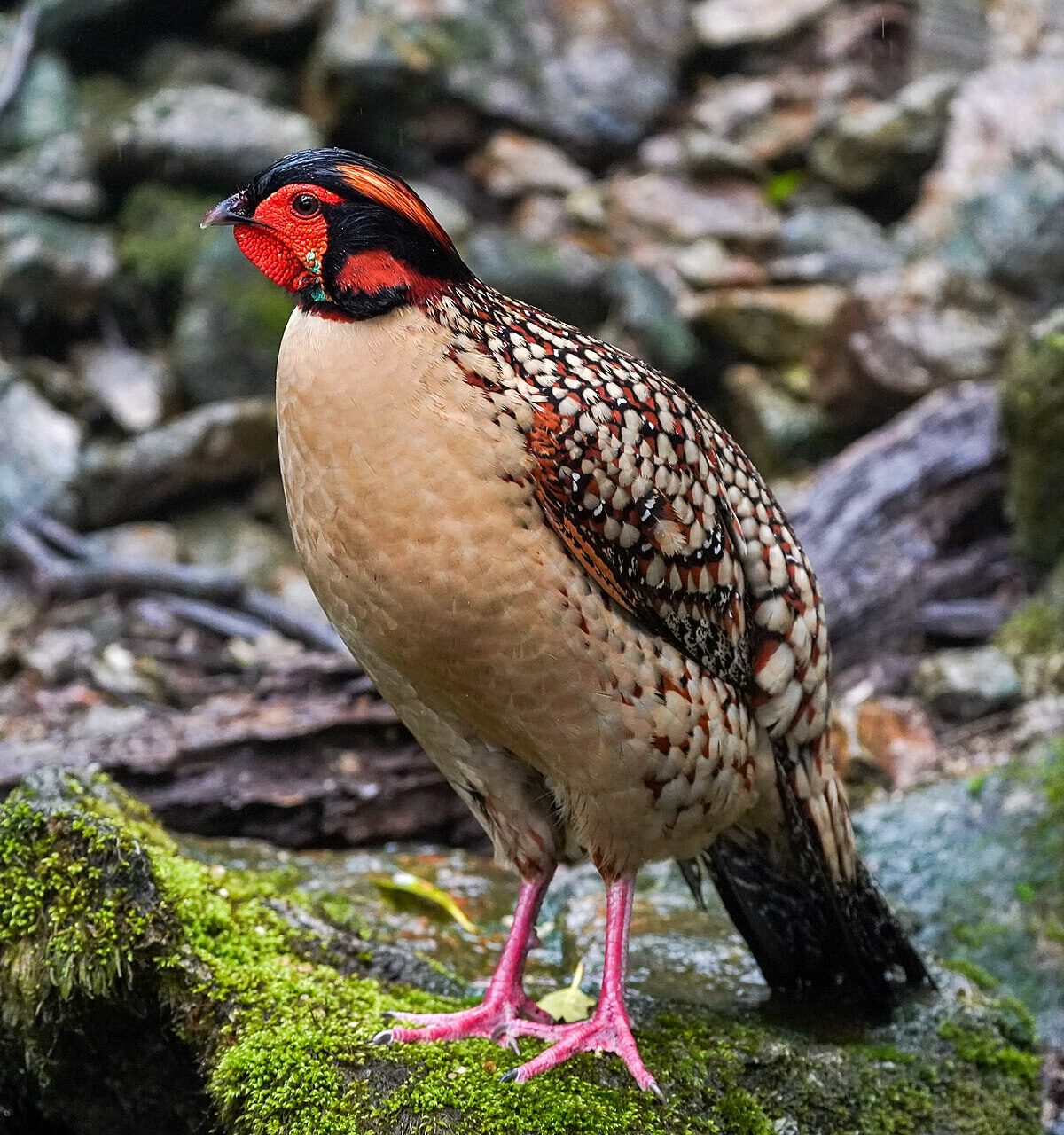
CABOT'S TRAGOPAN
Tragopan caboti
DESCRIPTION
Cabot's Tragopan (Tragopan caboti) is a strikingly beautiful bird known for its vibrant plumage, which features a mix of deep red and blue colors adorned with intricate patterns. This species is primarily found in the dense forests of the eastern Himalayas, where it thrives in the underbrush and is often seen foraging on the forest floor. Cabot's Tragopan is known for its shy and elusive behavior, making it a challenge to observe in the wild, and it plays a crucial role in its ecosystem as a seed disperser.
FUN FACTS
- Cabot's Tragopan is known for its elaborate courtship displays, where males perform intricate dances and vocalizations to attract females
- These displays are not only a sight to behold but also play a crucial role in their mating rituals
- | The species is named after the American naturalist William Cabot, who contributed significantly to the study of birds in the region
- Despite their beauty, Cabot's Tragopan remains elusive and is often more heard than seen in their natural habitat
QUICK INFO
Lifespan10-15 years in the wild, up to 20 years in captivi
Average Weight1.5-2.5 kg
Average Length60-70 cm
Diet TypeOmnivore
Social Structuresolitary or pairs, often seen alone or with a mate during the breeding season.
Activity PatternDiurnal
Breeding SeasonSpring (March-May)
- Habitat
- This species inhabits temperate forests, particularly in mountainous regions where dense undergrowth provides cover and foraging opportunities. They prefer areas with a mix of open ground and thick vegetation.
- Biomes
- Temperate Forest, Montane Forest
- Native Range
- Cabot's Tragopan is native to the eastern Himalayas, specifically found in regions of northeastern India, Bhutan, and parts of Myanmar.
- Continent
- Asia
- Countries
- India, Bhutan, Myanmar
- Diet
- Cabot's Tragopan primarily feeds on a variety of plant materials, including seeds, fruits, and leaves, as well as insects and small invertebrates. This diverse diet helps them adapt to their forest habitat.
- Diet Type
- Omnivore
- Favorite Food
- seeds, fruits, insects
- Social Structure
- solitary or pairs, often seen alone or with a mate during the breeding season.
- Activity Pattern
- Diurnal
- Group Size
- 1-2
- Territorial
- 0
 LC
LC
1.5-2.5 kg
Weight
60-70 cm
Length
- Coloration
- vibrant red and blue with intricate patterns and markings
- Sexual Dimorphism
- males are more brightly colored than females, with more pronounced patterns.
- Lifespan
- 10-15 years in the wild, up to 20 years in captivi
- Offspring per Birth
- 4-6 eggs
- Sexual Maturity
- 1 year
- Breeding Season
- Spring (March-May)
VU
Vulnerable
IUCN Red List Status
- Population Status
- The population of Cabot's Tragopan is currently considered to be decreasing due to habitat loss and hunting pressures.
- Wild Population Estimate
- unknown
- Population Trend
- Decreasing
- Endangered
- 1
- Threats
- Main threats include habitat destruction due to deforestation and hunting for their striking plumage. These pressures have led to a decline in their population in the wild.
- Conservation Program
- Various conservation efforts are underway in protected areas within their range, focusing on habitat preservation.
- Predators
- Main predators include large birds of prey and carnivorous mammals such as foxes and wild cats.
- Defense Mechanisms
- Cabot's Tragopan relies on its cryptic coloration to blend into the forest floor, making it difficult for predators to spot them.
- Found in Zoos
- Uncommon