


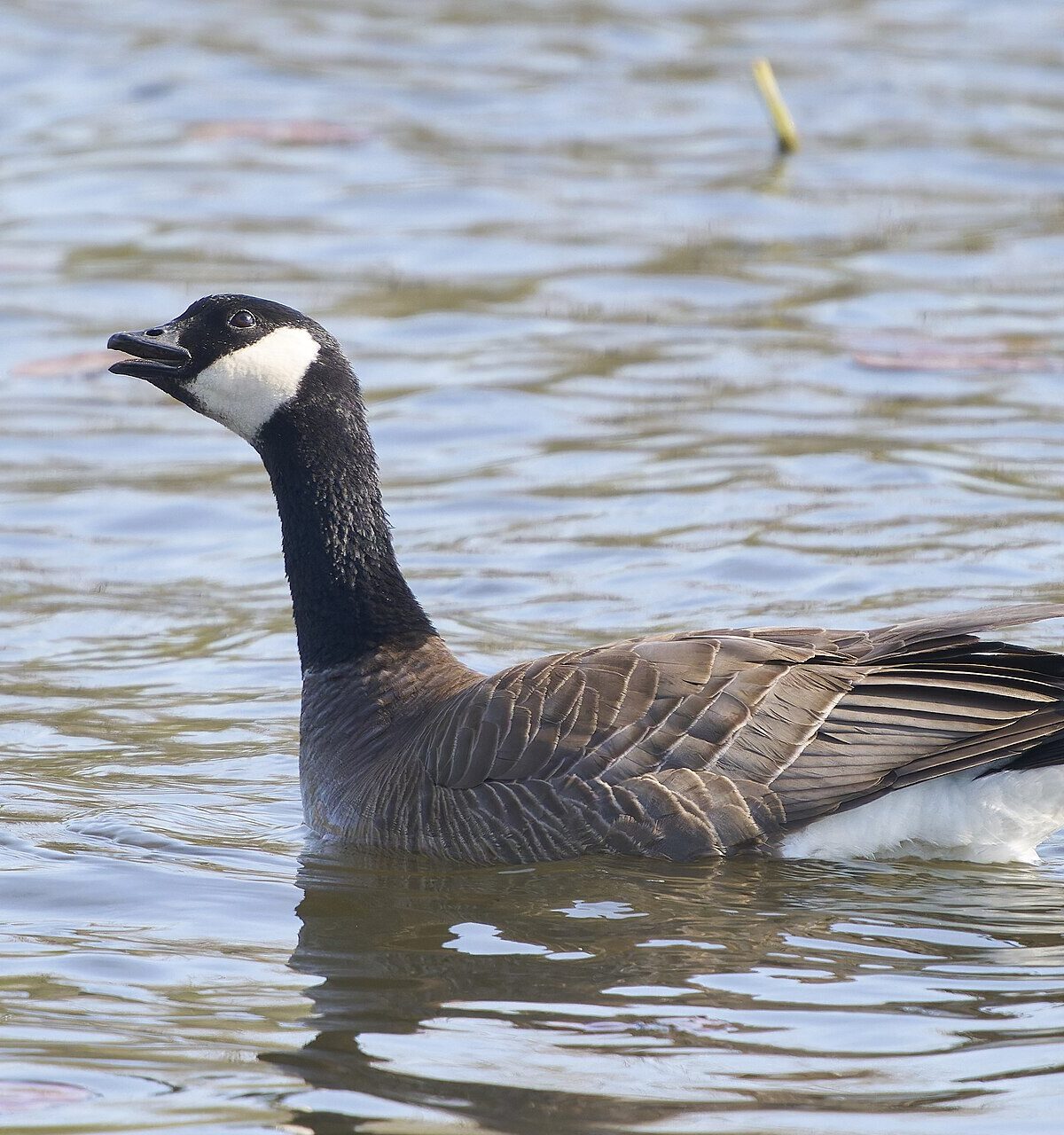
CACKLING CANADA GOOSE
Branta hutchinsii
DESCRIPTION
Cackling Canada Goose (Branta hutchinsii) is a small species of goose that is often confused with the larger Canada Goose. It has a distinctive short neck and a smaller body size, with a characteristic black head and neck, white cheek patches, and a brownish body. This species is known for its loud, high-pitched calls and migratory behavior, often forming large flocks during migration.
FUN FACTS
- Cackling Canada Geese were once considered a subspecies of the Canada Goose but were reclassified as a separate species due to distinct differences in size and vocalizations
- They are known for their impressive migratory journeys, traveling thousands of miles between their breeding and wintering grounds, often flying in a characteristic V formation
QUICK INFO
Lifespan10-15 years in the wild, up to 20 years in captivi
Average Weight1.5-3.5 kg
Average Length0.6-0.8 m
Diet TypeHerbivore
Social Structuregroup — they are often seen in flocks, especially during migration and feeding.
Activity PatternDiurnal
Breeding SeasonSpring (April-June)
- Habitat
- Cackling Canada Geese inhabit a variety of wetland and grassland environments, including marshes, lakes, and agricultural fields. They prefer areas with abundant food sources and suitable nesting sites.
- Biomes
- Wetlands, Grasslands
- Native Range
- This species is native to North America, primarily found in the Arctic and sub-Arctic regions during the breeding season and migrating to the continental United States during winter.
- Continent
- North America
- Countries
- Canada, United States
- Diet
- Cackling Canada Geese primarily feed on grasses, grains, and other vegetation. They are known to graze in fields and wetlands, foraging for food in both agricultural and natural habitats.
- Diet Type
- Herbivore
- Favorite Food
- grasses, grains
- Social Structure
- group — they are often seen in flocks, especially during migration and feeding.
- Activity Pattern
- Diurnal
- Group Size
- 10-100
- Territorial
- 0

 LC
LC
1.5-3.5 kg
Weight
0.6-0.8 m
Length
- Coloration
- They have a black head and neck, white cheek patches, and a brownish body with lighter underparts.
- Sexual Dimorphism
- Males and females are similar in appearance, with no significant differences in coloration.
- Lifespan
- 10-15 years in the wild, up to 20 years in captivi
- Offspring per Birth
- 3-8
- Sexual Maturity
- 2-3 years
- Breeding Season
- Spring (April-June)
LC
Least Concern
IUCN Red List Status
- Population Status
- The population of Cackling Canada Geese has been increasing in recent years, thanks to conservation efforts.
- Wild Population Estimate
- 200,000-300,000
- Population Trend
- Increasing
- Endangered
- 0
- Threats
- Main threats include habitat loss due to agricultural expansion and urban development. Additionally, hunting and climate change may impact their populations.
- Conservation Program
- Various conservation programs are in place to protect wetland habitats and manage hunting regulations.
- Predators
- Foxes, coyotes, eagles, and large birds of prey are known to prey on Cackling Canada Geese, especially their eggs and young.
- Defense Mechanisms
- They often use loud vocalizations to warn of danger and may exhibit aggressive behavior to defend their nests.
- Found in Zoos
- Uncommon