


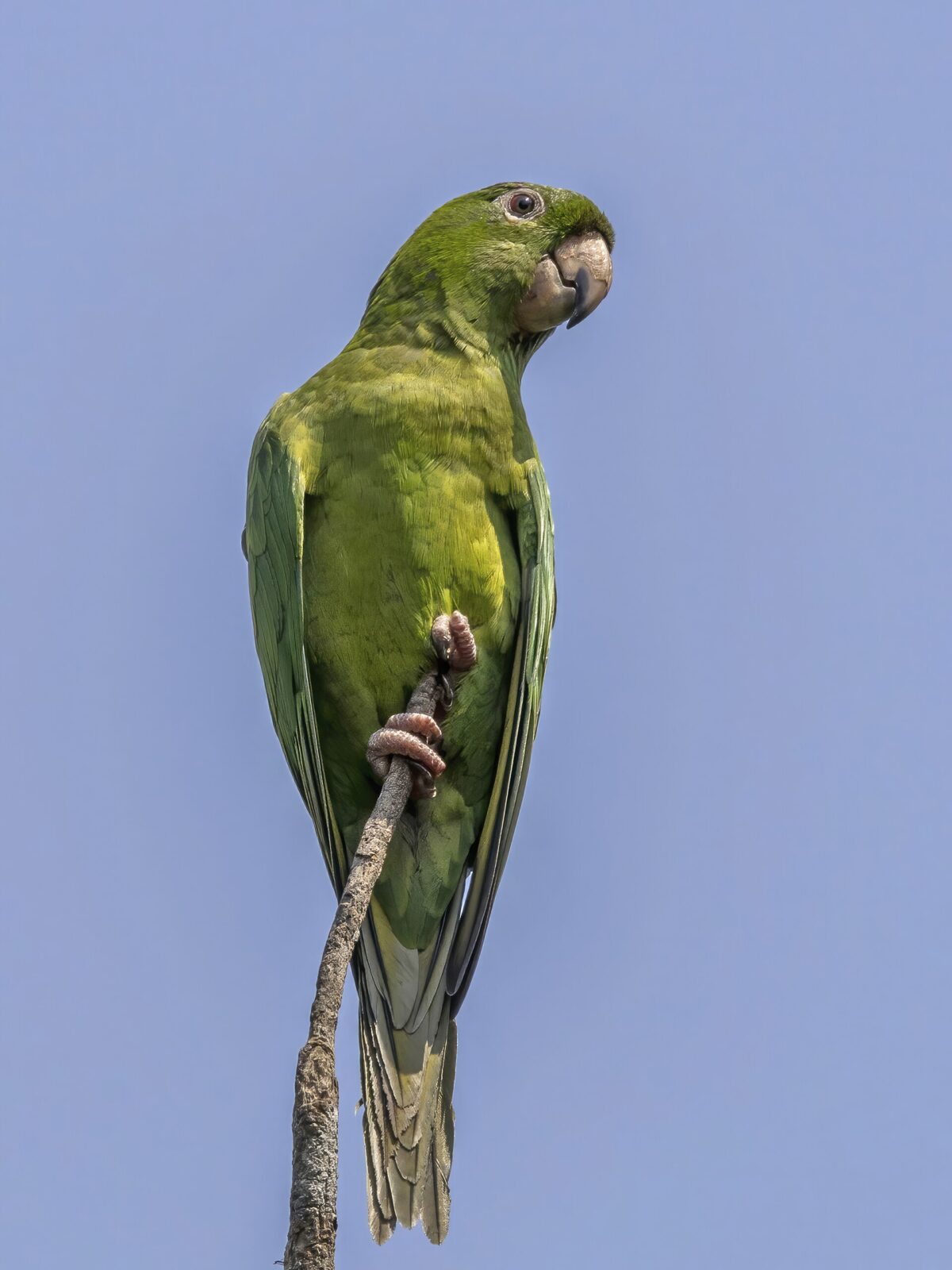
CACTUS PARAKEET
Psittacara strenuus
DESCRIPTION
Cactus Parakeet (Psittacara strenuus), also known as Cactus Conure, is a vibrant green parakeet characterized by its striking yellow and orange underwing feathers. This species is known for its playful and social behavior, often seen in flocks, which contributes to its lively nature. In the wild, they inhabit arid regions and are often found in areas with cacti, which play a crucial role in their ecology by providing food and nesting sites.
FUN FACTS
- Cactus Parakeets are known for their intelligence and can learn to mimic human speech and sounds, making them popular pets
- They also have a unique social structure, often engaging in cooperative breeding where non-breeding individuals help care for the young of their relatives
QUICK INFO
Lifespan15-20 years in the wild, up to 30 years in captivi
Average Weight80-120 g
Average Length25-30 cm
Diet TypeHerbivore
Social StructureThey are typically found in small to medium-sized flocks, showcasing a group social structure that enhances their foraging efficiency.
Activity PatternDiurnal
Breeding SeasonSpring (March-May)
- Habitat
- They thrive in dry, arid habitats, particularly in areas with abundant cacti. These environments provide both food and shelter, making them ideal for the species.
- Biomes
- Desert, Scrubland
- Native Range
- Cactus Parakeets are native to the arid regions of southwestern United States and northern Mexico.
- Continent
- North America
- Countries
- United States, Mexico
- Diet
- Cactus Parakeets primarily feed on seeds, fruits, and flowers, with a particular affinity for the fruits of cacti. Their diet is essential for their survival in arid environments where food sources can be scarce.
- Diet Type
- Herbivore
- Favorite Food
- cactus fruits, seeds
- Social Structure
- They are typically found in small to medium-sized flocks, showcasing a group social structure that enhances their foraging efficiency.
- Activity Pattern
- Diurnal
- Group Size
- 5-30
- Territorial
- 0
 LC
LC
80-120 g
Weight
25-30 cm
Length
- Coloration
- primarily green with yellow and orange accents on the wings and underparts
- Sexual Dimorphism
- males and females are similar in appearance, making it difficult to distinguish between the sexes
- Lifespan
- 15-20 years in the wild, up to 30 years in captivi
- Offspring per Birth
- 3-5
- Sexual Maturity
- 2-3 years
- Breeding Season
- Spring (March-May)
LC
Least Concern
IUCN Red List Status
- Population Status
- The population of Cactus Parakeets is currently stable, although habitat loss poses a potential threat.
- Wild Population Estimate
- unknown
- Population Trend
- Stable
- Endangered
- 0
- Threats
- Main threats include habitat destruction due to urbanization and agriculture, which reduces their natural foraging areas. Additionally, they may be affected by the illegal pet trade.
- Predators
- Common predators include hawks, snakes, and larger birds of prey.
- Defense Mechanisms
- They often use their agility and ability to fly quickly to evade predators, and they may also use vocalizations to alert others of danger.
- Compatible Animals
- other parakeets, small parrots
- Found in Zoos
- Uncommon