


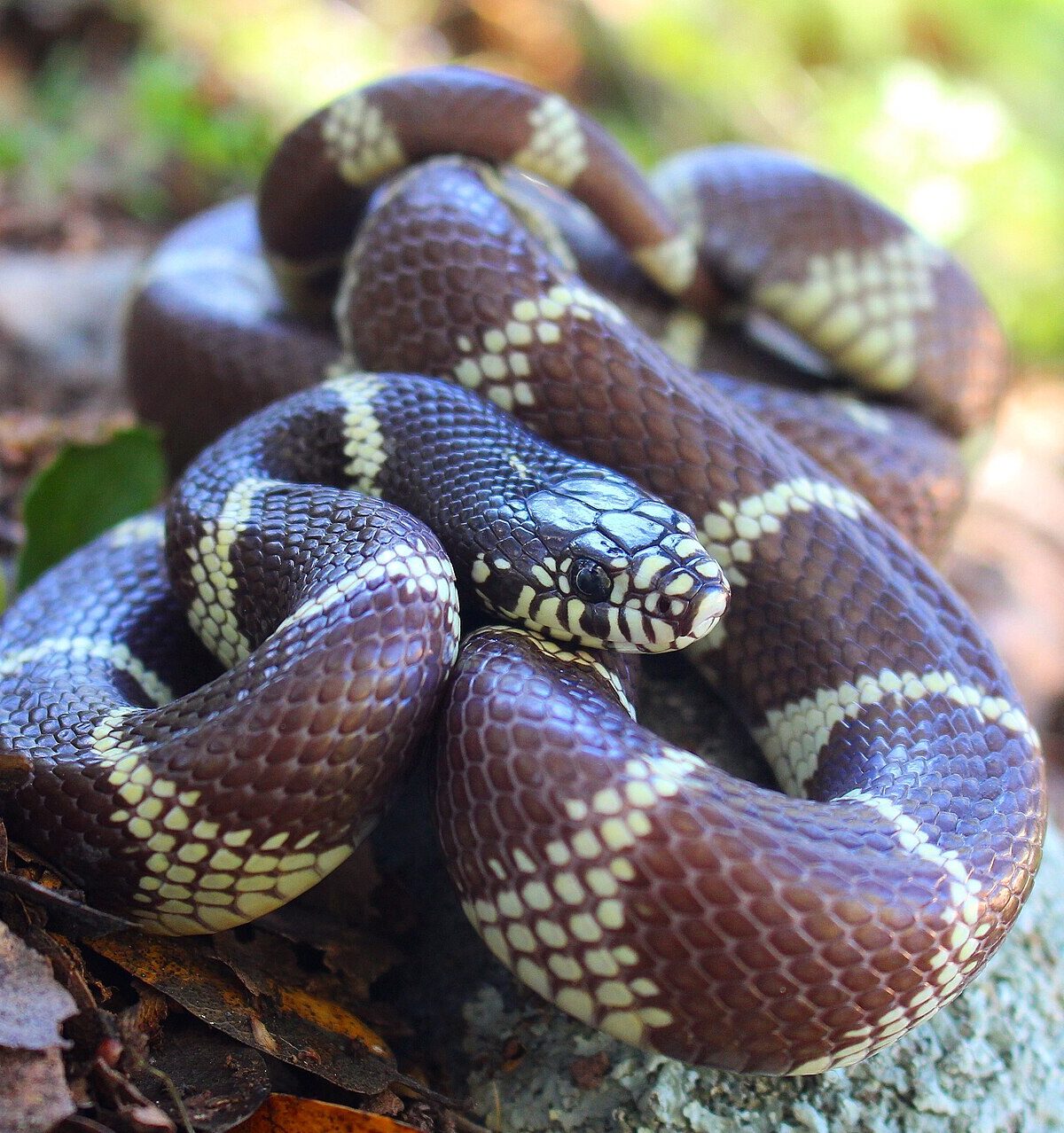
CALIFORNIA KING SNAKE
DESCRIPTION
The California King Snake is a non-venomous snake known for its striking coloration and pattern, which typically features bands of black and white or yellow. This species can vary significantly in appearance, with some individuals displaying solid colors or different patterns. They are known for their docile nature and adaptability, making them popular in the pet trade.
FUN FACTS
- California King Snakes are known for their impressive ability to eat other snakes, including venomous species like rattlesnakes, thanks to their immunity to certain venoms
- They are also popular in the pet trade due to their docile nature and striking appearance, with many color morphs available.| These snakes have a unique method of locomotion called 'rectilinear movement,' which allows them to move in a straight line by contracting their muscles, making them efficient hunters in their natural habitat
QUICK INFO
Lifespan15-20 years in the wild, up to 30 in captivity
Average Weight0.5-2 kg
Average Length1.2-1.8 m
Diet TypeCarnivore
Social Structuresolitary
Activity PatternDiurnal
Breeding SeasonSpring (April-June)
- Habitat
- These snakes inhabit a variety of environments, including grasslands, forests, and deserts. They are often found near water sources and prefer areas with ample cover for hunting and hiding.
- Biomes
- Desert, Grassland, Forest
- Native Range
- The California King Snake is native to the western United States, particularly California, and extends into parts of Mexico.
- Continent
- North America
- Countries
- United States, Mexico
- Diet
- California King Snakes are carnivorous and primarily feed on small mammals, birds, and other reptiles, including other snakes. They are known to consume venomous snakes, such as rattlesnakes, due to their immunity to certain snake venoms.
- Diet Type
- Carnivore
- Favorite Food
- small mammals, birds, other reptiles
- Social Structure
- solitary
- Activity Pattern
- Diurnal
- Group Size
- 1
- Territorial
- 0
 VU
VU

0.5-2 kg
Weight
1.2-1.8 m
Length
- Coloration
- Typically black and white or yellow bands, but can vary widely.
- Sexual Dimorphism
- Males are generally smaller than females.
- Lifespan
- 15-20 years in the wild, up to 30 in captivity
- Offspring per Birth
- 4-24
- Sexual Maturity
- 2-3 years
- Breeding Season
- Spring (April-June)
LC
Least Concern
IUCN Red List Status
- Population Status
- The population is currently stable, with no significant declines reported.
- Wild Population Estimate
- Unknown
- Population Trend
- Stable
- Endangered
- 0
- Threats
- Main threats include habitat loss due to urban development and road mortality. They are also sometimes killed by humans due to misconceptions about their danger.
- Predators
- Birds of prey, larger snakes, and mammals such as raccoons and foxes.
- Defense Mechanisms
- California King Snakes may mimic the coloration of venomous snakes to deter predators and can also release a foul-smelling musk when threatened.
- Found in Zoos
- Common