


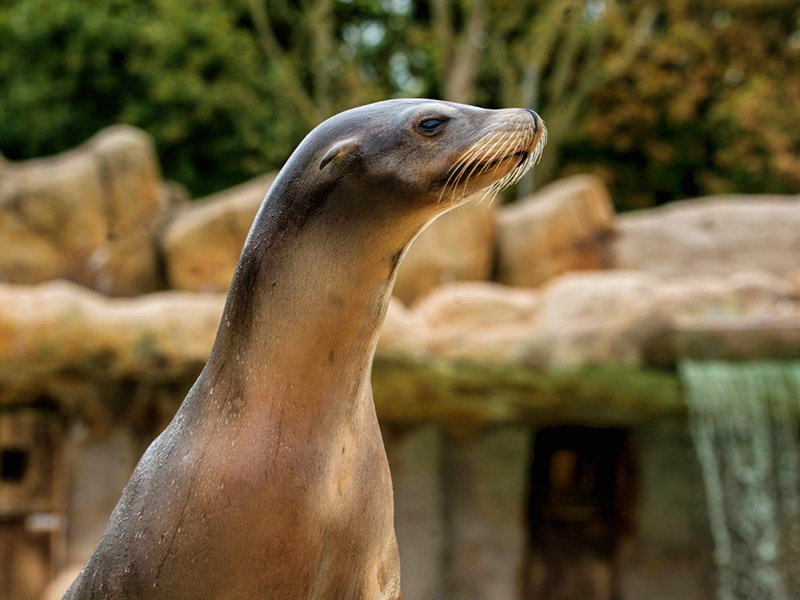
CALIFORNIA SEA LION
Zalophus californianus
DESCRIPTION
California Sea Lion (Zalophus californianus) is a highly social marine mammal known for its playful behavior and agility in the water. They have a robust body with a long, streamlined shape, and males are significantly larger than females, exhibiting a distinctive mane. These sea lions are often seen basking on rocks or beaches in groups, showcasing their social nature and vocal communication.
FUN FACTS
- California Sea Lions are known for their intelligence and can be trained to perform various tasks, making them popular in marine shows
- They can dive to depths of over 200 meters and hold their breath for up to 20 minutes while hunting for food
QUICK INFO
Lifespan16-20 years in the wild, up to 30 years in captivi
Average Weight100-300 kg
Average Length2-3 m
Diet TypeCarnivore
Social Structuregroup — they are highly social animals that often form large colonies.
Activity PatternDiurnal
Breeding SeasonSpring (May-June)
- Habitat
- California Sea Lions inhabit coastal areas, particularly rocky shorelines and sandy beaches. They are often found in both temperate and subtropical waters along the Pacific coast.
- Biomes
- Marine, Coastal
- Native Range
- They are native to the western coast of North America, ranging from British Columbia in Canada to Mexico.
- Continent
- North America
- Countries
- United States, Mexico
- Diet
- California Sea Lions primarily feed on fish and squid, utilizing their excellent diving abilities to hunt. They are opportunistic feeders and can adapt their diet based on the availability of prey.
- Diet Type
- Carnivore
- Favorite Food
- fish, squid
- Social Structure
- group — they are highly social animals that often form large colonies.
- Activity Pattern
- Diurnal
- Group Size
- 10-100
- Territorial
- 0
 VU
VU
100-300 kg
Weight
2-3 m
Length
- Coloration
- They have a light brown to tan coloration, with males being darker than females.
- Sexual Dimorphism
- Males are larger and have a mane, while females are smaller and lack the mane.
- Lifespan
- 16-20 years in the wild, up to 30 years in captivi
- Gestation Period
- 11 months
- Offspring per Birth
- 1
- Sexual Maturity
- 3-5 years
- Breeding Season
- Spring (May-June)
LC
Least Concern
IUCN Red List Status
- Population Status
- The population of California Sea Lions is currently stable, with healthy numbers in many areas.
- Wild Population Estimate
- 300,000-400,000
- Population Trend
- Stable
- Endangered
- 0
- Threats
- Main threats include habitat loss, entanglement in fishing gear, and competition for food with commercial fisheries. Climate change also poses a risk by affecting prey availability.
- Predators
- Great white sharks, orcas, and occasionally large terrestrial mammals like bears when on land.
- Defense Mechanisms
- They use vocalizations and physical displays to deter threats, and can also dive to escape predators.
- Compatible Animals
- Harbor Seals, various fish species
- Found in Zoos
- Common