


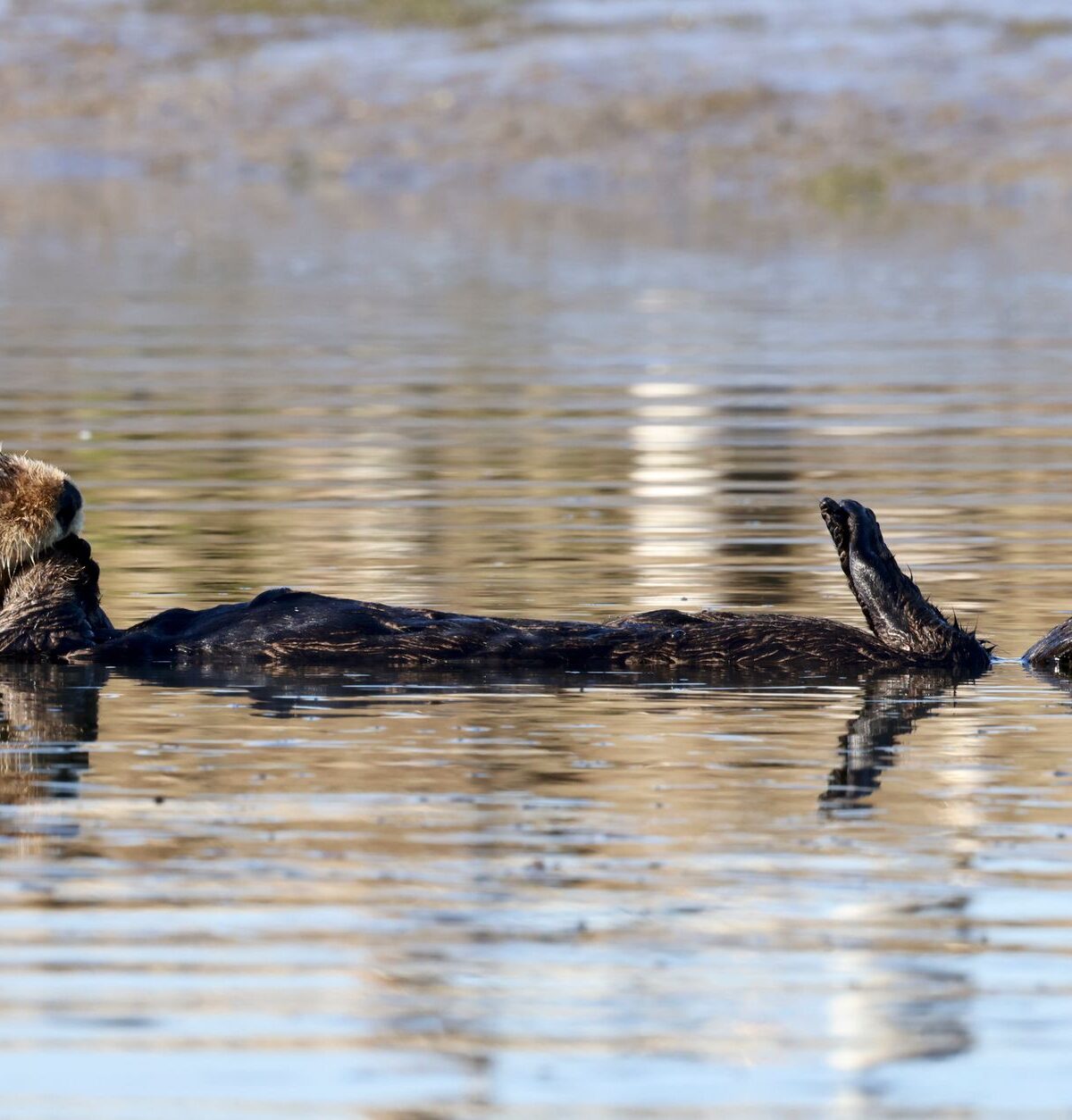
CALIFORNIA SEA OTTER
Enhydra lutris nereis
DESCRIPTION
California Sea Otter (Enhydra lutris nereis) is commonly known as the Southern Sea Otter. This marine mammal is characterized by its thick, soft fur, which is the densest of any animal, providing insulation in cold waters. They are known for their playful behavior, often seen floating on their backs while using tools, such as rocks, to crack open shellfish.
FUN FACTS
- California Sea Otters have a unique adaptation where they have a pouch under their forearms to store their favorite tools and food while foraging
- They are also known to hold hands while sleeping to prevent drifting apart, showcasing their social bonds
QUICK INFO
Lifespan15-20 years in the wild, up to 30 in captivity
Average Weight50-100 lbs
Average Length2-4 ft
Diet TypeCarnivore
Social Structuregroup — they often gather in rafts, which can consist of up to 20 individuals.
Activity PatternDiurnal
Breeding SeasonYear-round, peaks in spring
- Habitat
- California Sea Otters inhabit coastal waters, particularly in kelp forests and estuaries. They prefer areas with abundant food sources and shelter from strong waves.
- Biomes
- Marine, Coastal
- Native Range
- The native range of the California Sea Otter is along the central and southern coast of California.
- Continent
- North America
- Countries
- United States
- Diet
- California Sea Otters primarily feed on marine invertebrates, including sea urchins, crabs, clams, and various mollusks. Their foraging behavior plays a crucial role in maintaining the health of kelp forest ecosystems.
- Diet Type
- Carnivore
- Favorite Food
- sea urchins, crabs, clams
- Social Structure
- group — they often gather in rafts, which can consist of up to 20 individuals.
- Activity Pattern
- Diurnal
- Group Size
- 5-20
- Territorial
- 0
 VU
VU
 VU
VU
50-100 lbs
Weight
2-4 ft
Length
- Coloration
- dark brown to gray fur with lighter patches
- Sexual Dimorphism
- males are generally larger than females
- Lifespan
- 15-20 years in the wild, up to 30 in captivity
- Gestation Period
- 6 months
- Offspring per Birth
- 1
- Sexual Maturity
- 2-5 years
- Breeding Season
- Year-round, peaks in spring
EN
Endangered
IUCN Red List Status
- Population Status
- The population of California Sea Otters has been recovering since the 1970s but remains vulnerable.
- Wild Population Estimate
- 3,000-3,500
- Population Trend
- Increasing
- Endangered
- 1
- Threats
- Main threats include oil spills, habitat loss, and predation by sharks. Entanglement in fishing gear also poses a significant risk to their population.
- Conservation Program
- The U.S. Fish and Wildlife Service has implemented recovery plans and protections under the Marine Mammal Protection Act.
- Predators
- Great white sharks, orcas, and occasionally large birds of prey.
- Defense Mechanisms
- They use their agility in water to evade predators and can dive to significant depths to escape threats.
- Found in Zoos
- Uncommon