


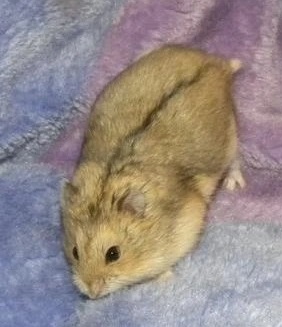
CAMPBELL’S DWARF HAMSTER
Phodopus campbelli
DESCRIPTION
Campbell’s Dwarf Hamster (Phodopus campbelli) is commonly known as Campbell's Hamster and Campbell's Dwarf. This small rodent typically measures about 8 to 10 cm in length and has a compact body covered in soft fur that can vary in color from grayish-brown to agouti with a lighter underbelly. They are known for their social behavior, often living in small groups in the wild, and exhibit a range of vocalizations to communicate with one another.
FUN FACTS
- Campbell’s Dwarf Hamsters are known for their ability to store food in their cheek pouches, which they can later transport to their burrows
- They are also popular pets due to their small size and relatively easy care requirements, making them a favorite among small animal enthusiasts
QUICK INFO
Lifespan2-3 years in the wild, up to 4 years in captivity
Average Weight30-50 g
Average Length8-10 cm
Diet TypeOmnivore
Social StructureThey are generally social animals, often found in small groups, but can also be territorial.
Activity PatternNocturnal
Breeding SeasonSpring to early summer
- Habitat
- Campbell’s Dwarf Hamsters inhabit grasslands and steppes, often creating extensive burrow systems. They prefer areas with ample vegetation for cover and food sources.
- Biomes
- Grassland, Steppe
- Native Range
- They are native to Central Asia, particularly in regions of Mongolia and northern China.
- Continent
- Asia
- Countries
- Mongolia, China
- Diet
- They primarily feed on seeds, grains, and vegetables, occasionally supplementing their diet with insects. This omnivorous diet helps them thrive in their natural habitat.
- Diet Type
- Omnivore
- Favorite Food
- seeds, grains, vegetables
- Social Structure
- They are generally social animals, often found in small groups, but can also be territorial.
- Activity Pattern
- Nocturnal
- Group Size
- 2-10
- Territorial
- 1
 CR
CR
 LC
LC
30-50 g
Weight
8-10 cm
Length
- Coloration
- Grayish-brown with a lighter underbelly
- Sexual Dimorphism
- Males are typically slightly larger than females.
- Lifespan
- 2-3 years in the wild, up to 4 years in captivity
- Gestation Period
- 21-24 days
- Offspring per Birth
- 3-7
- Sexual Maturity
- 6-8 weeks
- Breeding Season
- Spring to early summer
LC
Least Concern
IUCN Red List Status
- Population Status
- The population is currently stable, but habitat loss poses a potential threat.
- Wild Population Estimate
- Unknown
- Population Trend
- Stable
- Endangered
- 0
- Threats
- Main threats include habitat destruction due to agriculture and urbanization. Additionally, they face competition from invasive species.
- Predators
- Owls, hawks, snakes, and various carnivorous mammals.
- Defense Mechanisms
- They use their burrows for protection and can also exhibit aggressive behavior when threatened.
- Compatible Animals
- Other small rodents, such as dwarf hamsters and gerbils
- Found in Zoos
- Common