


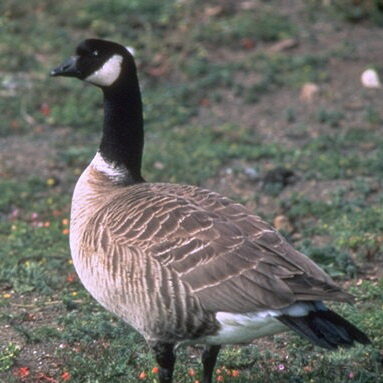
CANADA GOOSE
Branta canadensis
DESCRIPTION
The Canada Goose is a large waterfowl known for its distinctive black head and neck, white cheek patches, and brown body. They are highly social birds, often seen in large flocks, and are known for their honking calls during flight. Canada Geese are migratory, traveling long distances between their breeding and wintering grounds, and they are often found near water bodies such as lakes, rivers, and marshes.
FUN FACTS
- Canada Geese are known for their impressive migratory patterns, often flying in a V-formation to conserve energy during long flights
- This formation allows them to take advantage of the updraft created by the bird in front, making their journey more efficient
- | These geese are also known for their strong family bonds, often staying with their parents for an extended period after hatching
- This behavior helps the young learn essential survival skills and increases their chances of survival in the wild
QUICK INFO
Lifespan10-24 years in the wild, up to 30 years in captivi
Average Weight3-6 kg
Average Length75-110 cm
Diet TypeHerbivore
Social StructureThey are typically found in groups, especially during migration and feeding.
Activity PatternDiurnal
Breeding SeasonSpring (March-May)
- Habitat
- Canada Geese inhabit a variety of wetland and terrestrial environments, including lakes, rivers, marshes, and fields. They prefer areas with abundant food sources and open water for nesting and feeding.
- Biomes
- Wetlands, Temperate Forests, Grasslands
- Native Range
- Canada and the northern United States, with populations established in many other regions due to migration and introduction.
- Continent
- North America
- Countries
- Canada, United States, Mexico
- Diet
- Canada Geese primarily feed on grasses, grains, and aquatic plants. They are known to graze on lawns and agricultural fields, making them adaptable to various environments.
- Diet Type
- Herbivore
- Favorite Food
- grasses, grains, aquatic plants
- Social Structure
- They are typically found in groups, especially during migration and feeding.
- Activity Pattern
- Diurnal
- Group Size
- 10-100
- Territorial
- 1

 LC
LC
 VU
VU
3-6 kg
Weight
75-110 cm
Length
- Coloration
- Black head and neck, white cheek patches, brown body
- Sexual Dimorphism
- Males are generally larger than females.
- Lifespan
- 10-24 years in the wild, up to 30 years in captivi
- Offspring per Birth
- 2-8
- Sexual Maturity
- 2-3 years
- Breeding Season
- Spring (March-May)
LC
Least Concern
IUCN Red List Status
- Population Status
- The population of Canada Geese is currently stable, with some regions experiencing increases due to successful conservation efforts.
- Wild Population Estimate
- 1 million+
- Population Trend
- Increasing
- Endangered
- 0
- Threats
- Main threats include habitat loss due to urban development and agricultural practices, as well as hunting. They can also be affected by pollution and climate change.
- Conservation Program
- Various local and national conservation programs aimed at habitat preservation and management.
- Predators
- Foxes, coyotes, eagles, and large birds of prey are known to prey on Canada Goose eggs and goslings. Adult geese have few natural predators but can be vulnerable to large mammals and birds.
- Defense Mechanisms
- Canada Geese are known to hiss and flap their wings aggressively when threatened, and they will defend their nests vigorously.
- Found in Zoos
- Common