


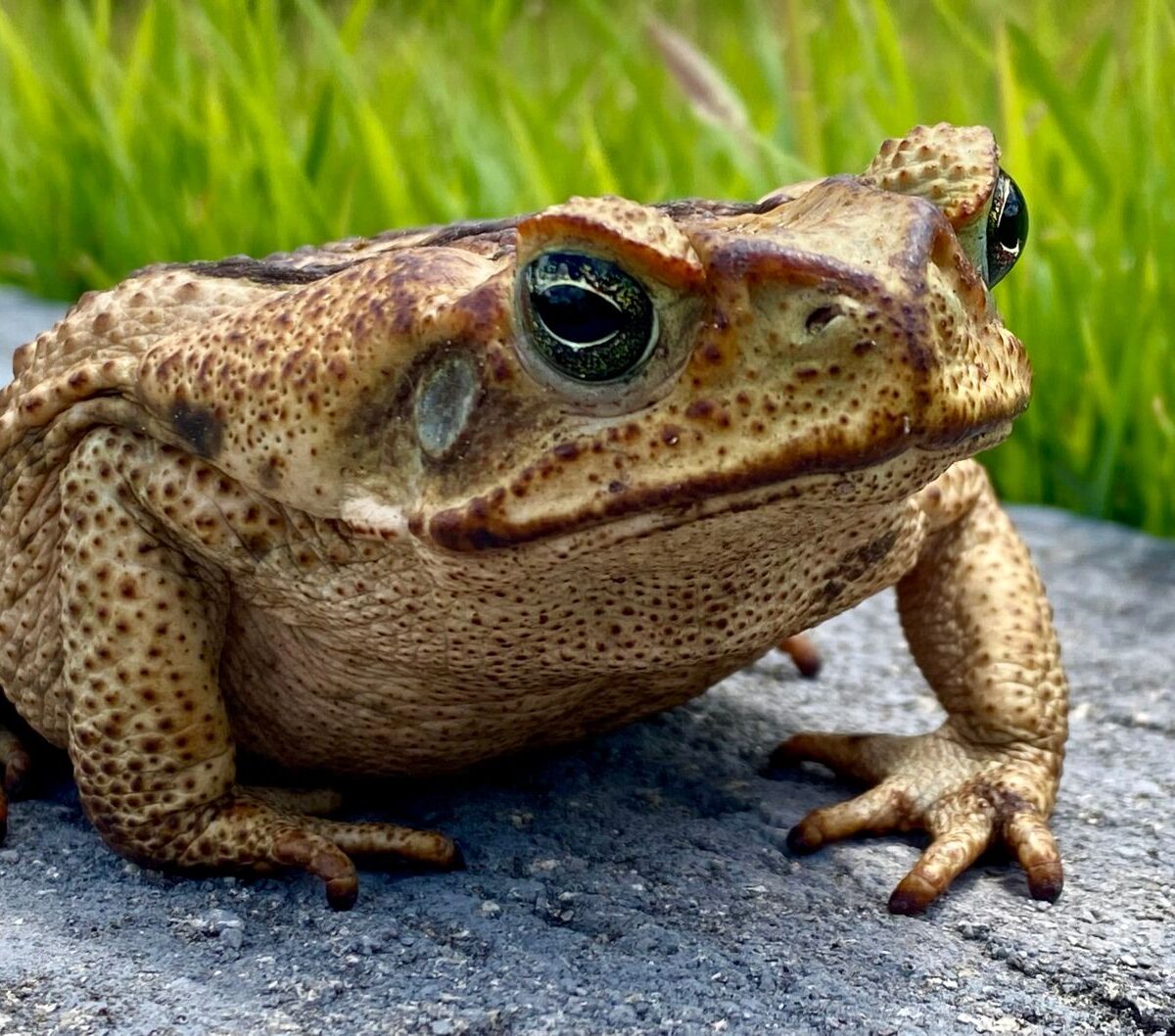
CANE TOAD
Rhinella marina
DESCRIPTION
Cane Toad (Rhinella marina) is commonly known as the Giant Toad and Marine Toad. This large amphibian can grow up to 9 inches in length and is characterized by its warty skin and robust body. Cane Toads are primarily nocturnal and are known for their adaptability to various environments, often found in urban areas as well as natural habitats.
FUN FACTS
- Cane Toads were introduced to Australia in 1935 to control agricultural pests, but they became an invasive species, causing significant ecological disruption
- Their skin contains bufotenin, a potent toxin that can be harmful or fatal to animals and humans if ingested
- | Despite their size and toxicity, Cane Toads are often kept in captivity and are popular in the exotic pet trade, although they require specific care to thrive
QUICK INFO
Lifespan10-15 years in the wild, up to 20 years in captivi
Average Weight0.5-1.5 kg
Average Length15-25 cm
Diet TypeOmnivore
Social Structuresolitary, but can gather in groups during breeding
Activity PatternNocturnal
Breeding SeasonWet season, varies by region
- Habitat
- Cane Toads thrive in a range of habitats, including tropical and subtropical regions, as well as urban areas. They prefer moist environments near water sources for breeding.
- Biomes
- Tropical Rainforest, Savanna, Urban
- Native Range
- Originally native to Central and South America, Cane Toads have been introduced to various regions worldwide, including Australia and the Caribbean.
- Continent
- North America, South America, Australia
- Countries
- Australia, United States, Brazil, Colombia, Puerto Rico
- Diet
- Cane Toads are opportunistic feeders, consuming a wide variety of prey including insects, small mammals, and even other amphibians. They have a voracious appetite and will eat whatever is available.
- Diet Type
- Omnivore
- Favorite Food
- insects, small mammals
- Social Structure
- solitary, but can gather in groups during breeding
- Activity Pattern
- Nocturnal
- Group Size
- 1-20
- Territorial
- 0
 VU
VU
 LC
LC
 LC
LC
0.5-1.5 kg
Weight
15-25 cm
Length
- Coloration
- brown to olive with darker mottling and warty skin
- Sexual Dimorphism
- males are generally smaller than females
- Lifespan
- 10-15 years in the wild, up to 20 years in captivi
- Offspring per Birth
- 8,000-35,000 eggs
- Sexual Maturity
- 1-2 years
- Breeding Season
- Wet season, varies by region
LC
Least Concern
IUCN Red List Status
- Population Status
- Cane Toad populations are widespread and often abundant in introduced areas.
- Wild Population Estimate
- unknown
- Population Trend
- Increasing
- Endangered
- 0
- Threats
- Cane Toads pose a significant threat to local wildlife due to their toxicity and competitive feeding habits. They have been known to outcompete native species for resources.
- Predators
- birds, snakes, some mammals, and large fish
- Defense Mechanisms
- Cane Toads secrete toxic substances from their skin, deterring many potential predators.
- Found in Zoos
- Common