


CANEBRAKE RATTLESNAKE
Crotalus horridus
DESCRIPTION
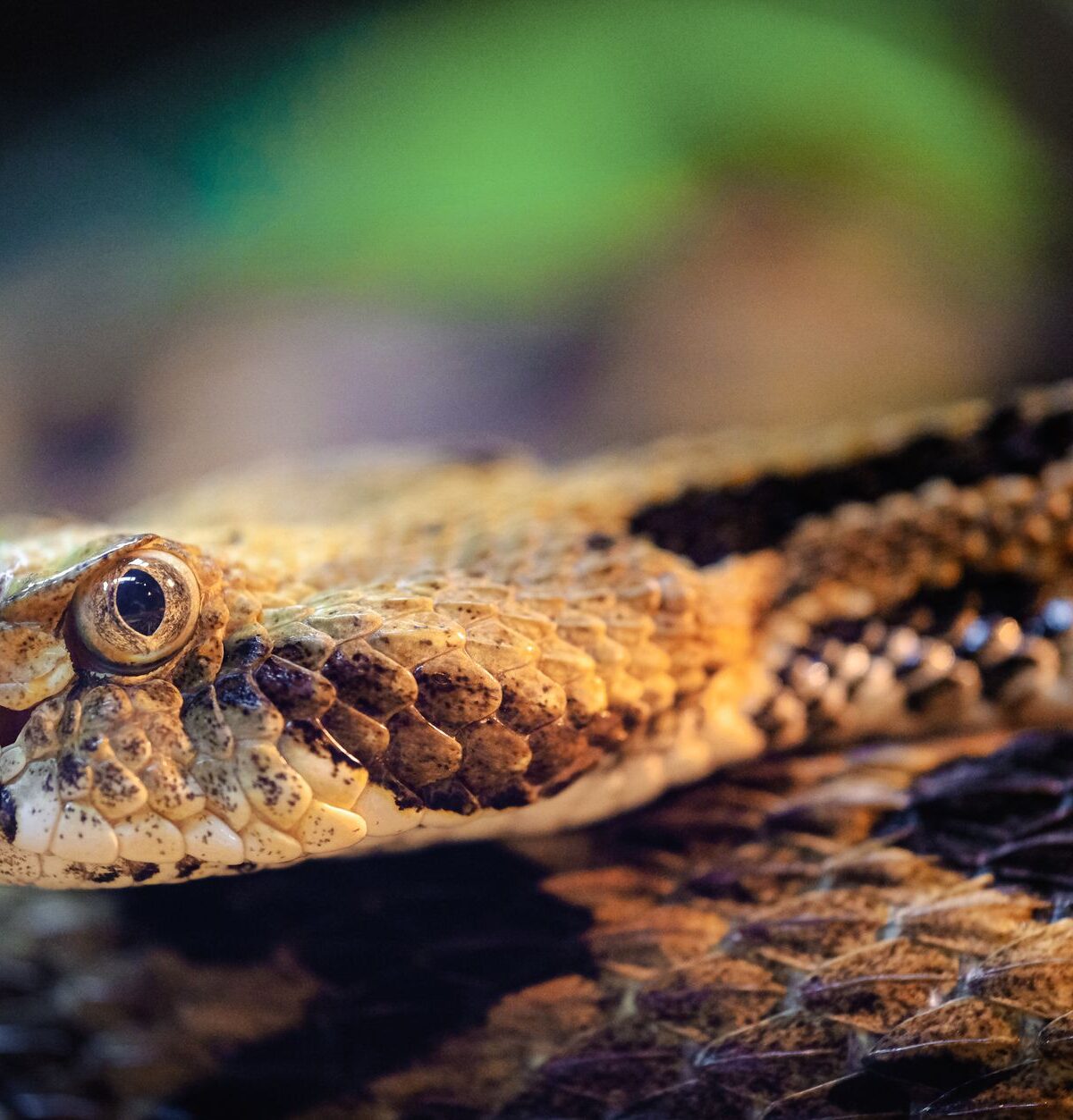
Canebrake Rattlesnake (Crotalus horridus) is commonly known as the Timber Rattlesnake. This species is characterized by its robust body, distinctive rattle at the tail, and a color pattern that typically includes shades of brown, yellow, or gray with dark bands. They are primarily found in wooded areas and are known for their ambush hunting strategy, often lying in wait for prey to come close before striking.
FUN FACTS
- Canebrake Rattlesnakes are known for their unique rattle, which is made of keratin and grows with each shedding of their skin, making it a useful tool for communication and defense
- Additionally, they have a fascinating method of thermoregulation, using their heat-sensing pits to locate warm-blooded prey even in complete darkness
QUICK INFO
Lifespan10-20 years in the wild, up to 30 years in captivi
Average Weight1.5-2.5 kg
Average Length1.2-1.8 m
Diet TypeCarnivore
Social Structuresolitary, typically found alone except during mating season
Activity PatternCrepuscular
Breeding SeasonSpring (April-June)
- Habitat
- These snakes inhabit a variety of environments, including deciduous forests, swamps, and grasslands. They prefer areas with ample cover and basking sites.
- Biomes
- Temperate Forest, Wetlands
- Native Range
- The Canebrake Rattlesnake is native to the eastern United States, particularly in the southeastern regions.
- Continent
- North America
- Countries
- United States
- Diet
- Canebrake Rattlesnakes primarily feed on small mammals, birds, and occasionally amphibians. They use their heat-sensing pits to detect warm-blooded prey.
- Diet Type
- Carnivore
- Favorite Food
- mice, rats, and small birds
- Social Structure
- solitary, typically found alone except during mating season
- Activity Pattern
- Crepuscular
- Group Size
- 1
- Territorial
- 0
 VU
VU
 LC
LC
1.5-2.5 kg
Weight
1.2-1.8 m
Length
- Coloration
- brown or gray with dark bands and a lighter background
- Sexual Dimorphism
- females are generally larger than males
- Lifespan
- 10-20 years in the wild, up to 30 years in captivi
- Gestation Period
- 90-100 days
- Offspring per Birth
- 4-20
- Sexual Maturity
- 3-4 years
- Breeding Season
- Spring (April-June)
VU
Vulnerable
IUCN Red List Status
- Population Status
- The population is currently stable in some areas but declining in others due to habitat loss.
- Wild Population Estimate
- unknown
- Population Trend
- Decreasing
- Endangered
- 1
- Threats
- Main threats include habitat destruction, road mortality, and persecution due to fear of snakes. Conservation efforts are needed to protect their habitats and reduce human-snake conflicts.
- Predators
- birds of prey, larger mammals, and other snakes
- Defense Mechanisms
- Canebrake Rattlesnakes use their rattle as a warning signal to deter potential threats. If threatened, they may also strike defensively.
- Found in Zoos
- Uncommon