


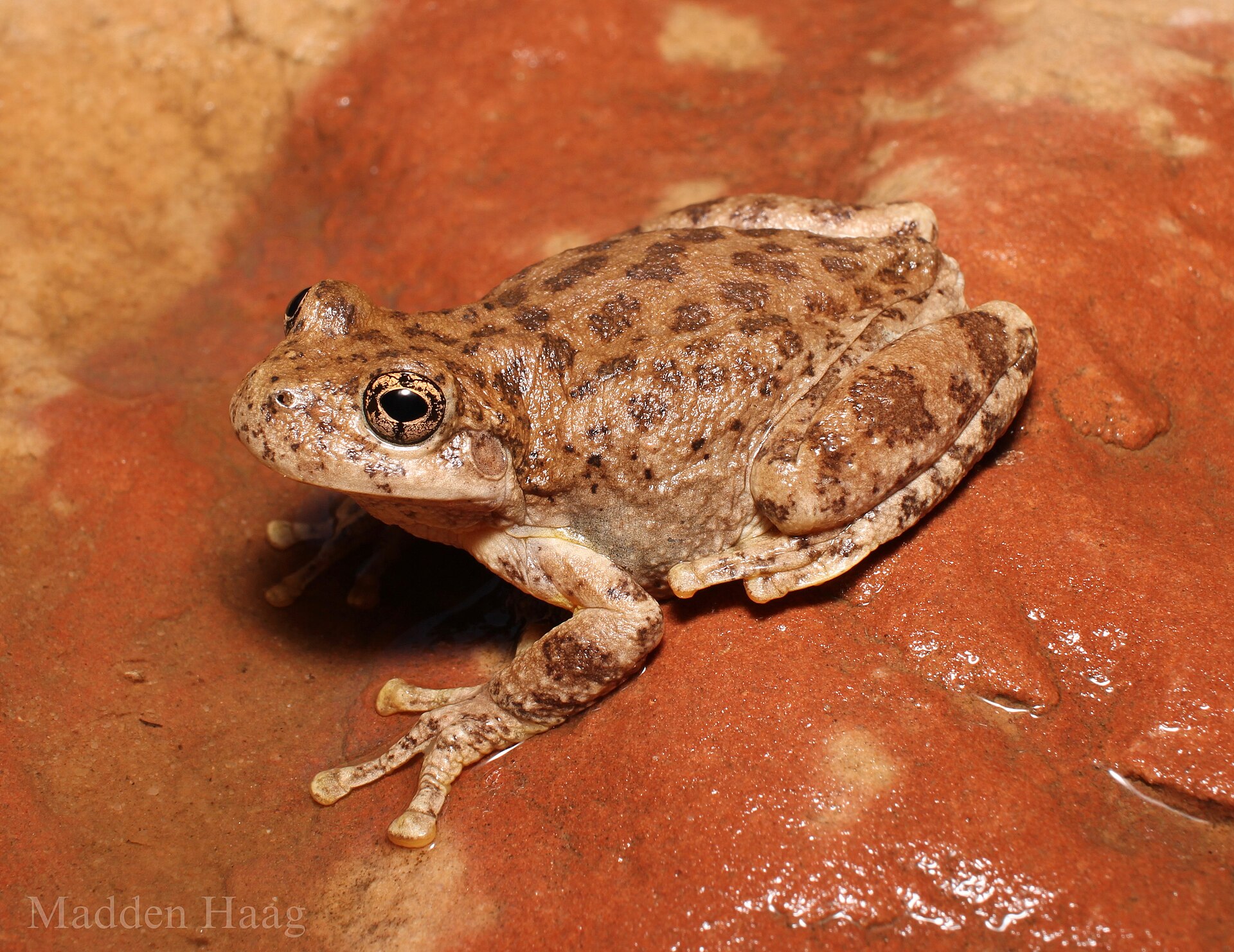
CANYON TREE FROG
Hyla arenicolor
DESCRIPTION
Canyon Tree Frog (Hyla arenicolor) is commonly known as the Desert Tree Frog and the Arizona Tree Frog. This small amphibian typically exhibits a range of colors from green to brown, often with dark spots or blotches that provide excellent camouflage against its rocky desert habitat. They are known for their distinctive calls, which can be heard during the breeding season, and they are primarily nocturnal, becoming active at night to hunt and mate.
FUN FACTS
- Canyon Tree Frogs are known for their remarkable ability to survive in arid environments, often being found in areas with very little water
- They can tolerate significant fluctuations in temperature and humidity, making them well-adapted to desert life
- | These frogs have a unique breeding strategy where they lay their eggs in temporary pools that form after rain, allowing their tadpoles to develop quickly before the water evaporates
- This adaptation is crucial for their survival in unpredictable desert climates
QUICK INFO
Lifespan5-10 years in the wild
Average Weight10-20 g
Average Length3-5 cm
Diet TypeInsectivore
Social Structuresolitary, typically found alone except during breeding
Activity PatternNocturnal
Breeding SeasonSpring to early summer
- Habitat
- These frogs are typically found in rocky canyons, streams, and areas with dense vegetation. They prefer moist environments but can tolerate arid conditions, often hiding in crevices during the day.
- Biomes
- Desert, Grassland
- Native Range
- Canyon Tree Frogs are native to the southwestern United States and parts of northern Mexico.
- Continent
- North America
- Countries
- United States, Mexico
- Diet
- Canyon Tree Frogs primarily feed on insects and other small invertebrates. Their diet consists mainly of crickets, moths, and beetles.
- Diet Type
- Insectivore
- Favorite Food
- crickets, moths
- Social Structure
- solitary, typically found alone except during breeding
- Activity Pattern
- Nocturnal
- Group Size
- 1-5
- Territorial
- 0
 LC
LC
 VU
VU

10-20 g
Weight
3-5 cm
Length
- Coloration
- variable coloration ranging from green to brown with dark spots
- Sexual Dimorphism
- males are usually smaller and have more pronounced vocal sacs
- Lifespan
- 5-10 years in the wild
- Offspring per Birth
- 20-50 eggs
- Sexual Maturity
- 1-2 years
- Breeding Season
- Spring to early summer
LC
Least Concern
IUCN Red List Status
- Population Status
- The population is currently stable, but local declines have been observed in some areas due to habitat loss.
- Wild Population Estimate
- unknown
- Population Trend
- Stable
- Endangered
- 0
- Threats
- Main threats include habitat destruction due to urban development and agricultural expansion. Climate change may also impact their habitats and breeding patterns.
- Predators
- snakes, birds, larger amphibians, and small mammals
- Defense Mechanisms
- Canyon Tree Frogs can blend into their surroundings to avoid predation, and they may also exhibit a defensive posture when threatened.
- Found in Zoos
- Uncommon