


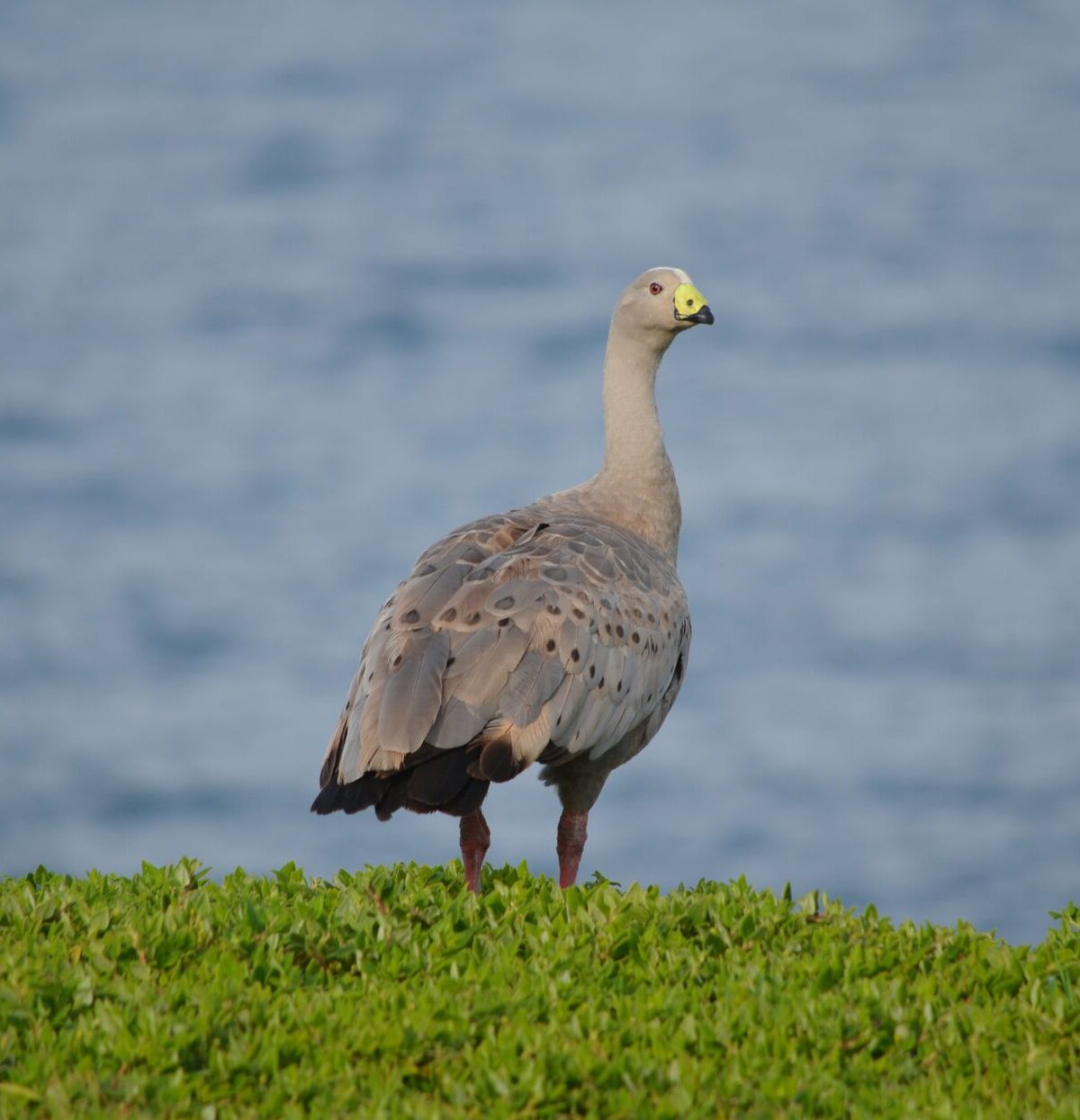
CAPE BARREN GOOSE
Cereopsis novaehollandiae
DESCRIPTION
Cape Barren Goose (Cereopsis novaehollandiae) is commonly known as the Cereopsis Goose and is a large waterfowl native to Australia. This species is characterized by its distinctive gray plumage, bright greenish-yellow bill, and striking black facial markings. They are known for their strong social bonds and often form monogamous pairs, displaying a range of vocalizations and behaviors that reflect their social nature.
FUN FACTS
- Cape Barren Geese are known for their unique vocalizations, which include a variety of honks and grunts that they use to communicate with each other
- They are also quite resilient and can adapt to various habitats, making them a fascinating species to observe in both the wild and in captivity
QUICK INFO
Lifespan10-15 years in the wild, up to 20 years in captivi
Average Weight3-4 kg
Average Length70-80 cm
Diet TypeHerbivore
Social StructureThey are typically found in pairs or small groups, often forming larger flocks during migration or outside the breeding season.
Activity PatternDiurnal
Breeding SeasonSpring (August-October)
- Habitat
- These geese inhabit open grasslands, coastal areas, and islands. They prefer habitats with abundant vegetation for grazing.
- Biomes
- Grassland, Coastal
- Native Range
- The native range of the Cape Barren Goose includes southern Australia and several offshore islands.
- Continent
- Australia
- Countries
- Australia, Tasmania
- Diet
- Cape Barren Geese primarily feed on grasses, seeds, and other vegetation. They are known to graze in open grasslands and pastures.
- Diet Type
- Herbivore
- Favorite Food
- grasses, seeds
- Social Structure
- They are typically found in pairs or small groups, often forming larger flocks during migration or outside the breeding season.
- Activity Pattern
- Diurnal
- Group Size
- 2-30
- Territorial
- 0

3-4 kg
Weight
70-80 cm
Length
- Coloration
- Gray plumage with a distinctive greenish-yellow bill and black facial markings.
- Sexual Dimorphism
- Males and females are similar in appearance, making it difficult to distinguish between the sexes.
- Lifespan
- 10-15 years in the wild, up to 20 years in captivi
- Offspring per Birth
- 3-6
- Sexual Maturity
- 2-3 years
- Breeding Season
- Spring (August-October)
LC
Least Concern
IUCN Red List Status
- Population Status
- The population of Cape Barren Geese is currently stable, though they face habitat loss in some areas.
- Wild Population Estimate
- 20,000-30,000
- Population Trend
- Stable
- Endangered
- 0
- Threats
- Main threats include habitat destruction due to agriculture and urban development. Additionally, predation by introduced species poses a risk to their populations.
- Predators
- Foxes, feral cats, and eagles are known predators of Cape Barren Geese.
- Defense Mechanisms
- They rely on their strong flight capabilities and can quickly take to the air when threatened.
- Found in Zoos
- Uncommon