


CAPE CRAG LIZARD
Pseudocordylus microlepidotus
DESCRIPTION
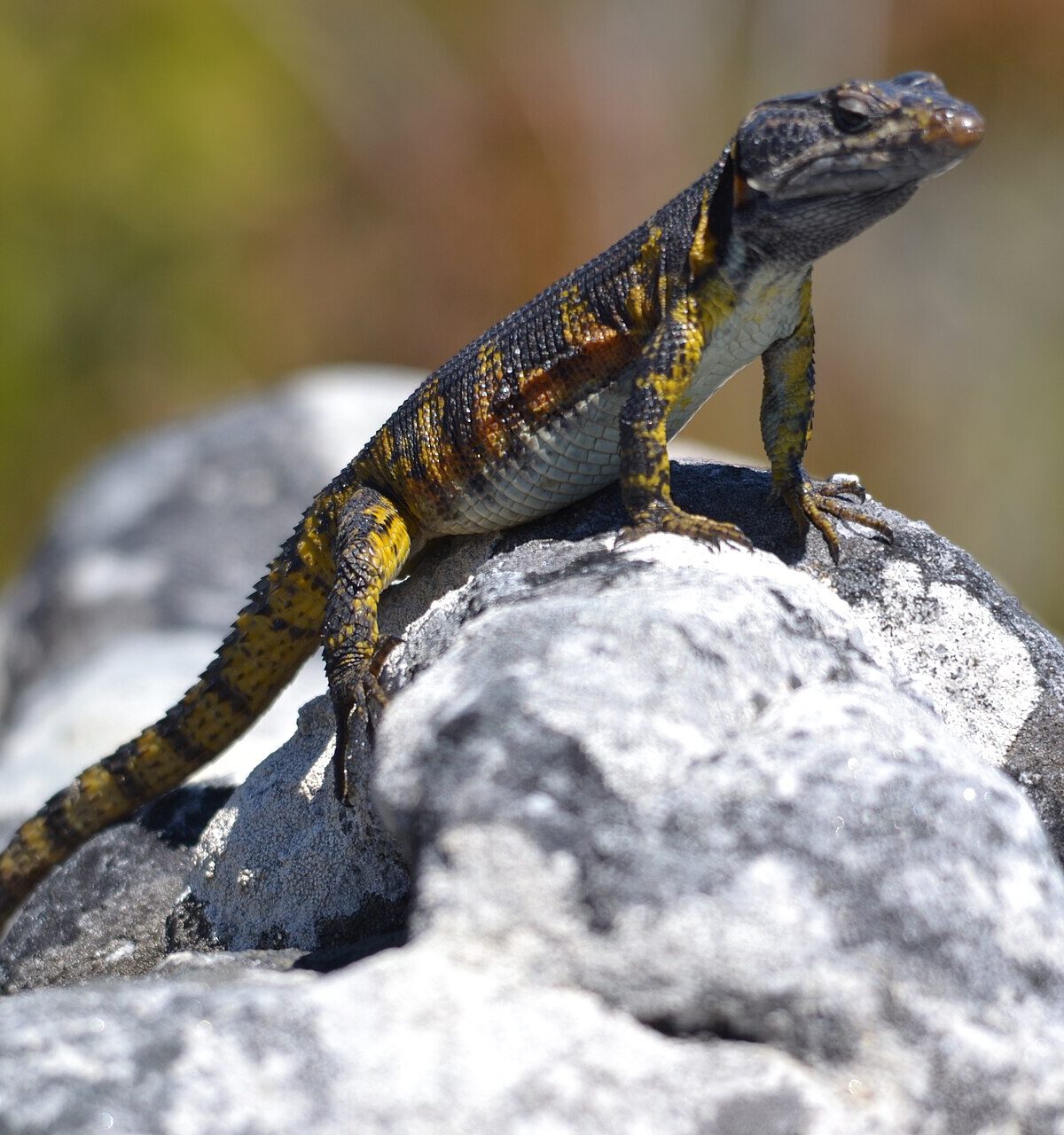
Cape crag lizard (Pseudocordylus microlepidotus) is a small, robust lizard characterized by its distinctive, granular scales and a somewhat flattened body. This species is typically found in rocky habitats, where it exhibits a behavior of basking on sunlit rocks and quickly retreating into crevices when threatened. Its coloration often blends well with the rocky environment, providing effective camouflage against predators.
FUN FACTS
- Cape crag lizards are known for their impressive climbing abilities, allowing them to navigate steep and rocky terrains with ease
- They have a unique defense mechanism where they can drop their tails to escape predators, although this is not a common behavior for all lizard species.| These lizards are also fascinating for their social interactions, as they often engage in head-bobbing displays to establish dominance and territory among males
QUICK INFO
Average Length15-20 cm
Diet TypeInsectivore
Social Structuresolitary
Activity PatternDiurnal
- Habitat
- This species inhabits rocky outcrops and boulder fields, often in mountainous regions. They prefer areas with plenty of sun exposure and crevices for shelter.
- Biomes
- Temperate Forest, Grassland
- Native Range
- The Cape crag lizard is native to the southwestern regions of South Africa.
- Continent
- Africa
- Countries
- South Africa
- Diet
- Cape crag lizards primarily feed on insects and other small invertebrates, which they hunt actively. Their diet may also include small plant matter occasionally.
- Diet Type
- Insectivore
- Favorite Food
- insects
- Social Structure
- solitary
- Activity Pattern
- Diurnal
- Group Size
- 1
- Territorial
- 1
 VU
VU
 LC
LC
15-20 cm
Length
- Coloration
- Typically brown or gray with darker mottling, aiding in camouflage.
LC
Least Concern
IUCN Red List Status
- Population Status
- The population status is currently stable, but habitat loss poses a potential threat.
- Population Trend
- Stable
- Endangered
- 0
- Threats
- Main threats include habitat destruction due to urban development and agriculture. Additionally, climate change may impact their rocky habitats.
- Predators
- Birds of prey, snakes, and larger lizards.
- Defense Mechanisms
- They rely on their ability to quickly hide in crevices and their cryptic coloration for protection.
- Found in Zoos
- Uncommon