


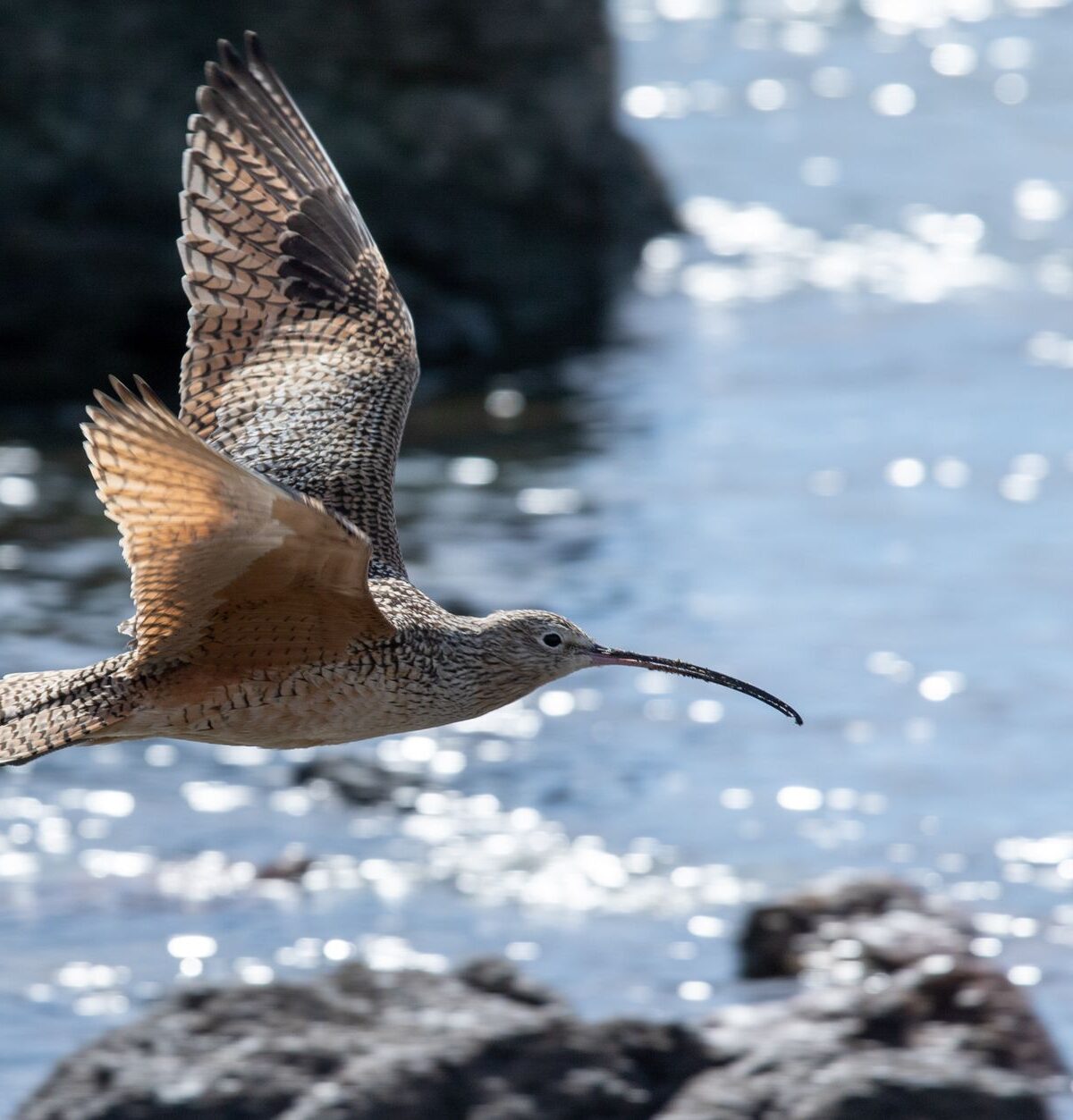
CAPE CURLEW
Numenius capensis
DESCRIPTION
Cape Curlew (Numenius capensis) is also known as the Long-billed Curlew due to its distinctive long, curved bill. This wading bird features a mottled brown plumage that provides excellent camouflage in its natural habitat. It is known for its graceful flight and often forages in mudflats and grasslands, using its bill to probe for food.
FUN FACTS
- Cape Curlew is known for its distinctive call, which is a series of melodious notes that can be heard during its breeding season
- This call is not only used to attract mates but also to establish territory
- | The long bill of the Cape Curlew is specially adapted for probing into mud and sand, allowing it to access food sources that other birds cannot reach
- This adaptation is crucial for its survival in its preferred habitats
QUICK INFO
Lifespan10-15 years in the wild
Average Weight300-500 g
Average Length50-60 cm
Diet TypeOmnivore
Social Structuresolitary, occasionally seen in small groups
Activity PatternDiurnal
Breeding SeasonSpring (September-November)
- Habitat
- This species inhabits coastal mudflats, estuaries, and grasslands. It prefers areas with soft, wet soil where it can easily probe for food.
- Biomes
- Wetlands, Grassland
- Native Range
- Cape Curlew is native to the southern regions of Africa, particularly along the coasts of South Africa and Namibia.
- Continent
- Africa
- Countries
- South Africa, Namibia
- Diet
- Cape Curlew primarily feeds on invertebrates, including worms and crustaceans, as well as some plant material. It uses its long bill to search for food in soft substrates.
- Diet Type
- Omnivore
- Favorite Food
- invertebrates, worms, crustaceans
- Social Structure
- solitary, occasionally seen in small groups
- Activity Pattern
- Diurnal
- Group Size
- 1-5
- Territorial
- 0

 VU
VU
300-500 g
Weight
50-60 cm
Length
- Coloration
- mottled brown with lighter underparts
- Lifespan
- 10-15 years in the wild
- Offspring per Birth
- 3-4
- Sexual Maturity
- 2-3 years
- Breeding Season
- Spring (September-November)
LC
Least Concern
IUCN Red List Status
- Population Status
- The population of Cape Curlew is currently stable, but habitat loss poses a potential threat.
- Wild Population Estimate
- 10,000-15,000
- Population Trend
- Stable
- Endangered
- 0
- Threats
- Main threats include habitat destruction due to urban development and pollution. Climate change also poses a risk to their coastal habitats.
- Predators
- Foxes, birds of prey, and domestic cats are known predators of Cape Curlew.
- Defense Mechanisms
- Cape Curlew relies on its camouflage to avoid detection by predators.
- Found in Zoos
- Rare