


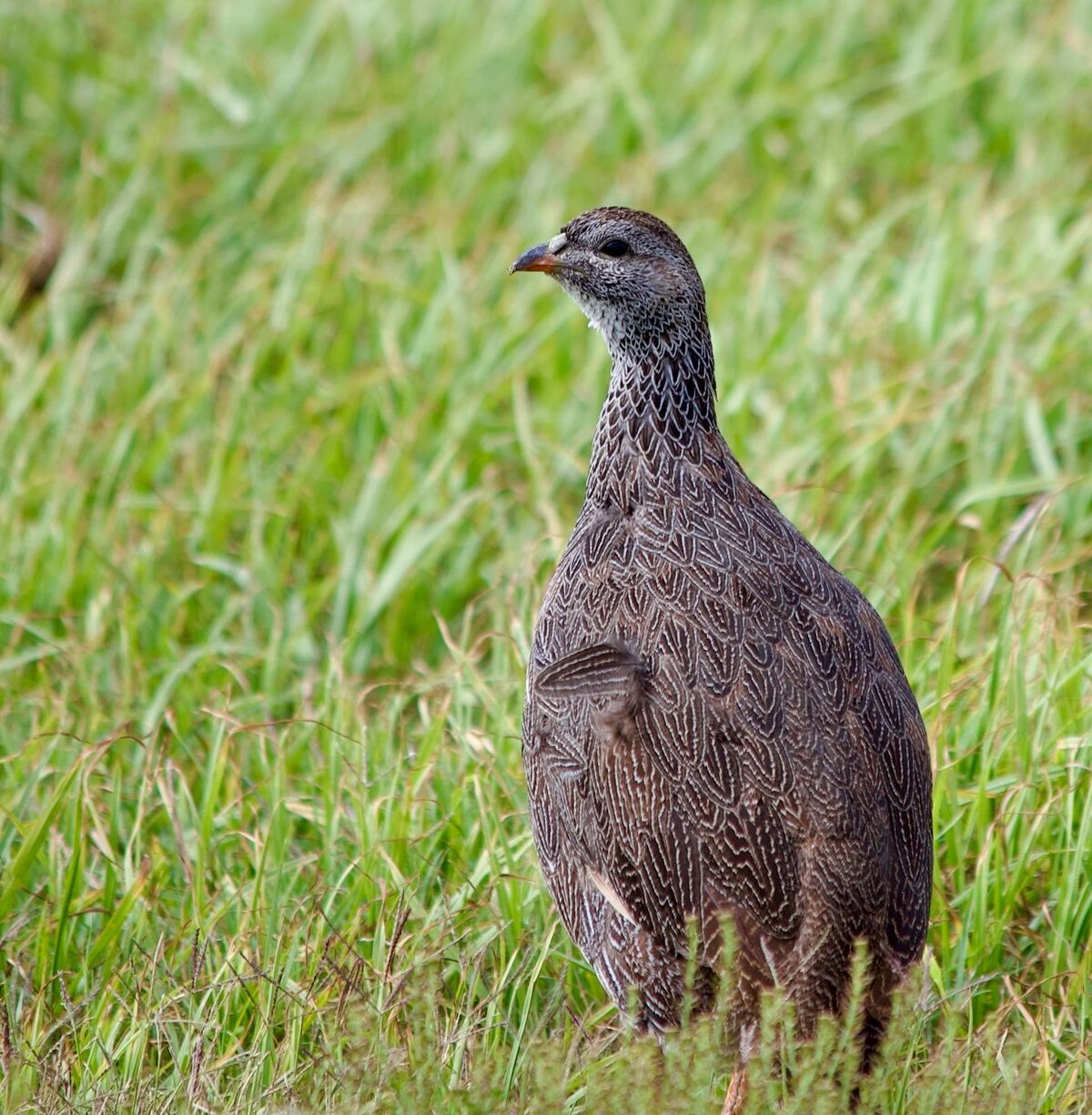
CAPE FRANCOLIN
Francolinus capensis
DESCRIPTION
Cape Francolin (Francolinus capensis), also known as Cape Spurfowl, is a medium-sized bird characterized by its robust body and distinctive plumage. It has a brownish coloration with intricate patterns of black and white, which provides excellent camouflage in its natural habitat. This species is known for its loud, distinctive calls and is often found in pairs or small groups, foraging on the ground for food.
FUN FACTS
- Cape Francolins are known for their unique vocalizations, which can be heard during the day and are used for communication among group members
- They have a fascinating courtship display, where males perform elaborate dances and calls to attract females, showcasing their vibrant plumage and agility.| These birds are also quite adaptable, thriving in various habitats as long as there is sufficient cover for nesting and foraging
- Their ability to forage on the ground makes them an important part of the ecosystem, helping to control insect populations and disperse seeds
QUICK INFO
Lifespan5-10 years in the wild
Average Weight300-400 g
Average Length30-35 cm
Diet TypeOmnivore
Social StructureThey are often found in small groups or pairs, exhibiting a social structure that allows for cooperative foraging and protection.
Activity PatternDiurnal
Breeding SeasonSpring to early summer
- Habitat
- Cape Francolins inhabit a variety of environments, including grasslands, scrublands, and open woodlands. They prefer areas with dense cover for nesting and protection from predators.
- Biomes
- Savanna, Grassland, Woodland
- Native Range
- This species is native to southern Africa, particularly in regions of South Africa, Namibia, and Botswana.
- Continent
- Africa
- Countries
- South Africa, Namibia, Botswana
- Diet
- Cape Francolins primarily feed on seeds, fruits, and insects, foraging on the ground in search of food. They are known to scratch the soil to uncover hidden food items.
- Diet Type
- Omnivore
- Favorite Food
- seeds, fruits, insects
- Social Structure
- They are often found in small groups or pairs, exhibiting a social structure that allows for cooperative foraging and protection.
- Activity Pattern
- Diurnal
- Group Size
- 2-10
- Territorial
- 1
 LC
LC
 VU
VU
300-400 g
Weight
30-35 cm
Length
- Coloration
- Brownish with intricate black and white patterns
- Sexual Dimorphism
- Males are generally larger and have more vibrant coloration than females.
- Lifespan
- 5-10 years in the wild
- Offspring per Birth
- 6-12 eggs
- Sexual Maturity
- 1 year
- Breeding Season
- Spring to early summer
LC
Least Concern
IUCN Red List Status
- Population Status
- The population of Cape Francolins is currently stable, with no significant declines reported.
- Wild Population Estimate
- Unknown
- Population Trend
- Stable
- Endangered
- 0
- Threats
- Main threats include habitat loss due to agricultural expansion and urban development. However, they are currently not facing significant threats to their population.
- Predators
- Snakes, birds of prey, and small mammals are known to prey on Cape Francolins.
- Defense Mechanisms
- They rely on their camouflage and ability to run quickly to escape predators.
- Found in Zoos
- Uncommon