


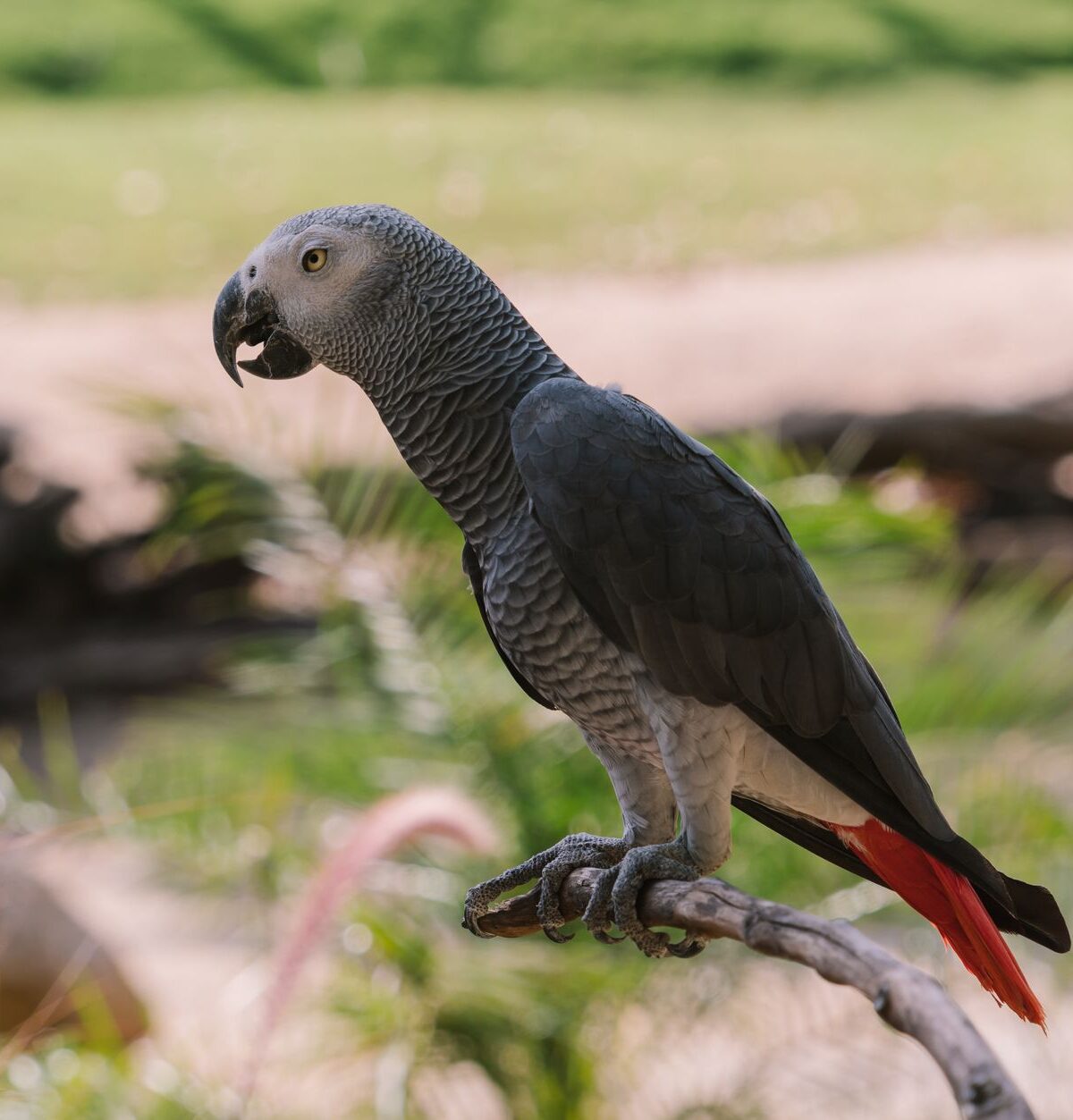
CAPE PARROT
Poicephalus robustus
DESCRIPTION
Cape Parrot (Poicephalus robustus) is a medium-sized parrot native to South Africa, known for its striking green plumage and distinctive orange underwing feathers. This species exhibits a strong, robust build with a relatively large head and a hooked beak, which is typical of the parrot family. Cape Parrots are social birds that often inhabit forests and woodlands, where they can be seen foraging for food and interacting with their flock members.
FUN FACTS
- Cape Parrots are known for their intelligence and ability to mimic sounds, making them popular among bird enthusiasts
- They have a unique social structure and often engage in playful behaviors, which can include swinging from branches and playing with objects in their environment.|The Cape Parrot is one of the few parrot species that primarily feeds on the fruit of the yellowwood tree, which is crucial for their survival
- This specialized diet makes them an important part of their ecosystem, as they help in the dispersal of seeds from these trees
QUICK INFO
Lifespan20-30 years in captivity
Average Weight150-200 g
Average Length24-26 cm
Diet TypeHerbivore
Social StructureCape Parrots are typically found in small groups or pairs, often forming strong bonds with their mates.
Activity PatternDiurnal
Breeding SeasonSpring (September-November)
- Habitat
- Cape Parrots inhabit montane forests and woodlands, often found in areas with abundant fruiting trees. They prefer habitats that provide ample food sources and nesting sites.
- Biomes
- Tropical Rainforest, Temperate Forest
- Native Range
- The native range of the Cape Parrot is limited to the forests of South Africa, particularly in the Eastern Cape and parts of KwaZulu-Natal.
- Continent
- Africa
- Countries
- South Africa
- Diet
- Cape Parrots primarily feed on fruits, seeds, and nuts, with a particular preference for the fruit of the yellowwood tree. They play a crucial role in their ecosystem by aiding in seed dispersal.
- Diet Type
- Herbivore
- Favorite Food
- yellowwood fruit, seeds, nuts
- Social Structure
- Cape Parrots are typically found in small groups or pairs, often forming strong bonds with their mates.
- Activity Pattern
- Diurnal
- Group Size
- 2-10
- Territorial
- 0
 CR
CR
150-200 g
Weight
24-26 cm
Length
- Coloration
- primarily green with orange underwings and a yellowish crown
- Lifespan
- 20-30 years in captivity
- Offspring per Birth
- 2-4
- Sexual Maturity
- 2-3 years
- Breeding Season
- Spring (September-November)
EN
Endangered
IUCN Red List Status
- Population Status
- The Cape Parrot population is currently declining due to habitat loss and other factors.
- Wild Population Estimate
- 1,000-2,500
- Population Trend
- Decreasing
- Endangered
- 1
- Threats
- Main threats to the Cape Parrot include deforestation, habitat destruction, and illegal trapping for the pet trade. These factors have significantly impacted their population numbers.
- Conservation Program
- Various conservation efforts are underway to protect their habitat and raise awareness about their plight.
- Predators
- Predators of the Cape Parrot include birds of prey such as eagles and hawks, as well as snakes and larger mammals that may threaten their nests.
- Defense Mechanisms
- Cape Parrots use their strong beaks to defend themselves and can also rely on their ability to fly away quickly from threats.
- Compatible Animals
- other parrot species, small birds
- Found in Zoos
- Uncommon