


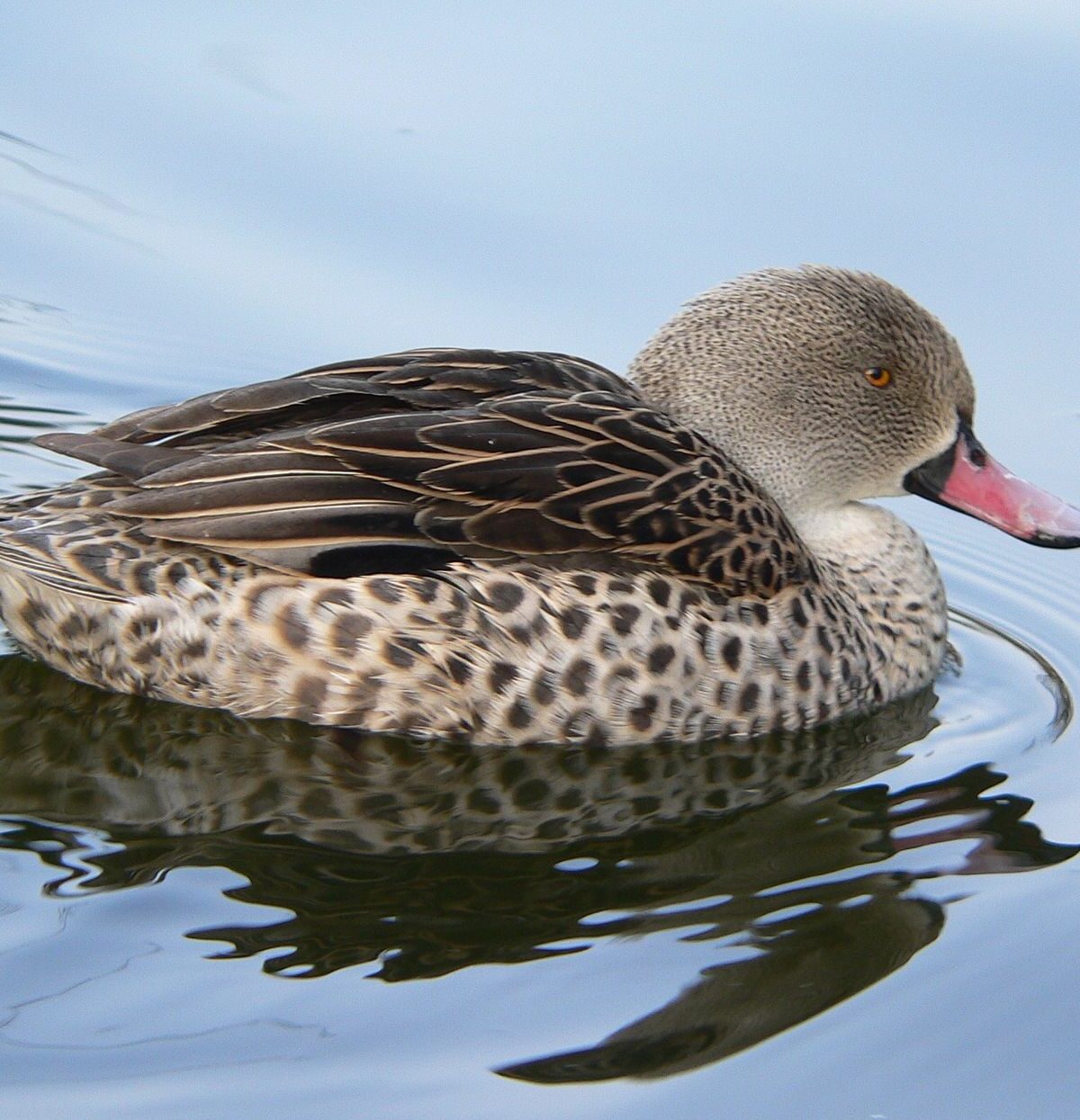
CAPE TEAL
Anas capensis
DESCRIPTION
Cape Teal (Anas capensis) is commonly known as the African Teal and Cape Duck. This small dabbling duck is characterized by its strikingly patterned plumage, which includes a mix of brown, gray, and white, with a distinctive blue-green speculum on its wings. They are often found in pairs or small groups, foraging in shallow waters and wetlands, where they exhibit a calm and graceful demeanor.
FUN FACTS
- Cape Teal are known for their unique courtship displays, which include elaborate swimming patterns and vocalizations to attract mates
- They are also quite adaptable, often thriving in urban areas where wetlands are present, showcasing their resilience to habitat changes
QUICK INFO
Lifespan5-10 years in the wild
Average Weight0.5-1 kg
Average Length50-60 cm
Diet TypeOmnivore
Social StructureThey are often found in pairs or small groups, displaying a social structure that is relatively loose.
Activity PatternDiurnal
Breeding SeasonSpring to early summer
- Habitat
- They inhabit freshwater wetlands, marshes, and shallow lakes, often preferring areas with abundant vegetation for cover and foraging.
- Biomes
- Wetlands, Freshwater
- Native Range
- Cape Teal is native to southern Africa, primarily found in countries such as South Africa, Namibia, Botswana, and Zimbabwe.
- Continent
- Africa
- Countries
- South Africa, Namibia, Botswana, Zimbabwe
- Diet
- Cape Teal primarily feeds on aquatic plants, seeds, and small invertebrates found in their wetland habitats.
- Diet Type
- Omnivore
- Favorite Food
- aquatic plants, seeds, invertebrates
- Social Structure
- They are often found in pairs or small groups, displaying a social structure that is relatively loose.
- Activity Pattern
- Diurnal
- Group Size
- 2-10
- Territorial
- 0

 LC
LC
0.5-1 kg
Weight
50-60 cm
Length
- Coloration
- They have a mottled brown and gray body with a distinctive blue-green wing patch.
- Sexual Dimorphism
- Males and females are similar in appearance, but males tend to have slightly brighter coloration.
- Lifespan
- 5-10 years in the wild
- Offspring per Birth
- 6-12
- Sexual Maturity
- 1 year
- Breeding Season
- Spring to early summer
LC
Least Concern
IUCN Red List Status
- Population Status
- The population of Cape Teal is currently stable, with no immediate threats to their numbers.
- Wild Population Estimate
- 50,000-100,000
- Population Trend
- Stable
- Endangered
- 0
- Threats
- Main threats include habitat loss due to wetland drainage and pollution, which can impact their breeding and foraging areas.
- Predators
- Predators include larger birds of prey, foxes, and domestic cats.
- Defense Mechanisms
- Cape Teal rely on their ability to blend into their surroundings and often take flight to escape threats.
- Compatible Animals
- other dabbling ducks, coots, moorhens
- Found in Zoos
- Uncommon