


CAPERCAILLIE
Tetrao urogallus
DESCRIPTION
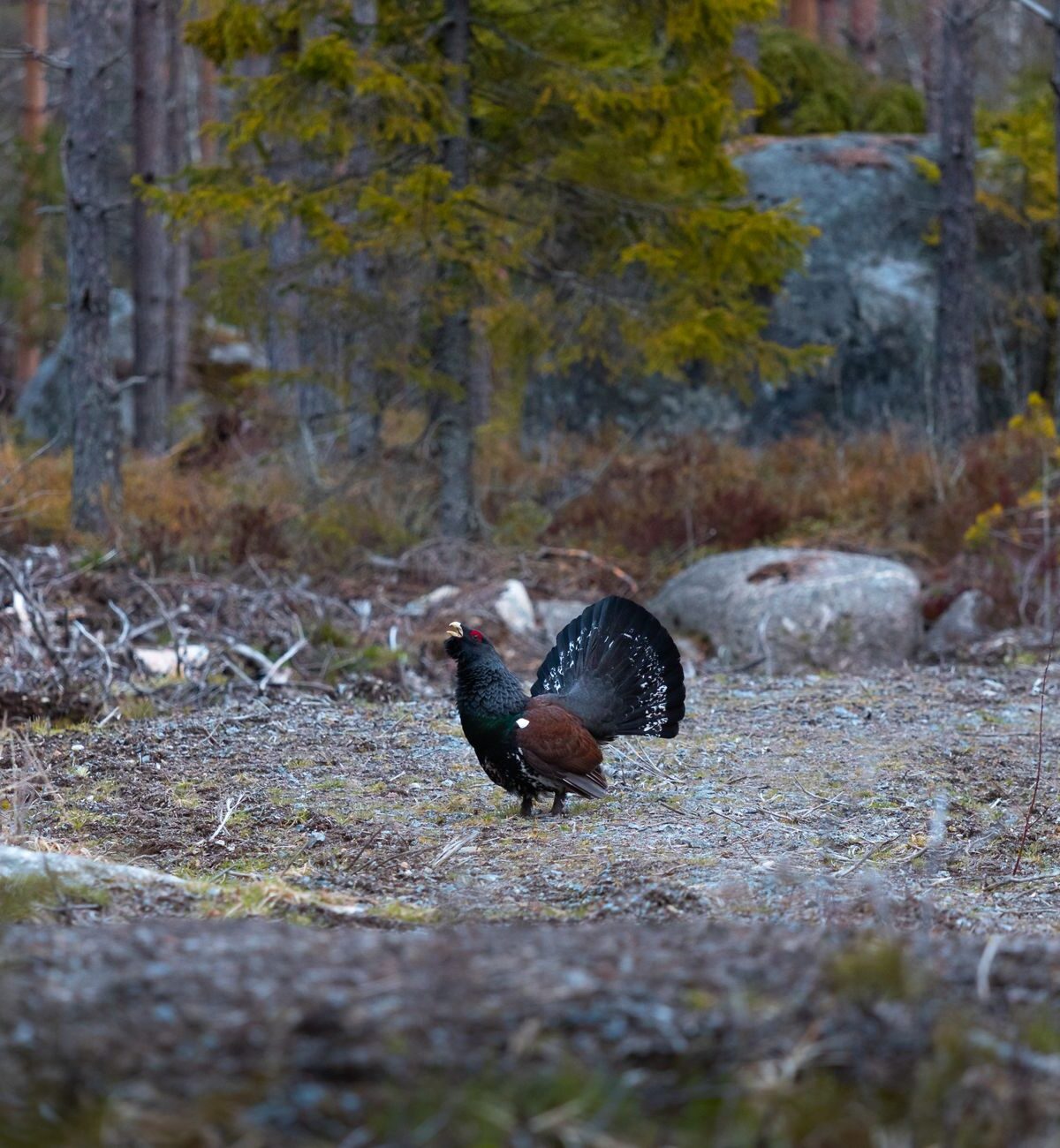
Capercaillie (Tetrao urogallus) is a large bird known for its striking appearance, featuring a dark plumage with a distinctive fan-shaped tail. Males are particularly notable for their vibrant coloration, with a glossy greenish-black body and bright red eyebrows, while females are more camouflaged with brown and mottled feathers. This species is known for its elaborate courtship displays during the breeding season, where males perform a series of vocalizations and physical displays to attract females, showcasing their importance in the ecosystem as both prey and a seed disperser.
FUN FACTS
- Capercaillie are known for their unique courtship displays, where males puff up their feathers and produce a series of booming calls to attract females
- These displays can be quite a spectacle, drawing in observers during the breeding season
- | The Capercaillie is the largest member of the grouse family, and its name comes from the Scottish Gaelic word 'capall coille', meaning 'wood horse', reflecting its size and forest habitat
QUICK INFO
Lifespan10-15 years in the wild, up to 20 years in captivi
Average Weight2-4 kg
Average Length70-80 cm
Diet TypeHerbivore
Social Structuresolitary, with males establishing territories and females being more social during the breeding season.
Activity PatternDiurnal
Breeding SeasonSpring (April-May)
- Habitat
- Capercaillie inhabit dense coniferous and mixed forests, often favoring areas with a rich undergrowth. They require a habitat that provides both cover and food sources, making them sensitive to habitat changes.
- Biomes
- Temperate Forest, Boreal Forest
- Native Range
- Capercaillie is native to the forests of Europe and parts of Asia, ranging from Scandinavia to the Carpathians and the Ural Mountains.
- Continent
- Europe, Asia
- Countries
- Sweden, Finland, Norway, Russia, Poland, Germany, Austria, Switzerland
- Diet
- Capercaillie primarily feeds on a variety of plant materials, including leaves, berries, and seeds. They are known to forage on the ground and in trees, particularly during the winter months when they consume conifer needles.
- Diet Type
- Herbivore
- Favorite Food
- Berries, conifer needles, leaves
- Social Structure
- solitary, with males establishing territories and females being more social during the breeding season.
- Activity Pattern
- Diurnal
- Group Size
- 1-5
- Territorial
- 1

 LC
LC
2-4 kg
Weight
70-80 cm
Length
- Coloration
- Males are dark with a glossy greenish-black body, while females are brown and mottled for camouflage.
- Sexual Dimorphism
- Males are larger and more colorful than females.
- Lifespan
- 10-15 years in the wild, up to 20 years in captivi
- Offspring per Birth
- 6-12
- Sexual Maturity
- 1-2 years
- Breeding Season
- Spring (April-May)
VU
Vulnerable
IUCN Red List Status
- Population Status
- The population of Capercaillie has been declining in many areas due to habitat loss and hunting.
- Wild Population Estimate
- 100,000-200,000
- Population Trend
- Decreasing
- Endangered
- 1
- Threats
- Main threats to Capercaillie include habitat destruction due to logging and land development, as well as hunting pressures. Climate change also poses a risk by altering their habitat and food availability.
- Conservation Program
- Various conservation programs are in place across Europe to protect Capercaillie habitats and manage populations.
- Predators
- Foxes, eagles, and humans are known predators of Capercaillie, particularly affecting their populations during vulnerable periods.
- Defense Mechanisms
- Capercaillie rely on their camouflage and the dense forest cover to evade predators, and they can also become aggressive when threatened.
- Found in Zoos
- Uncommon