


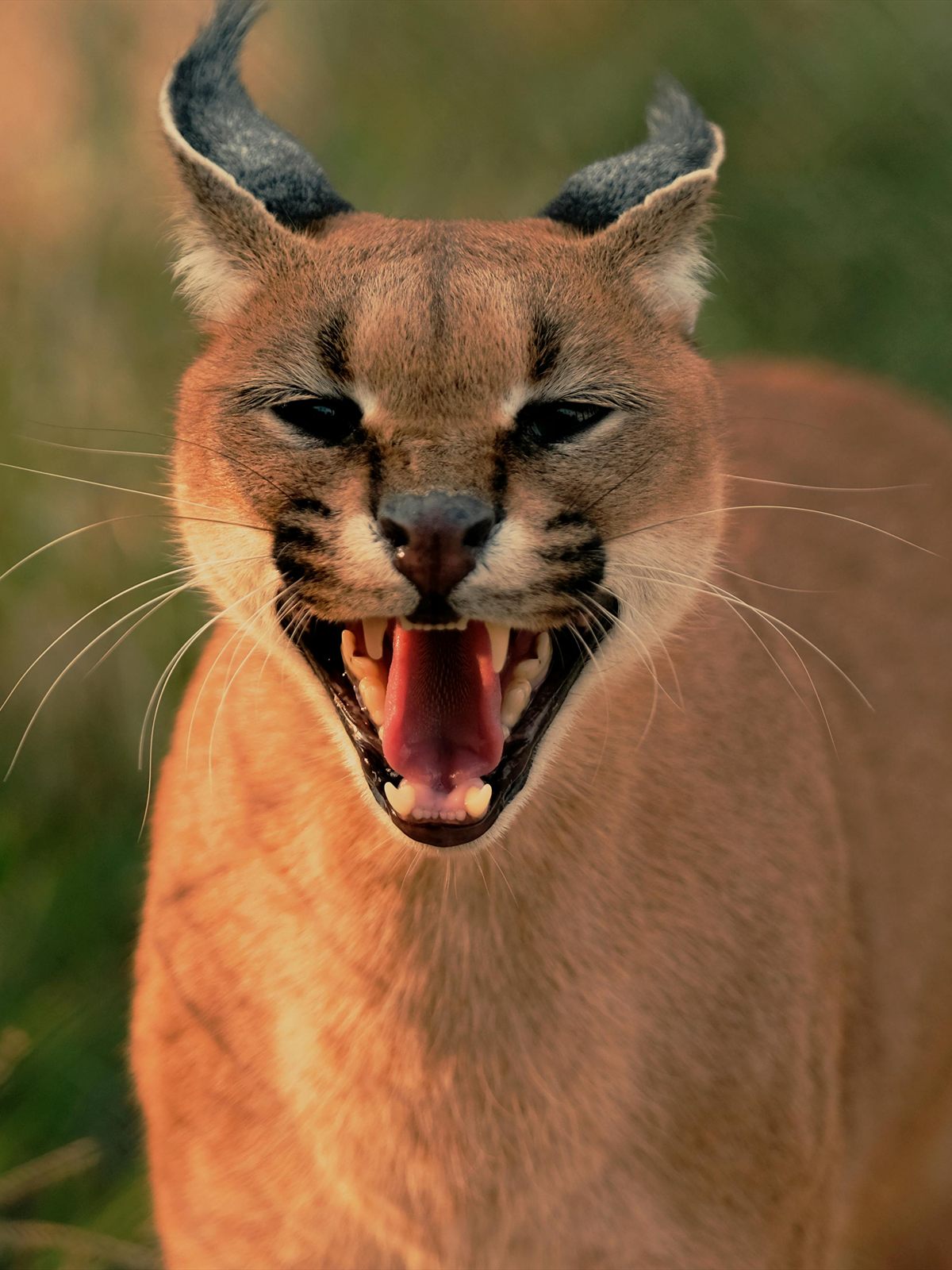
CARACAL
Caracal caracal
DESCRIPTION
The caracal is a medium-sized wild cat known for its distinctive tufted ears and robust build. It has a short, reddish-brown coat with a white patch on the chin and a black facial mask, which enhances its striking appearance. Caracals are agile hunters, capable of leaping high to catch birds in mid-air, and they are primarily solitary animals that exhibit a range of vocalizations.
FUN FACTS
- Caracals are known for their incredible jumping ability, capable of leaping up to 3 meters in the air to catch birds
- This impressive skill allows them to hunt effectively in open habitats where birds are abundant
- | The name 'caracal' is derived from the Turkish word 'karakulak,' meaning 'black ear,' which refers to the distinctive black tufts on their ears
- These tufts are thought to play a role in communication and may help in hearing by directing sound waves
QUICK INFO
Lifespan12-15 years in the wild, up to 20 years in captivi
Average Weight8-19 kg
Average Length40-50 cm
Diet TypeCarnivore
Social Structuresolitary, with males and females coming together only for mating
Activity PatternNocturnal
Breeding SeasonYear-round, with peaks depending on the region
- Habitat
- Caracals inhabit a variety of environments, including savannas, semi-deserts, and scrub forests. They prefer areas with dense vegetation for cover while hunting.
- Biomes
- Savanna, Grassland, Desert
- Native Range
- Caracals are found across Africa, the Middle East, and parts of Central Asia and India.
- Continent
- Africa, Asia
- Countries
- South Africa, Namibia, Kenya, India, Iran
- Diet
- Caracals are carnivorous and primarily hunt small to medium-sized mammals and birds. They are known for their ability to take down prey larger than themselves, including small antelopes.
- Diet Type
- Carnivore
- Favorite Food
- small mammals, birds
- Social Structure
- solitary, with males and females coming together only for mating
- Activity Pattern
- Nocturnal
- Group Size
- 1
- Territorial
- 1
 VU
VU
8-19 kg
Weight
40-50 cm
Length
- Coloration
- reddish-brown with white underparts and black ear tufts
- Sexual Dimorphism
- males are generally larger than females
- Lifespan
- 12-15 years in the wild, up to 20 years in captivi
- Gestation Period
- 63-68 days
- Offspring per Birth
- 1-6
- Sexual Maturity
- 1-2 years
- Breeding Season
- Year-round, with peaks depending on the region
LC
Least Concern
IUCN Red List Status
- Population Status
- The caracal population is currently stable, but habitat loss and hunting pose threats.
- Wild Population Estimate
- unknown
- Population Trend
- Stable
- Endangered
- 0
- Threats
- Main threats include habitat destruction, hunting, and conflict with humans. In some areas, they are hunted for their fur or due to livestock predation.
- Predators
- larger carnivores such as lions, leopards, and hyenas may pose threats to caracals, especially to young individuals.
- Defense Mechanisms
- Caracals rely on their agility and stealth to evade predators, and they can also use their sharp claws and teeth if threatened.
- Found in Zoos
- Uncommon