


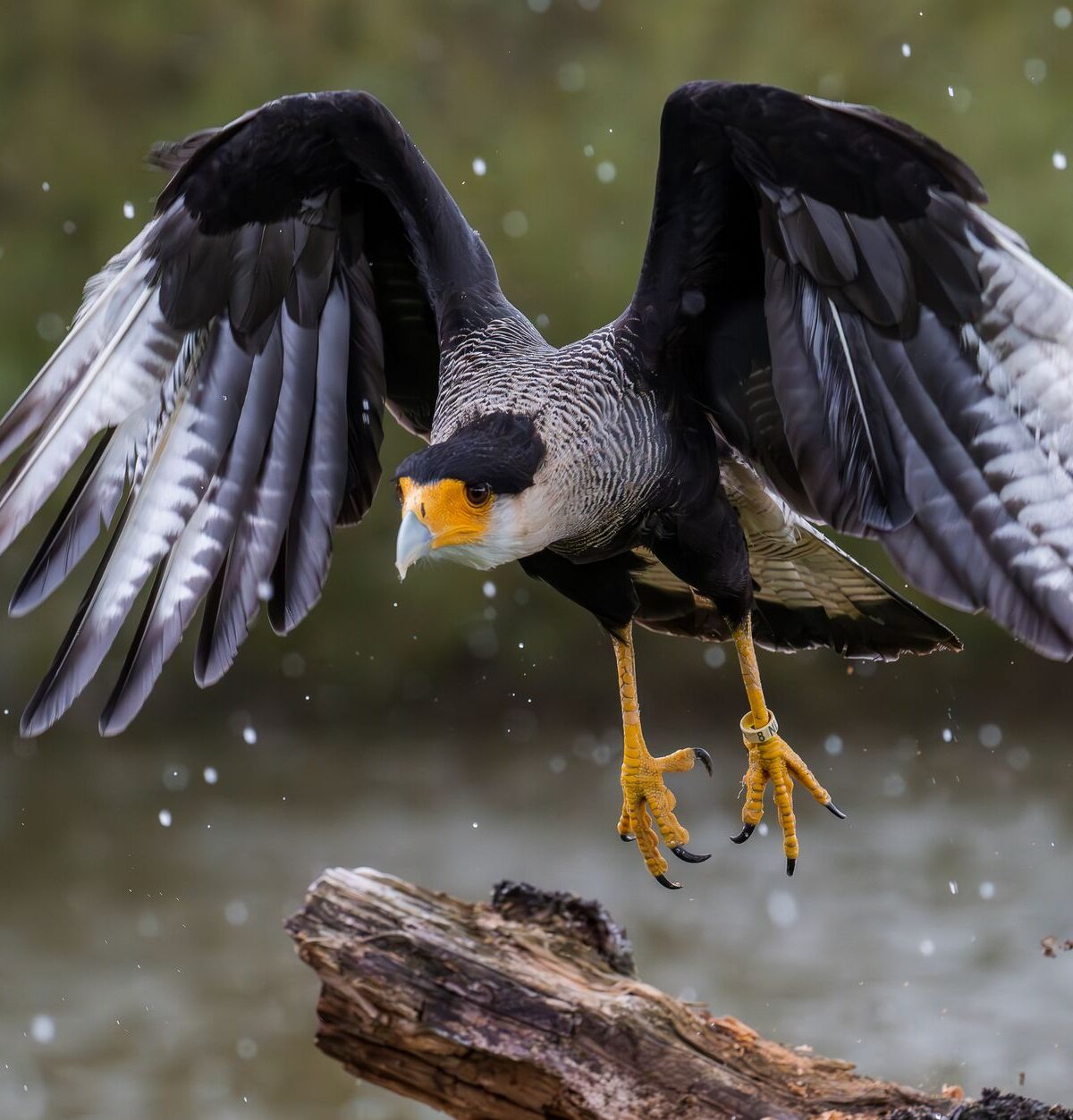
CARACARA
DESCRIPTION
Caracara is commonly known as the Southern Caracara and the Crested Caracara. This bird of prey is characterized by its striking appearance, featuring a black crown, a white face, and a distinctive orange-yellow facial skin. Caracaras are known for their bold behavior, often scavenging for food and displaying a unique combination of soaring and walking on the ground, which sets them apart from other raptors.
FUN FACTS
- Caracaras are known for their intelligence and problem-solving abilities, often using tools to access food
- They have a unique social structure, often foraging in groups and displaying complex interactions with one another
QUICK INFO
Lifespan15-20 years in the wild, up to 30 in captivity
Average Weight1.5-2.5 kg
Average Length50-65 cm
Diet TypeOmnivore
Social Structurepair or group, often seen foraging together
Activity PatternDiurnal
Breeding SeasonSpring (April-June)
- Habitat
- Caracaras inhabit open landscapes such as grasslands, savannas, and scrublands. They are often found near agricultural areas where they can easily find food.
- Biomes
- Grassland, Savanna, Temperate Forest
- Native Range
- Caracaras are native to parts of North and South America, ranging from the southern United States to Argentina.
- Continent
- North America, South America
- Countries
- United States, Mexico, Argentina, Brazil, Chile
- Diet
- Caracaras primarily feed on carrion, but they also hunt small animals and scavenge for food scraps. Their opportunistic feeding habits allow them to thrive in various environments.
- Diet Type
- Omnivore
- Favorite Food
- carrion, small mammals, and birds
- Social Structure
- pair or group, often seen foraging together
- Activity Pattern
- Diurnal
- Group Size
- 2-10
- Territorial
- 1
 LC
LC
 CR
CR
1.5-2.5 kg
Weight
50-65 cm
Length
- Coloration
- black and white with orange-yellow facial skin
- Sexual Dimorphism
- males are generally larger than females
- Lifespan
- 15-20 years in the wild, up to 30 in captivity
- Offspring per Birth
- 2-4
- Sexual Maturity
- 2-3 years
- Breeding Season
- Spring (April-June)
LC
Least Concern
IUCN Red List Status
- Population Status
- The population of Caracaras is currently stable, with some local increases due to habitat modification.
- Wild Population Estimate
- 50,000-100,000
- Population Trend
- Stable
- Endangered
- 0
- Threats
- Main threats to Caracaras include habitat loss due to agricultural expansion and vehicle collisions. They are also sometimes persecuted as pests in farming areas.
- Predators
- eagles, large hawks, and humans
- Defense Mechanisms
- Caracaras use their strong beaks and talons to defend themselves and can be quite aggressive when threatened.
- Found in Zoos
- Common