


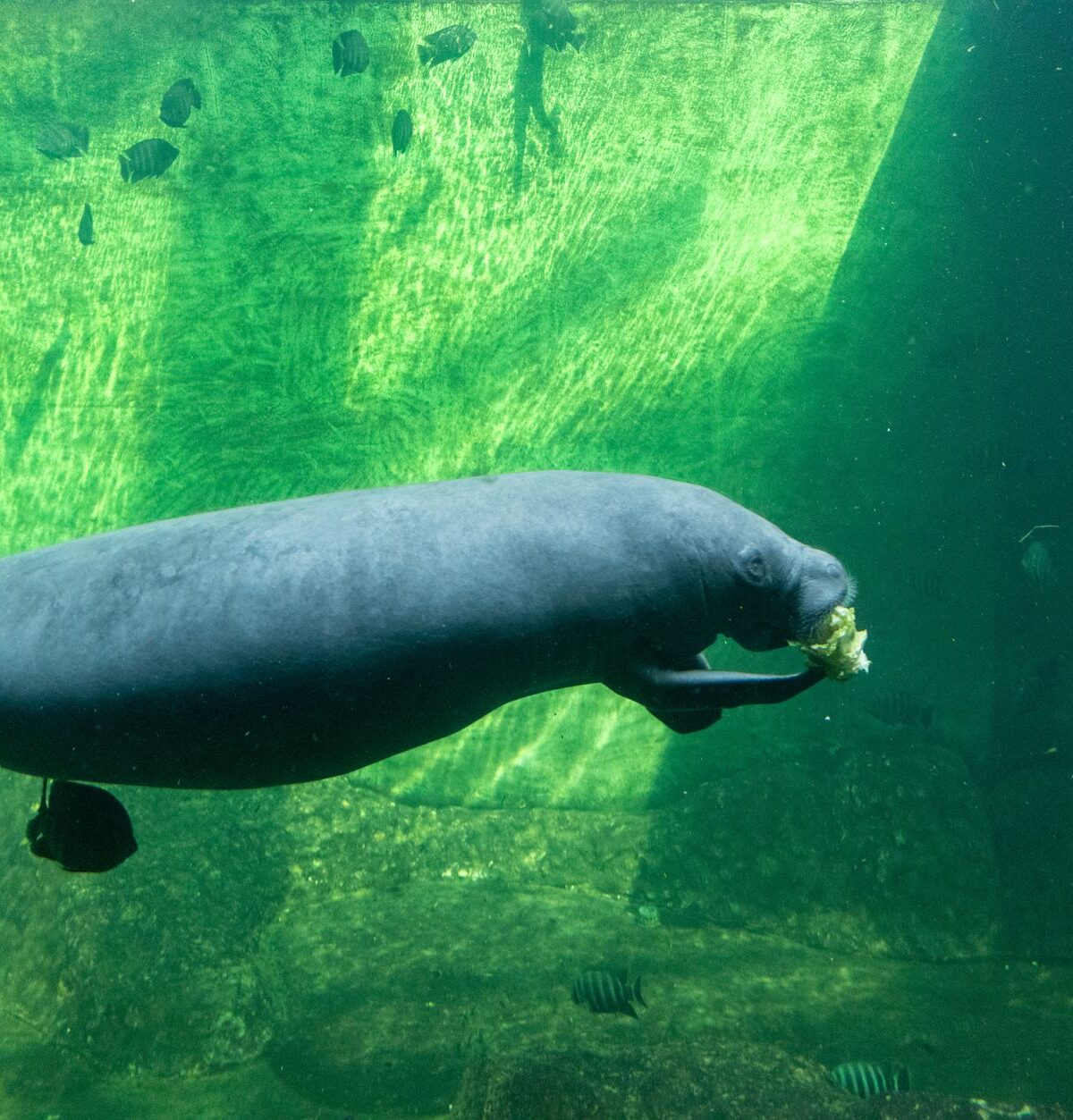
CARIBBEAN MANATEE
Trichechus manatus
DESCRIPTION
Caribbean Manatee (Trichechus manatus) is commonly known as the West Indian Manatee. This large marine mammal can reach lengths of up to 4 meters and weigh between 400 to 600 kilograms. They have a robust, rounded body with a paddle-like tail and two flippers, which they use to navigate through shallow waters and seagrass beds, their primary habitat.
FUN FACTS
- Caribbean Manatees can hold their breath for up to 20 minutes while diving for food, but they typically surface every 3-5 minutes to breathe
- They are also known to communicate with each other through a variety of sounds, including chirps, whistles, and squeaks, which can be heard above and below water
QUICK INFO
Lifespan50-65 years in the wild
Average Weight400-600 kg
Average Length3-4 m
Diet TypeHerbivore
Social Structuresolitary, occasionally found in small groups
Activity PatternDiurnal
Breeding SeasonYear-round, with peaks in spring and summer
- Habitat
- Caribbean Manatees inhabit warm coastal waters, rivers, and estuaries. They prefer shallow areas where they can easily access their food sources.
- Biomes
- Coastal, Freshwater
- Native Range
- The native range of the Caribbean Manatee includes the warm waters of the Caribbean Sea, the Gulf of Mexico, and the southeastern United States.
- Continent
- North America, Central America, South America
- Countries
- United States, Mexico, Cuba, Bahamas, Belize, Colombia, Venezuela
- Diet
- Caribbean Manatees are herbivores, primarily feeding on aquatic plants such as seagrasses and algae. They play a crucial role in maintaining the health of their ecosystems by grazing on these plants, which helps to promote growth and maintain water clarity.
- Diet Type
- Herbivore
- Favorite Food
- seagrasses, algae
- Social Structure
- solitary, occasionally found in small groups
- Activity Pattern
- Diurnal
- Group Size
- 1-3
- Territorial
- 0

400-600 kg
Weight
3-4 m
Length
- Coloration
- grayish-brown with a wrinkled skin texture
- Lifespan
- 50-65 years in the wild
- Gestation Period
- 12 months
- Offspring per Birth
- 1
- Sexual Maturity
- 3-5 years
- Breeding Season
- Year-round, with peaks in spring and summer
VU
Vulnerable
IUCN Red List Status
- Population Status
- The population of Caribbean Manatees is currently vulnerable due to habitat loss and human activities.
- Wild Population Estimate
- 13,000-15,000
- Population Trend
- Increasing
- Endangered
- 1
- Threats
- Main threats to Caribbean Manatees include habitat destruction, boat strikes, and entanglement in fishing gear. Conservation efforts are ongoing to mitigate these threats and protect their habitats.
- Conservation Program
- Manatee Protection Plans in various states and countries, including designated sanctuaries and speed zones for boats.
- Predators
- Humans are the primary threat, but young manatees may be vulnerable to large sharks and alligators.
- Defense Mechanisms
- Manatees rely on their size and strength for defense, as they have few natural predators.
- Found in Zoos
- Uncommon