


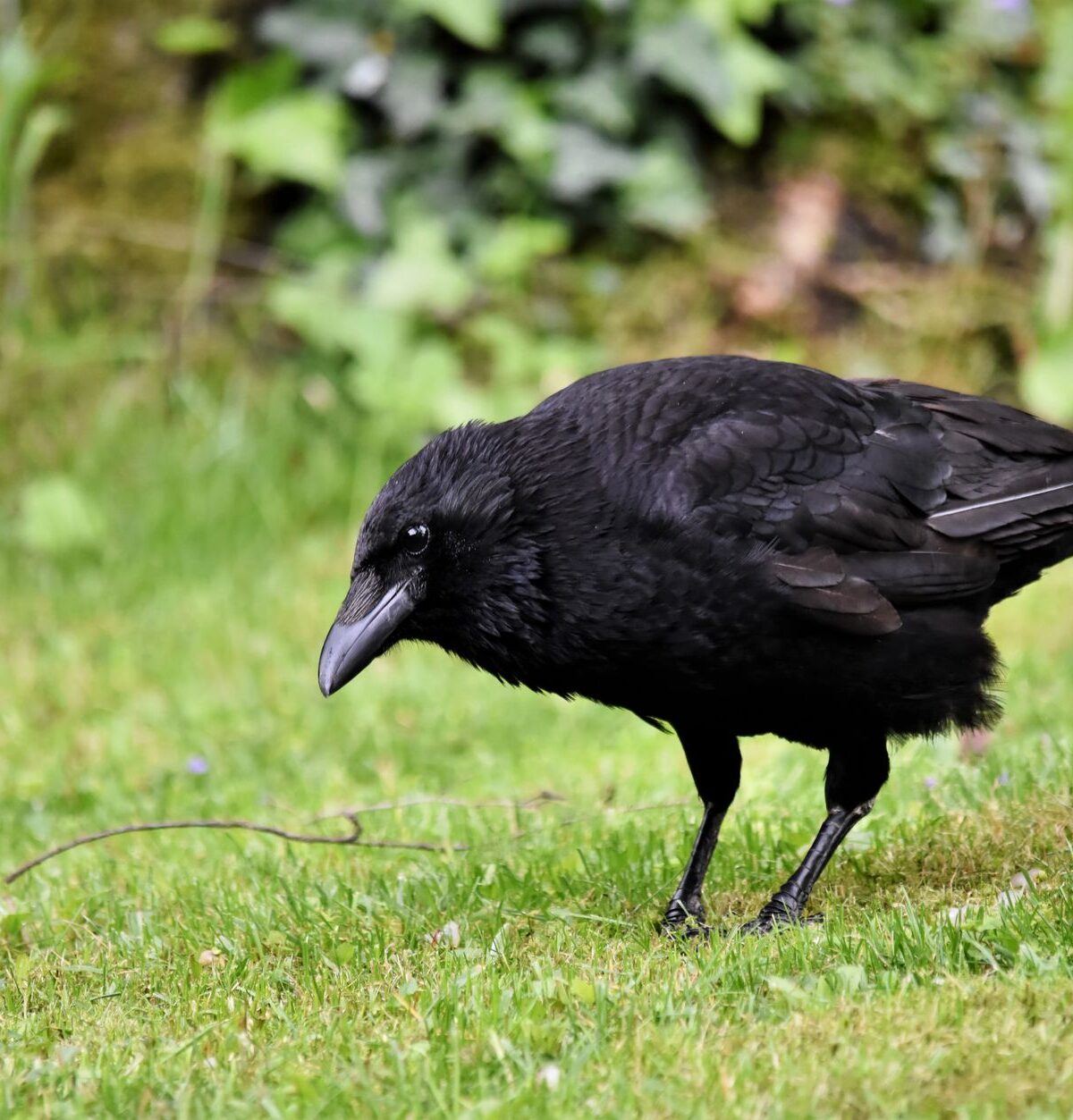
CARRION CROW
Corvus corone
DESCRIPTION
Carrion Crow (Corvus corone) is commonly known as the Black Crow and European Crow. This medium-sized bird is characterized by its all-black plumage, strong bill, and a distinctive cawing call. It is highly intelligent and adaptable, often seen foraging in various environments, showcasing complex social behaviors and problem-solving skills.
FUN FACTS
- Carrion Crows are known for their remarkable intelligence, capable of using tools to obtain food, such as using sticks to extract insects from tree bark
- They also have a complex social structure, often engaging in play and even mourning their dead, showcasing their emotional depth.| These birds have a diverse vocal repertoire, capable of mimicking sounds from their environment, including human voices and other animal calls
- Their adaptability to urban settings has allowed them to thrive alongside human populations, often seen scavenging in parks and streets
QUICK INFO
Lifespan10-15 years in the wild, up to 20 in captivity
Average Weight0.5-1.0 kg
Average Length40-50 cm
Diet TypeOmnivore
Social StructureThey are often seen in pairs or small groups, displaying a social structure that allows for cooperative foraging.
Activity PatternDiurnal
Breeding SeasonSpring (March-May)
- Habitat
- Carrion Crows thrive in diverse habitats, including urban areas, farmland, and woodlands. They prefer open spaces where they can easily find food and build their nests.
- Biomes
- Temperate Forest, Grassland, Urban
- Native Range
- Carrion Crows are native to Europe and parts of Asia, with a range extending from the British Isles to the eastern regions of Russia.
- Continent
- Europe, Asia
- Countries
- United Kingdom, France, Germany, Russia, Spain
- Diet
- Carrion Crows are opportunistic feeders, consuming a wide range of food items including carrion, insects, seeds, and fruits. They are known to scavenge and will also hunt small animals when necessary.
- Diet Type
- Omnivore
- Favorite Food
- carrion, insects, seeds
- Social Structure
- They are often seen in pairs or small groups, displaying a social structure that allows for cooperative foraging.
- Activity Pattern
- Diurnal
- Group Size
- 2-10
- Territorial
- 1

 VU
VU
0.5-1.0 kg
Weight
40-50 cm
Length
- Coloration
- All-black plumage with a glossy sheen.
- Lifespan
- 10-15 years in the wild, up to 20 in captivity
- Offspring per Birth
- 3-6
- Sexual Maturity
- 2-3 years
- Breeding Season
- Spring (March-May)
LC
Least Concern
IUCN Red List Status
- Population Status
- The population of Carrion Crows is generally stable across their range.
- Wild Population Estimate
- 1,000,000-2,000,000
- Population Trend
- Stable
- Endangered
- 0
- Threats
- Main threats include habitat loss and poisoning from agricultural chemicals. However, they are adaptable and can thrive in urban environments.
- Predators
- Foxes, birds of prey, and domestic cats are known predators of Carrion Crows.
- Defense Mechanisms
- Carrion Crows use mobbing behavior to defend against predators, often calling out to alert others.
- Compatible Animals
- Ravens, Magpies
- Found in Zoos
- Common