


CAVE SALAMANDER
Eurycea lucifuga
DESCRIPTION
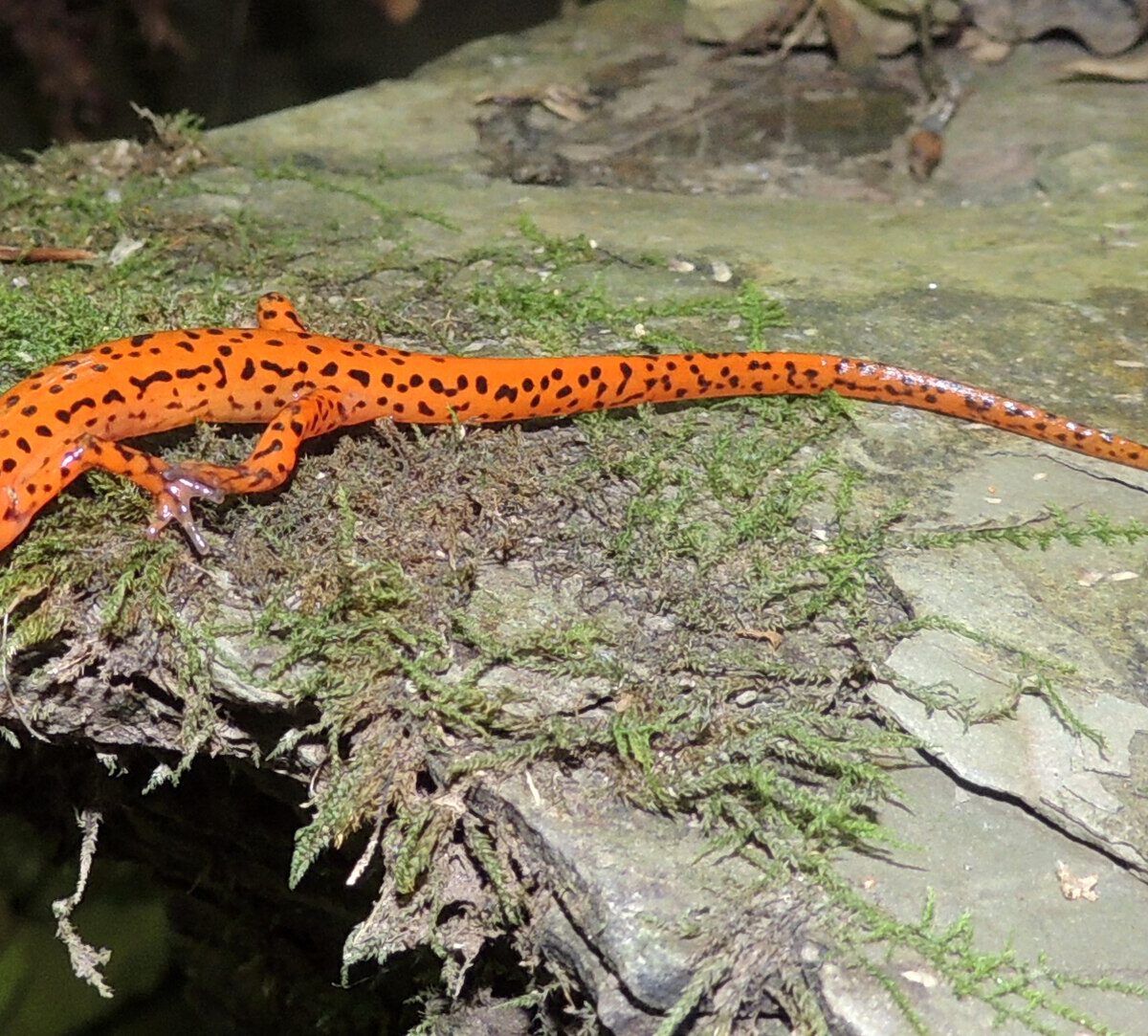
Cave Salamander (Eurycea lucifuga) is a striking amphibian known for its elongated body and vibrant coloration, typically featuring a bright orange or yellow hue with dark spots. This species is primarily found in the moist environments of caves and underground streams, where it exhibits a preference for cool, humid conditions. Behaviorally, Cave Salamanders are often seen foraging for food in the dark, relying on their keen sense of smell to navigate their subterranean habitat.
FUN FACTS
- Cave Salamanders are known for their unique adaptations to life in dark environments, including their ability to detect vibrations and chemical cues in the water
- They play a crucial role in the cave ecosystem, helping to control insect populations and serving as prey for larger animals
- | Interestingly, Cave Salamanders have a relatively long lifespan for amphibians, with some individuals living over a decade in the wild
- Their vibrant coloration not only makes them visually striking but also serves as a warning to potential predators about their toxicity
QUICK INFO
Lifespan10-15 years in the wild
Average Weight10-20 g
Average Length10-15 cm
Diet TypeInsectivore
Social Structuresolitary
Activity PatternNocturnal
Breeding SeasonSpring (March-May)
- Habitat
- Cave Salamanders inhabit limestone caves and other subterranean environments, thriving in areas with high humidity and stable temperatures. They are often found near water sources within these habitats.
- Biomes
- Cave, Temperate Forest
- Native Range
- The native range of the Cave Salamander includes the eastern United States, particularly in regions with limestone geology.
- Continent
- North America
- Countries
- United States
- Diet
- Cave Salamanders primarily consume small invertebrates, including insects and other arthropods. They are adept at hunting in the dark, using their sensitive skin to detect prey.
- Diet Type
- Insectivore
- Favorite Food
- small insects, worms
- Social Structure
- solitary
- Activity Pattern
- Nocturnal
- Group Size
- 1-5
- Territorial
- 0
 LC
LC
 VU
VU

10-20 g
Weight
10-15 cm
Length
- Coloration
- bright orange or yellow with dark spots
- Sexual Dimorphism
- males are typically smaller than females
- Lifespan
- 10-15 years in the wild
- Offspring per Birth
- 10-20
- Sexual Maturity
- 2-3 years
- Breeding Season
- Spring (March-May)
LC
Least Concern
IUCN Red List Status
- Population Status
- The population of Cave Salamanders is currently stable, although local declines may occur due to habitat disturbance.
- Wild Population Estimate
- unknown
- Population Trend
- Stable
- Endangered
- 0
- Threats
- Main threats to Cave Salamanders include habitat destruction due to urban development and pollution of water sources. Additionally, climate change may impact their delicate cave ecosystems.
- Predators
- snakes, birds, small mammals
- Defense Mechanisms
- Cave Salamanders can secrete toxins through their skin as a defense mechanism against predators.
- Found in Zoos
- Uncommon