


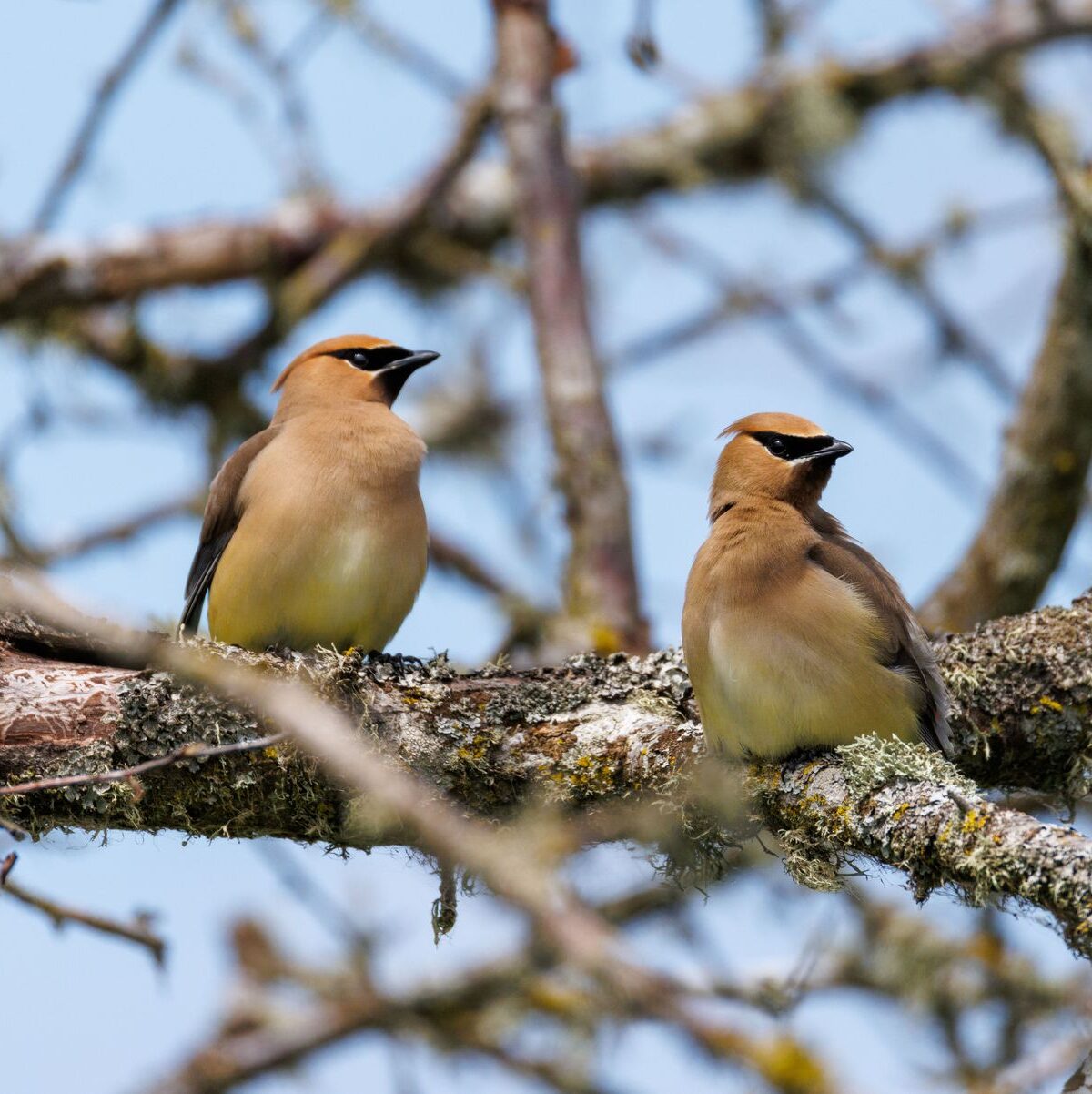
CEDAR WAXWING
Bombycilla cedrorum
DESCRIPTION
Cedar Waxwing (Bombycilla cedrorum) is a medium-sized songbird known for its sleek, elegant appearance and distinctive yellow-tipped tail feathers. These birds have a soft, brownish-gray plumage with a black mask and a yellow belly, making them easily recognizable. Cedar Waxwings are social creatures, often found in flocks, and are known for their acrobatic feeding behavior, particularly when consuming berries.
FUN FACTS
- Cedar Waxwings are known for their unique feeding behavior, where they can become intoxicated after consuming fermented berries, leading to erratic flight patterns
- Additionally, they are one of the few bird species that can store food in their throat, allowing them to transport berries back to their nests for later consumption
QUICK INFO
Lifespan2-5 years in the wild, up to 8 years in captivity
Average Weight30-50 g
Average Length14-20 cm
Diet TypeOmnivore
Social StructureCedar Waxwings are typically found in flocks, especially outside of the breeding season.
Activity PatternDiurnal
Breeding SeasonSpring (April-June)
- Habitat
- Cedar Waxwings inhabit a variety of environments, including open woodlands, shrubby areas, and urban parks. They prefer areas with abundant fruiting trees and shrubs.
- Biomes
- Temperate Forest, Urban
- Native Range
- Cedar Waxwings are found across North America, from southern Canada to the northern United States and parts of Mexico.
- Continent
- North America
- Countries
- Canada, United States, Mexico
- Diet
- Cedar Waxwings primarily feed on fruits, particularly berries, but they also consume insects during the breeding season.
- Diet Type
- Omnivore
- Favorite Food
- Berries, particularly cedar berries and serviceberries
- Social Structure
- Cedar Waxwings are typically found in flocks, especially outside of the breeding season.
- Activity Pattern
- Diurnal
- Group Size
- 5-50
- Territorial
- 0

 LC
LC
30-50 g
Weight
14-20 cm
Length
- Coloration
- Brownish-gray with a yellow belly and black mask
- Sexual Dimorphism
- Males and females are similar in appearance, making sexual dimorphism minimal.
- Lifespan
- 2-5 years in the wild, up to 8 years in captivity
- Offspring per Birth
- 3-5
- Sexual Maturity
- 1 year
- Breeding Season
- Spring (April-June)
LC
Least Concern
IUCN Red List Status
- Population Status
- Cedar Waxwing populations are generally stable, though they can fluctuate based on food availability.
- Wild Population Estimate
- Unknown
- Population Trend
- Stable
- Endangered
- 0
- Threats
- Main threats include habitat loss and changes in food availability due to climate change. They are also susceptible to collisions with windows and vehicles.
- Predators
- Sharp-shinned Hawks, Cooper's Hawks, domestic cats, and various raptors.
- Defense Mechanisms
- Cedar Waxwings rely on their flocking behavior for safety, often taking to the air in unison to evade predators.
- Found in Zoos
- Uncommon