


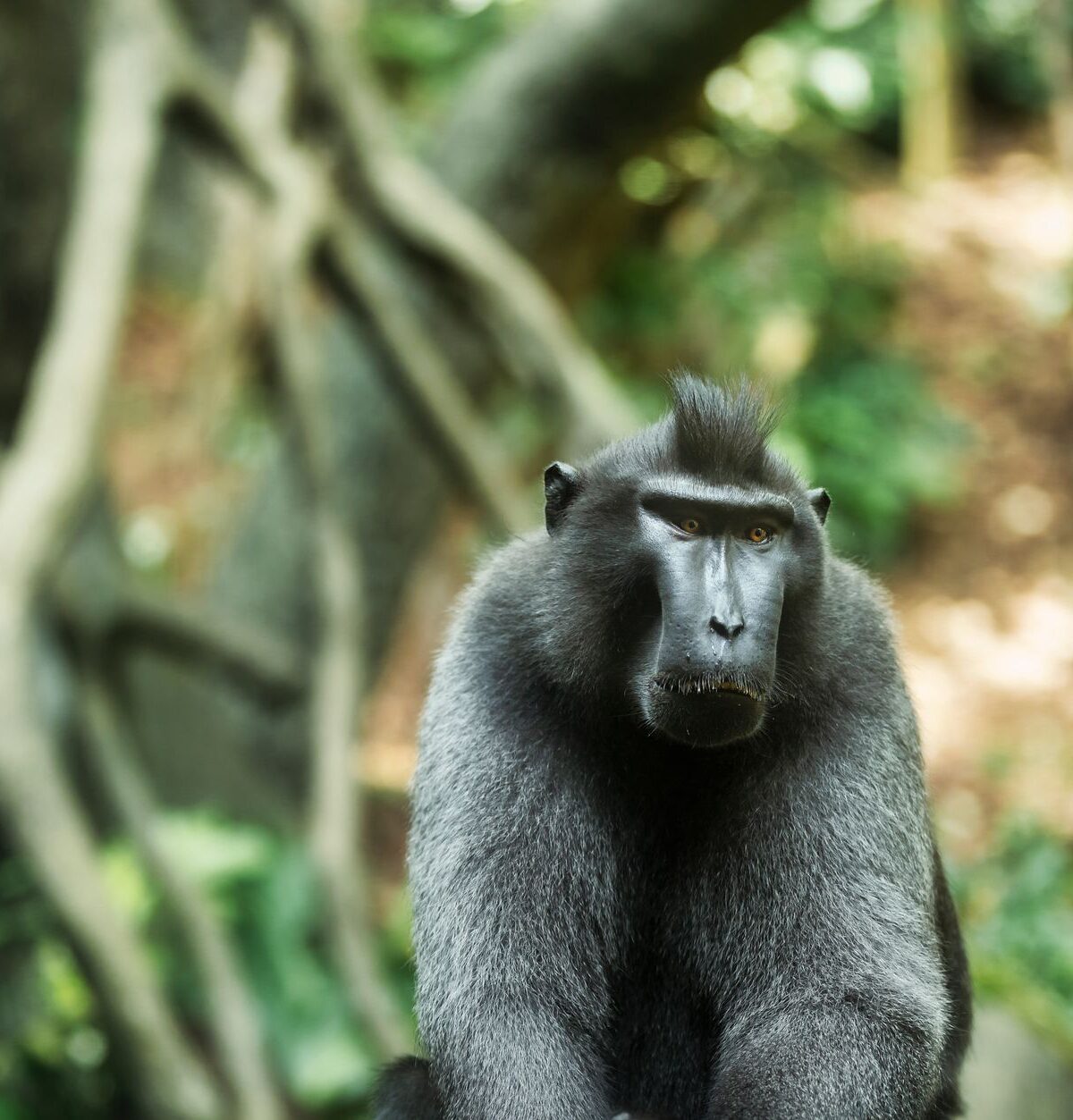
CELEBES CRESTED MACAQUE
Macaca nigra
DESCRIPTION
Also called the Black Macaque and Sulawesi Crested Macaque, the Celebes Crested Macaque is a striking primate known for its distinctive crest of hair on its head and its predominantly black fur. These monkeys are highly social and live in groups, exhibiting complex social behaviors and strong bonds within their troops. They are primarily found in the tropical forests of Sulawesi, where they play a crucial role in seed dispersal and maintaining the health of their ecosystem.
FUN FACTS
- Celebes Crested Macaques are known for their expressive faces and vocalizations, which they use to communicate a range of emotions and social signals
- They have a unique social structure where females often remain in their natal groups, while males leave to join new groups, promoting genetic diversity.| These macaques are also notable for their grooming behaviors, which not only help maintain hygiene but also strengthen social bonds within the group
- Grooming can take up a significant portion of their day, highlighting the importance of social interactions in their lives
QUICK INFO
Lifespan15-20 years in the wild, up to 30 years in captivi
Average Weight6-10 kg
Average Length50-70 cm
Diet TypeOmnivore
Social StructureThey live in groups, typically consisting of 5 to 30 individuals, led by a dominant male.
Activity PatternDiurnal
Breeding SeasonYear-round, with peaks during certain months
- Habitat
- They inhabit tropical rainforests, often found in hilly or mountainous regions. Their habitat is characterized by dense vegetation, which provides both food and shelter.
- Biomes
- Tropical Rainforest
- Native Range
- Endemic to the island of Sulawesi in Indonesia.
- Continent
- Asia
- Countries
- Indonesia
- Diet
- Celebes Crested Macaques are primarily frugivorous, feeding on a variety of fruits, leaves, and seeds. They also consume flowers and occasionally insects, showcasing their adaptability in foraging.
- Diet Type
- Omnivore
- Favorite Food
- Fruits, leaves
- Social Structure
- They live in groups, typically consisting of 5 to 30 individuals, led by a dominant male.
- Activity Pattern
- Diurnal
- Group Size
- 5-30
- Territorial
- 1
6-10 kg
Weight
50-70 cm
Length
- Coloration
- Predominantly black fur with a distinctive crest of hair on the head.
- Sexual Dimorphism
- Males are generally larger than females.
- Lifespan
- 15-20 years in the wild, up to 30 years in captivi
- Gestation Period
- 160 days
- Offspring per Birth
- 1
- Sexual Maturity
- 3-4 years
- Breeding Season
- Year-round, with peaks during certain months
EN
Endangered
IUCN Red List Status
- Population Status
- The population is currently declining due to habitat loss and hunting.
- Wild Population Estimate
- 20,000-30,000
- Population Trend
- Decreasing
- Endangered
- 1
- Threats
- Main threats include habitat destruction due to logging and agriculture, as well as hunting for bushmeat. These pressures have led to a significant decline in their population.
- Conservation Program
- Various conservation efforts are underway, including habitat protection and anti-poaching initiatives.
- Predators
- Main predators include large birds of prey and possibly snakes, although specific predator relationships are not well-documented.
- Defense Mechanisms
- They use vocalizations and social displays to warn off potential threats, and their group living provides safety in numbers.
- Compatible Animals
- Other primates, such as various species of lemurs or smaller monkeys, in controlled environments.
- Found in Zoos
- Uncommon