


CENTRAL AFRICAN RATEL
Mellivora capensis cottoni
DESCRIPTION
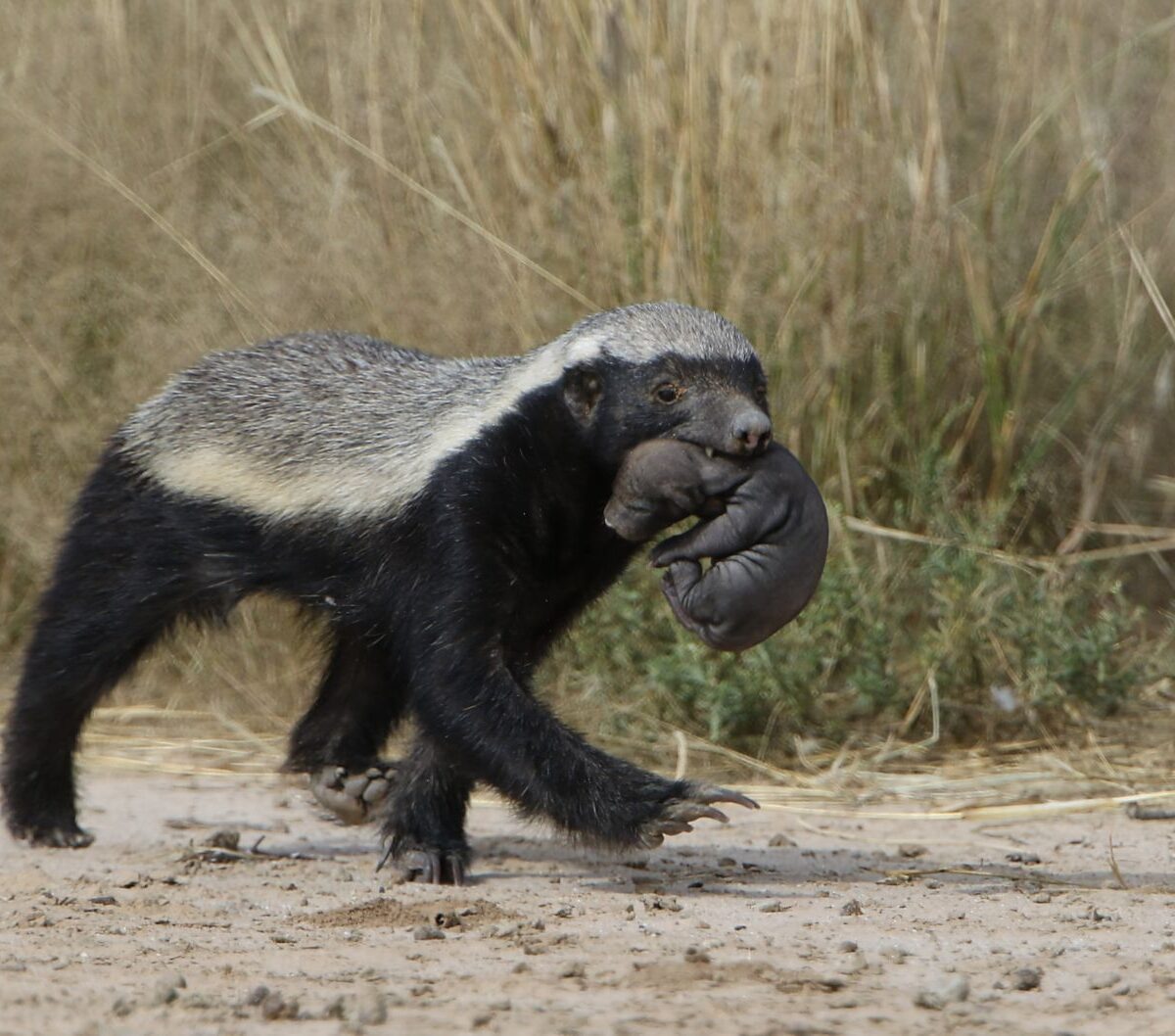
Central African ratel (Mellivora capensis cottoni) is a subspecies of the honey badger, known for its robust body and thick skin, which provides protection against predators. This species exhibits a distinctive coloration, with a grayish-brown body and a characteristic white stripe running from its head to its tail. Highly adaptable and fearless, the Central African ratel is known for its tenacity and aggressive behavior, often taking on animals much larger than itself.
FUN FACTS
- The Central African ratel is often referred to as the 'honey badger' due to its love for honey, which it will go to great lengths to obtain, including raiding beehives
- This species has a remarkable resistance to venom, allowing it to hunt and eat snakes, including cobras, without suffering serious harm
- | Known for its boldness, the Central African ratel has been observed taking on much larger animals, such as lions and buffalo, when threatened
- Its thick skin and loose body structure allow it to twist and turn to escape from predators' grips
QUICK INFO
Lifespan7-10 years in the wild, up to 14 years in captivit
Average Weight9-14 kg
Average Length60-77 cm
Diet TypeOmnivore
Social Structuresolitary, occasionally pairs
Activity PatternNocturnal
Breeding SeasonYear-round
- Habitat
- This species inhabits a range of environments, including savannas, grasslands, and forest edges. It prefers areas with ample cover for foraging and denning.
- Biomes
- Savanna, Grassland, Forest
- Native Range
- The Central African ratel is found in various regions across Central Africa, including parts of the Democratic Republic of the Congo and surrounding countries.
- Continent
- Africa
- Countries
- Democratic Republic of the Congo, Central African Republic, Republic of the Congo, Gabon
- Diet
- The Central African ratel primarily feeds on a variety of prey, including small mammals, birds, insects, and fruits. It is particularly famous for its ability to hunt and consume venomous snakes.
- Diet Type
- Omnivore
- Favorite Food
- honey, small mammals, insects
- Social Structure
- solitary, occasionally pairs
- Activity Pattern
- Nocturnal
- Group Size
- 1-2
- Territorial
- 1
 LC
LC
 VU
VU
 LC
LC
9-14 kg
Weight
60-77 cm
Length
- Coloration
- grayish-brown with a distinctive white stripe
- Sexual Dimorphism
- males are generally larger than females
- Lifespan
- 7-10 years in the wild, up to 14 years in captivit
- Gestation Period
- 60-70 days
- Offspring per Birth
- 1-4
- Sexual Maturity
- 2-3 years
- Breeding Season
- Year-round
LC
Least Concern
IUCN Red List Status
- Population Status
- The population status of the Central African ratel is not well-documented, but it is generally considered to be stable in some regions.
- Wild Population Estimate
- Unknown
- Population Trend
- Stable
- Endangered
- 0
- Threats
- Main threats include habitat loss due to deforestation and human encroachment, as well as hunting in some areas. Despite these threats, the species is currently not considered endangered.
- Predators
- Lions, leopards, hyenas, and large birds of prey may pose threats to young or injured individuals.
- Defense Mechanisms
- The Central African ratel has a reputation for being fearless and aggressive, using its strong claws and teeth to defend itself. It can also emit a strong odor to deter predators.
- Found in Zoos
- Uncommon