


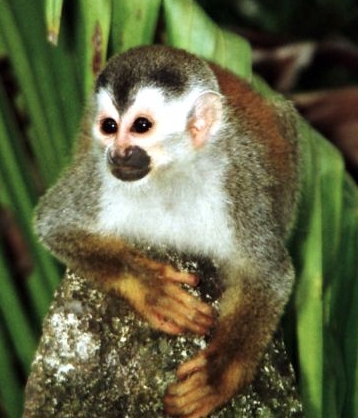
CENTRAL AMERICAN RED-BACKED SQUIRREL MONKEY
Saimiri oerstedii
DESCRIPTION
Central American Red-Backed Squirrel Monkey (Saimiri oerstedii) is also known as Oersted's Squirrel Monkey. This small primate is characterized by its distinctive reddish-brown back and a lighter-colored face with a dark crown. They are highly social animals, often found in groups, and are known for their playful behavior and agility in the trees of their tropical forest habitat.
FUN FACTS
- Central American Red-Backed Squirrel Monkeys are known for their remarkable agility and can leap distances of up to 10 meters between branches
- They have a complex social structure, often engaging in grooming behaviors that help maintain group cohesion and reduce stress.| These monkeys are highly vocal and use a variety of calls to communicate with each other, including alarm calls that warn of predators
- Their playful nature makes them a favorite among zoo visitors, as they often engage in acrobatic displays and social interactions
QUICK INFO
Lifespan15-20 years in the wild, up to 25 years in captivi
Average Weight750-1,200 g
Average Length40-55 cm
Diet TypeOmnivore
Social StructureThey live in groups, typically consisting of 10-30 individuals, which helps them protect against predators and enhances foraging efficiency.
Activity PatternDiurnal
Breeding SeasonYear-round, with peaks during the rainy season
- Habitat
- These monkeys inhabit tropical rainforests, particularly in areas with dense canopy cover. They are often found near water sources, which provide additional food resources.
- Biomes
- Tropical Rainforest
- Native Range
- They are native to the tropical forests of Central America, specifically in regions of Costa Rica and Panama.
- Continent
- North America
- Countries
- Costa Rica, Panama
- Diet
- They primarily consume fruits, seeds, and insects, showcasing a varied diet that reflects their omnivorous nature. Their foraging behavior often involves searching through the canopy for ripe fruits and small invertebrates.
- Diet Type
- Omnivore
- Favorite Food
- fruits, seeds, insects
- Social Structure
- They live in groups, typically consisting of 10-30 individuals, which helps them protect against predators and enhances foraging efficiency.
- Activity Pattern
- Diurnal
- Group Size
- 10-30
- Territorial
- 0
 VU
VU
 LC
LC
750-1,200 g
Weight
40-55 cm
Length
- Coloration
- Reddish-brown back with a lighter face and dark crown.
- Sexual Dimorphism
- Males are generally larger than females.
- Lifespan
- 15-20 years in the wild, up to 25 years in captivi
- Gestation Period
- 150-170 days
- Offspring per Birth
- 1
- Sexual Maturity
- 2-3 years
- Breeding Season
- Year-round, with peaks during the rainy season
LC
Least Concern
IUCN Red List Status
- Population Status
- The population is currently stable, but habitat loss poses a significant threat.
- Wild Population Estimate
- 10,000-20,000
- Population Trend
- Stable
- Endangered
- 0
- Threats
- Main threats include habitat destruction due to deforestation and fragmentation, as well as hunting. These factors have led to a decline in their natural habitat, impacting their population.
- Predators
- Birds of prey, snakes, and larger mammals such as jaguars may prey on them.
- Defense Mechanisms
- They use vocalizations to alert the group of potential threats and often flee to the safety of the trees.
- Compatible Animals
- Other small primates, such as capuchins, in controlled environments like zoos.
- Found in Zoos
- Uncommon