


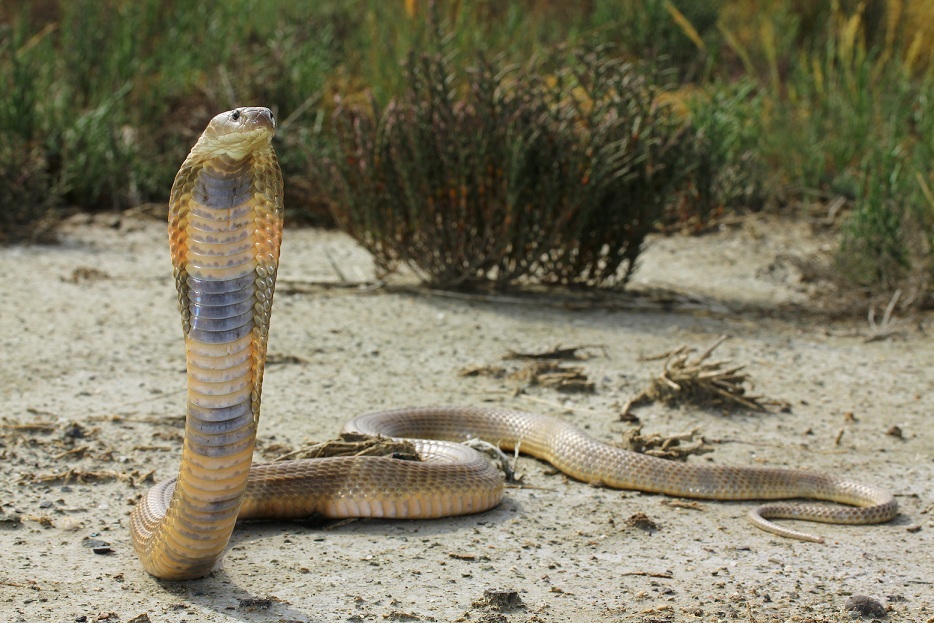
CENTRAL ASIAN COBRA
Naja oxiana
DESCRIPTION
Central Asian Cobra (Naja oxiana), also known as the Oxus Cobra, is a venomous snake characterized by its distinctive hood and slender body. It typically exhibits a range of colors from light brown to dark brown, often with lighter markings that help it blend into its arid surroundings. This species is known for its defensive behavior, where it raises its hood and hisses loudly when threatened, showcasing its impressive size and potential danger to predators and humans alike.
FUN FACTS
- The Central Asian Cobra is known for its impressive ability to adapt to various habitats, which allows it to thrive in both arid and semi-arid environments
- Its venom is highly neurotoxic, making it one of the more dangerous snakes in its region, capable of causing severe symptoms in humans if bitten
- | Interestingly, the Central Asian Cobra has been observed using its venom not only for hunting but also for self-defense against larger predators, showcasing its versatility as a predator and a survivor in the wild
QUICK INFO
Lifespan10-15 years in the wild, up to 20 years in captivi
Average Weight1.5-2.5 kg
Average Length1.2-1.5 m
Diet TypeCarnivore
Social Structuresolitary
Activity PatternDiurnal
Breeding SeasonSpring (April-June)
- Habitat
- This species inhabits a variety of environments, including deserts, semi-deserts, and grasslands. It prefers areas with ample cover, such as rocky outcrops and vegetation, which provide shelter and hunting grounds.
- Biomes
- Desert, Grassland
- Native Range
- The Central Asian Cobra is found across parts of Central Asia, particularly in regions of Uzbekistan, Kazakhstan, and Turkmenistan.
- Continent
- Asia
- Countries
- Uzbekistan, Kazakhstan, Turkmenistan
- Diet
- The Central Asian Cobra primarily feeds on small mammals, birds, and other reptiles. It uses its potent venom to immobilize its prey before consumption.
- Diet Type
- Carnivore
- Favorite Food
- small mammals, birds, reptiles
- Social Structure
- solitary
- Activity Pattern
- Diurnal
- Group Size
- 1
- Territorial
- 0
 VU
VU
1.5-2.5 kg
Weight
1.2-1.5 m
Length
- Coloration
- Typically light to dark brown with lighter markings.
- Sexual Dimorphism
- Males are generally larger than females.
- Lifespan
- 10-15 years in the wild, up to 20 years in captivi
- Gestation Period
- 60-70 days
- Offspring per Birth
- 10-20
- Sexual Maturity
- 2-3 years
- Breeding Season
- Spring (April-June)
LC
Least Concern
IUCN Red List Status
- Population Status
- The population status of the Central Asian Cobra is not well-documented, but it is believed to be stable in its native range.
- Wild Population Estimate
- Unknown
- Population Trend
- Stable
- Endangered
- 0
- Threats
- Main threats include habitat loss due to agricultural expansion and human encroachment. Additionally, they face persecution from humans due to fear of their venomous nature.
- Predators
- Birds of prey, larger snakes, and mammals such as foxes may prey on juvenile Central Asian Cobras.
- Defense Mechanisms
- When threatened, they can raise their hoods and deliver a warning hiss, displaying their size and readiness to defend themselves.
- Found in Zoos
- Uncommon