


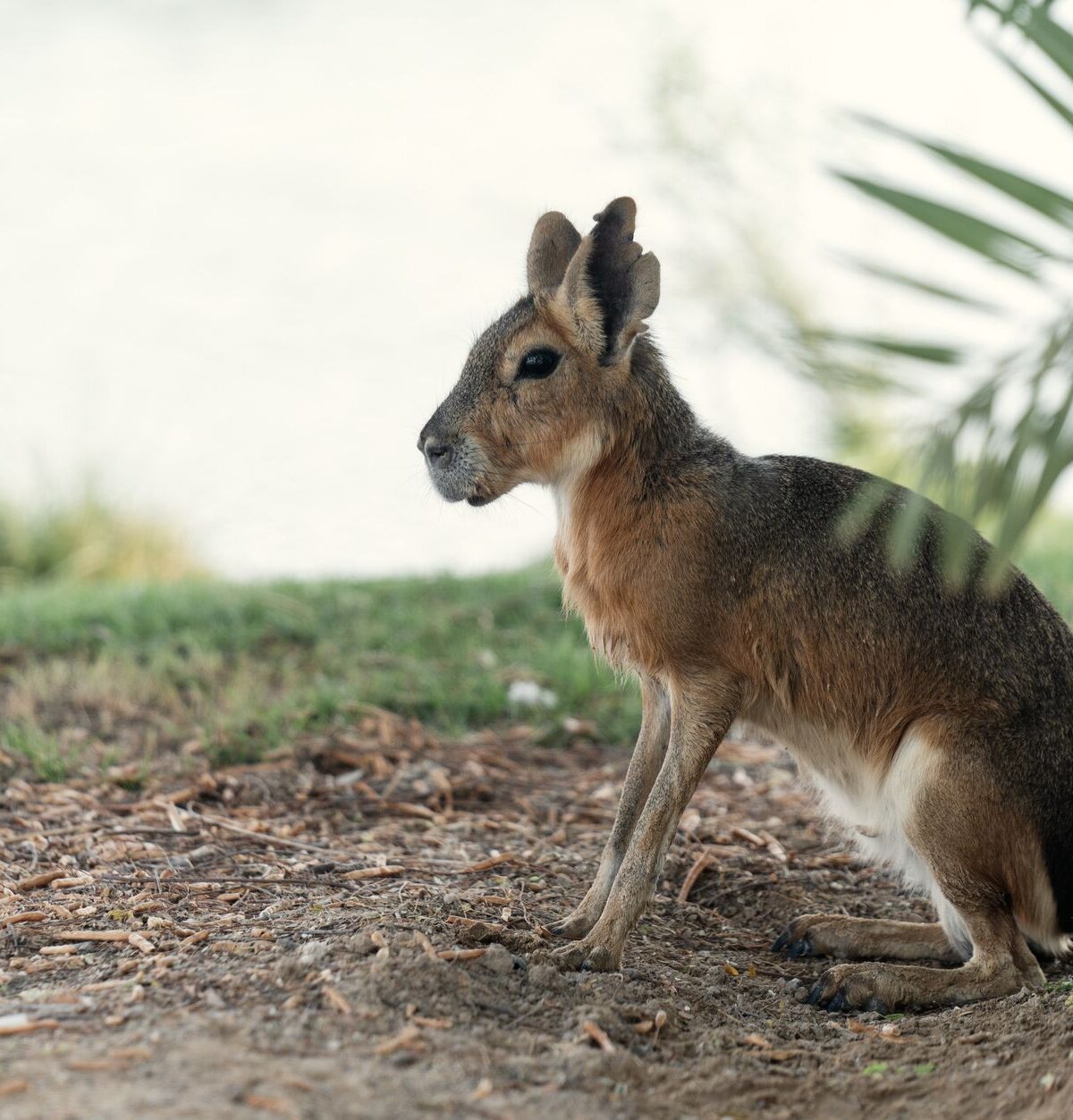
CHACOAN MARA
Dolichotis salinicola
DESCRIPTION
Chacoan mara (Dolichotis salinicola) is commonly known as the Patagonian mara. This large rodent is characterized by its long legs, large ears, and a distinctive coat that is typically a mix of brown and gray. They are social animals that often form monogamous pairs and are known for their unique hopping gait, which allows them to cover large distances in search of food and mates.
FUN FACTS
- Chacoan maras are unique among rodents for their monogamous breeding behavior, often forming lifelong pairs
- They are also known for their distinctive hopping movement, which resembles that of kangaroos, allowing them to travel efficiently across their grassland habitats.|These animals have a specialized digestive system that allows them to ferment plant material in their cecum, similar to that of some herbivorous mammals
- This adaptation helps them extract maximum nutrients from their fibrous diet, which is essential for their survival in the wild
QUICK INFO
Lifespan10-12 years in the wild, up to 15 years in captivi
Average Weight8-16 kg
Average Length70-80 cm
Diet TypeHerbivore
Social StructureThey are typically found in pairs or small family groups, often consisting of a monogamous pair and their offspring.
Activity PatternDiurnal
Breeding SeasonYear-round, with peaks during the rainy season
- Habitat
- Chacoan maras inhabit open grasslands and scrublands, often in areas with sparse vegetation. They prefer regions with sandy soils that allow for easy burrowing.
- Biomes
- Grassland, Savanna
- Native Range
- They are native to the Chaco region of Argentina, Paraguay, and Bolivia.
- Continent
- South America
- Countries
- Argentina, Paraguay, Bolivia
- Diet
- Chacoan maras are herbivores, primarily feeding on grasses, herbs, and shrubs. They have a specialized digestive system that allows them to extract nutrients from tough plant materials.
- Diet Type
- Herbivore
- Favorite Food
- grasses, herbs
- Social Structure
- They are typically found in pairs or small family groups, often consisting of a monogamous pair and their offspring.
- Activity Pattern
- Diurnal
- Group Size
- 2-6
- Territorial
- 0

8-16 kg
Weight
70-80 cm
Length
- Coloration
- Their fur is a mix of brown and gray, providing camouflage in their natural habitat.
- Sexual Dimorphism
- Males are generally larger than females.
- Lifespan
- 10-12 years in the wild, up to 15 years in captivi
- Gestation Period
- 90-100 days
- Offspring per Birth
- 1-3
- Sexual Maturity
- 1-2 years
- Breeding Season
- Year-round, with peaks during the rainy season
LC
Least Concern
IUCN Red List Status
- Population Status
- The population is currently stable, but habitat loss poses a potential threat.
- Wild Population Estimate
- Unknown
- Population Trend
- Stable
- Endangered
- 0
- Threats
- Main threats include habitat destruction due to agriculture and urbanization. Additionally, hunting and predation by domestic dogs can impact local populations.
- Predators
- Foxes, pumas, and domestic dogs are known predators of Chacoan maras.
- Defense Mechanisms
- They rely on their speed and agility to escape predators, often using their strong hind legs to make quick jumps.
- Found in Zoos
- Uncommon