


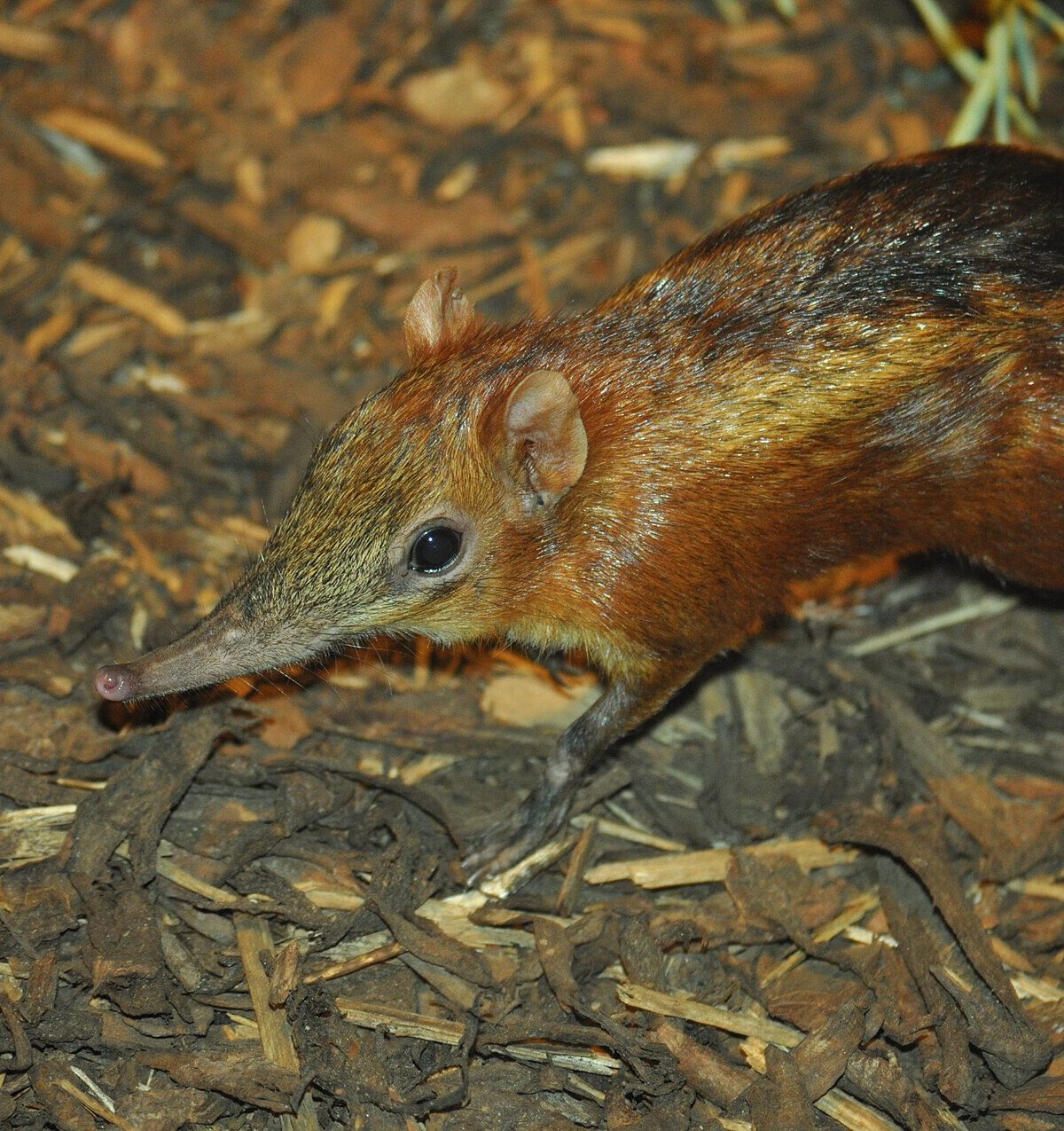
CHECKERED ELEPHANT SHREW
Rhynchocyon cirnei
DESCRIPTION
Checkered elephant shrew (Rhynchocyon cirnei) is a small mammal known for its distinctive checkered fur pattern, which provides excellent camouflage in its forest habitat. This species exhibits a long snout and large ears, resembling a miniature elephant, which aids in foraging for insects and other small invertebrates. Primarily found in the dense underbrush of tropical forests, it is a solitary and elusive creature, often active during the day, foraging for food and establishing territories.
FUN FACTS
- Checkered elephant shrews are not actually shrews but belong to their own unique order, Macroscelidea
- They are known for their remarkable speed and agility, which allows them to navigate through dense underbrush with ease.| Despite their small size, checkered elephant shrews have a complex social structure and communicate through a variety of vocalizations and scent markings, showcasing their intelligence and adaptability in the wild
QUICK INFO
Lifespanup to 5 years in the wild, longer in captivity
Average Weight1-2 kg
Average Length30-40 cm
Diet TypeInsectivore
Social Structuresolitary, individuals maintain their own territories and are rarely seen in groups.
Activity PatternDiurnal
Breeding SeasonYear-round, with peaks during wet seasons
- Habitat
- Checkered elephant shrews inhabit moist tropical forests, particularly in areas with dense undergrowth. They prefer environments that provide ample cover for foraging and hiding from predators.
- Biomes
- Tropical Rainforest
- Native Range
- This species is native to the eastern regions of Africa, particularly in the forests of Tanzania and Mozambique.
- Continent
- Africa
- Countries
- Tanzania, Mozambique
- Diet
- It primarily feeds on insects, worms, and other small invertebrates, using its keen sense of smell to locate food. Occasionally, it may consume fruits and plant material.
- Diet Type
- Insectivore
- Favorite Food
- insects, worms
- Social Structure
- solitary, individuals maintain their own territories and are rarely seen in groups.
- Activity Pattern
- Diurnal
- Group Size
- 1
- Territorial
- 1
 LC
LC
 VU
VU
1-2 kg
Weight
30-40 cm
Length
- Coloration
- The fur is a mix of brown and black with a distinctive checkered pattern.
- Sexual Dimorphism
- males are slightly larger than females
- Lifespan
- up to 5 years in the wild, longer in captivity
- Gestation Period
- 60-70 days
- Offspring per Birth
- 1-2
- Sexual Maturity
- 6-12 months
- Breeding Season
- Year-round, with peaks during wet seasons
LC
Least Concern
IUCN Red List Status
- Population Status
- The population is currently stable, but habitat loss poses a potential threat.
- Wild Population Estimate
- unknown
- Population Trend
- Stable
- Endangered
- 0
- Threats
- Main threats include habitat destruction due to logging and agricultural expansion. Additionally, they face predation from larger mammals and birds of prey.
- Predators
- snakes, birds of prey, small carnivores
- Defense Mechanisms
- They rely on their speed and agility to escape from predators, often using dense vegetation for cover.
- Found in Zoos
- Uncommon