


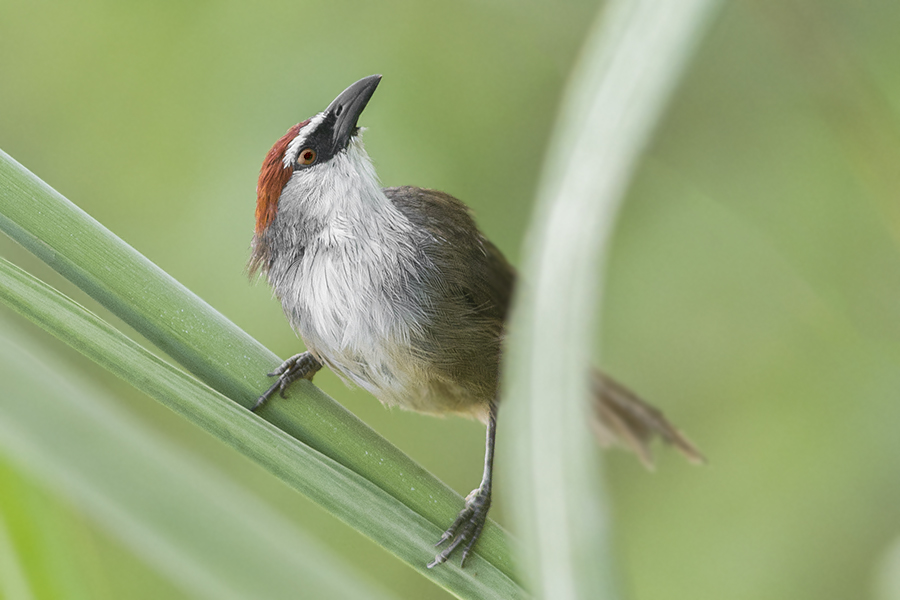
CHESTNUT-CAPPED BABBLER
Timalia pileata
DESCRIPTION
Chestnut-capped babbler (Timalia pileata) is a small, distinctive bird characterized by its striking chestnut-colored cap and a generally brownish body. This species is known for its lively behavior, often seen foraging in pairs or small groups among dense undergrowth. It inhabits tropical forests and is adept at navigating through the foliage, using its strong legs to hop and climb as it searches for food.
FUN FACTS
- Chestnut-capped babblers are known for their energetic foraging behavior, often seen hopping around on the forest floor in search of food
- They have a unique way of communicating with each other, using a series of whistles and chirps that can be heard throughout their habitat.| These birds are also quite adaptable, able to thrive in secondary growth forests as well as primary forests, showcasing their resilience in changing environments
QUICK INFO
Lifespan5-7 years in the wild
Average Weight20-30 g
Average Length15-18 cm
Diet TypeInsectivore
Social StructureThey are typically found in pairs or small groups, often foraging together in the underbrush.
Activity PatternDiurnal
Breeding SeasonSpring to early summer
- Habitat
- This species prefers dense, humid tropical forests, often found in areas with thick underbrush. It is typically associated with secondary growth and can be found in both lowland and montane forests.
- Biomes
- Tropical Rainforest
- Native Range
- The Chestnut-capped babbler is native to Southeast Asia, specifically found in parts of Myanmar, Thailand, and Malaysia.
- Continent
- Asia
- Countries
- Myanmar, Thailand, Malaysia
- Diet
- The Chestnut-capped babbler primarily feeds on insects and other small invertebrates, foraging on the ground and in low vegetation. It may also consume some plant material, such as seeds and fruits.
- Diet Type
- Insectivore
- Favorite Food
- insects, seeds
- Social Structure
- They are typically found in pairs or small groups, often foraging together in the underbrush.
- Activity Pattern
- Diurnal
- Group Size
- 2-10
- Territorial
- 0
 LC
LC
20-30 g
Weight
15-18 cm
Length
- Coloration
- The bird has a chestnut crown, brown upperparts, and a lighter underbelly with streaks.
- Lifespan
- 5-7 years in the wild
- Offspring per Birth
- 2-4
- Sexual Maturity
- 1 year
- Breeding Season
- Spring to early summer
LC
Least Concern
IUCN Red List Status
- Population Status
- The population of Chestnut-capped babblers is currently stable, but habitat loss poses a potential threat.
- Wild Population Estimate
- Unknown
- Population Trend
- Stable
- Endangered
- 0
- Threats
- Habitat destruction due to logging and agricultural expansion is the main threat to this species. Additionally, they may be affected by changes in forest management practices.
- Predators
- Snakes, larger birds of prey, and mammals may prey on Chestnut-capped babblers.
- Defense Mechanisms
- They rely on their cryptic coloration and dense habitat to avoid detection by predators.
- Found in Zoos
- Uncommon