


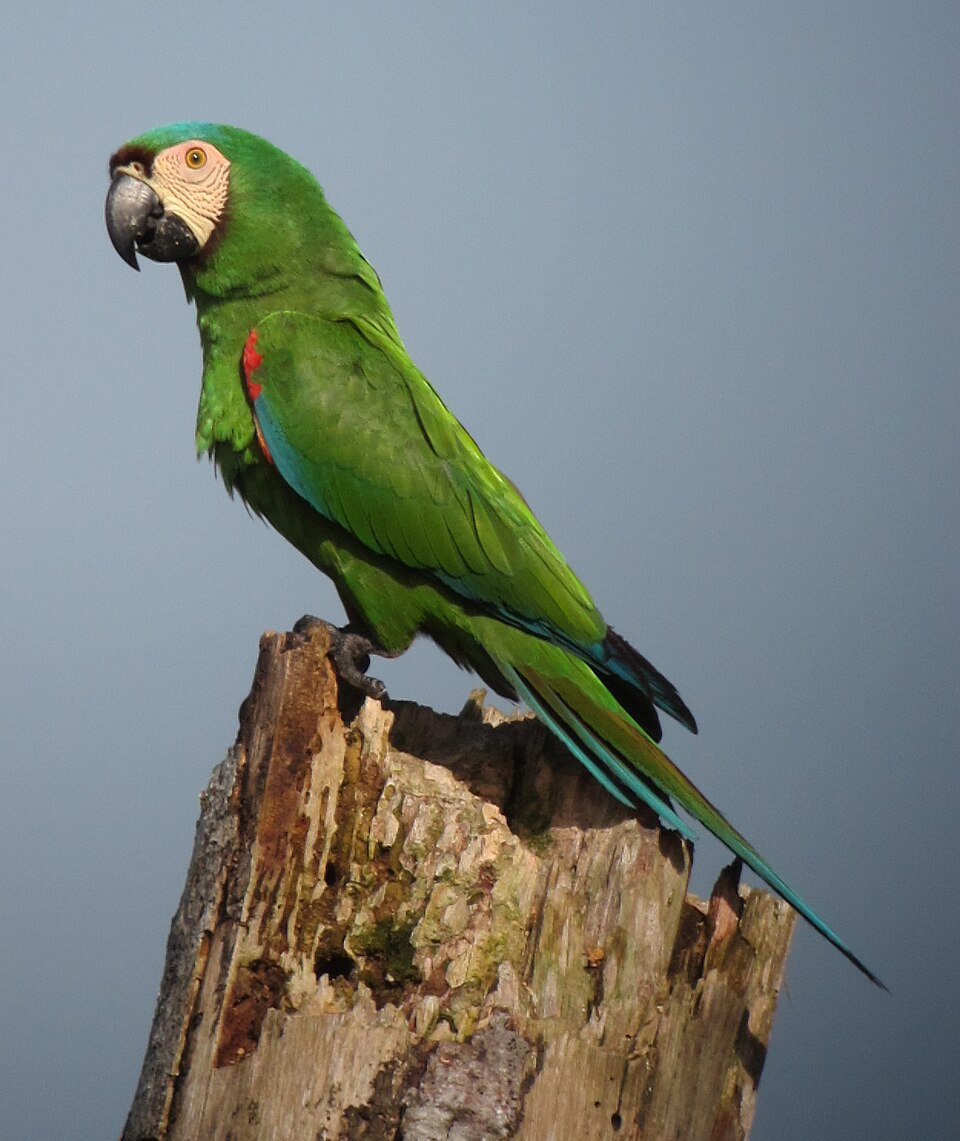
CHESTNUT-FRONTED MACAW
Ara severa
DESCRIPTION
Chestnut-fronted Macaw (Ara severa) is a striking bird known for its vibrant plumage, which features a mix of green, blue, and yellow colors, with a distinctive chestnut-colored forehead. These macaws are highly social and often found in pairs or small groups, engaging in playful behaviors and vocalizations that are characteristic of their species. In the wild, they inhabit tropical forests and are known to be quite intelligent, often using tools to access food and interacting with their environment in complex ways.
FUN FACTS
- Chestnut-fronted Macaws are known for their impressive vocal abilities, often mimicking sounds and human speech, which makes them popular pets
- Additionally, they have strong social structures and can live in complex family groups, showcasing behaviors that indicate high intelligence and emotional bonds.|These macaws are also known for their playful nature, often engaging in acrobatic displays and games with each other, which not only strengthens their social bonds but also keeps them physically active and mentally stimulated
QUICK INFO
Lifespan20-30 years in the wild, up to 50 in captivity
Average Weight700-900 g
Average Length50-60 cm
Diet TypeHerbivore
Social StructureThey are typically found in pairs or small groups, showcasing a social structure that emphasizes strong pair bonds.
Activity PatternDiurnal
Breeding SeasonSpring (March-May)
- Habitat
- Chestnut-fronted Macaws thrive in tropical rainforests and woodlands, where they can find ample food sources and nesting sites. They prefer areas with abundant trees for foraging and roosting.
- Biomes
- Tropical Rainforest, Woodland
- Native Range
- They are native to the tropical regions of South America, particularly in countries like Brazil and Bolivia.
- Continent
- South America
- Countries
- Brazil, Bolivia, Paraguay
- Diet
- They primarily feed on seeds, nuts, and fruits, utilizing their strong beaks to crack open hard shells.
- Diet Type
- Herbivore
- Favorite Food
- Nuts, seeds, fruits
- Social Structure
- They are typically found in pairs or small groups, showcasing a social structure that emphasizes strong pair bonds.
- Activity Pattern
- Diurnal
- Group Size
- 2-10
- Territorial
- 0
 VU
VU
 LC
LC
700-900 g
Weight
50-60 cm
Length
- Coloration
- Predominantly green with blue wings and a chestnut forehead.
- Lifespan
- 20-30 years in the wild, up to 50 in captivity
- Offspring per Birth
- 2-4
- Sexual Maturity
- 3-4 years
- Breeding Season
- Spring (March-May)
LC
Least Concern
IUCN Red List Status
- Population Status
- The population is currently stable, but habitat loss poses a significant threat.
- Wild Population Estimate
- 10,000-20,000
- Population Trend
- Stable
- Endangered
- 0
- Threats
- Main threats include habitat destruction due to deforestation and illegal trapping for the pet trade. These factors have led to localized declines in some areas.
- Predators
- Large birds of prey, snakes, and mammals such as jaguars may prey on young or vulnerable macaws.
- Defense Mechanisms
- They often use their loud vocalizations to warn of danger and can fly quickly to escape predators.
- Compatible Animals
- Other macaws, large parrots, and some species of birds of similar size
- Found in Zoos
- Common