


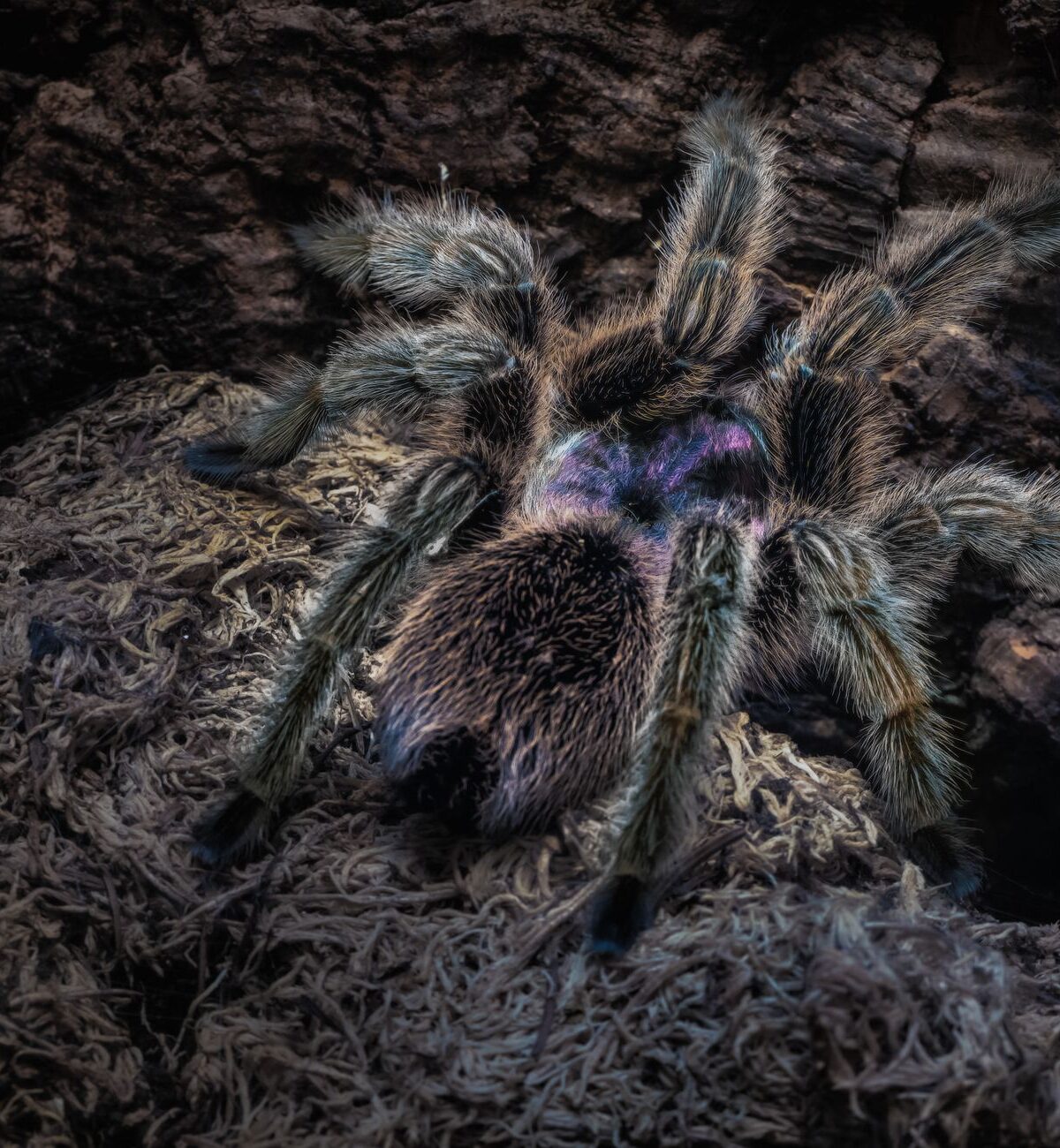
CHILEAN ROSE TARANTULA
DESCRIPTION
Chilean Rose Tarantula, also known as Rose Hair Tarantula, is a popular pet species due to its docile nature and striking appearance. It typically features a pinkish-brown coloration with a velvety texture, and its legs are often adorned with darker bands. This species is primarily terrestrial and is known for its burrowing behavior, creating silk-lined retreats in the wild.
FUN FACTS
- Chilean Rose Tarantulas can live for several decades, making them one of the longest-lived tarantula species
- They are also known for their ability to survive in harsh environments, which is a testament to their adaptability and resilience.|These tarantulas can be quite docile and are often recommended for beginners in the pet trade
- Their calm nature allows them to be handled more easily than many other tarantula species, although caution is always advised
QUICK INFO
Lifespan15-20 years in the wild, up to 30 in captivity
Average Weight60-100 g
Average Length4-5 inches
Diet TypeCarnivore
Social Structuresolitary, they prefer to live alone except during mating.
Activity PatternNocturnal
Breeding SeasonSpring (March-May)
- Habitat
- These tarantulas inhabit arid and semi-arid regions, often found in scrublands and grasslands. They prefer burrows or crevices where they can hide from predators and regulate their moisture levels.
- Biomes
- Desert, Grassland
- Native Range
- Native to the arid regions of Chile, particularly in the Atacama Desert and surrounding areas.
- Continent
- South America
- Countries
- Chile
- Diet
- Chilean Rose Tarantulas are carnivorous and primarily feed on insects and small invertebrates. In captivity, they are often fed crickets, mealworms, and other similar prey.
- Diet Type
- Carnivore
- Favorite Food
- crickets, mealworms
- Social Structure
- solitary, they prefer to live alone except during mating.
- Activity Pattern
- Nocturnal
- Group Size
- 1
- Territorial
- 1
 VU
VU

60-100 g
Weight
4-5 inches
Length
- Coloration
- pinkish-brown with darker bands on the legs
- Sexual Dimorphism
- Males are generally smaller and have longer legs compared to females.
- Lifespan
- 15-20 years in the wild, up to 30 in captivity
- Offspring per Birth
- 100-200
- Sexual Maturity
- 3-4 years
- Breeding Season
- Spring (March-May)
LC
Least Concern
IUCN Red List Status
- Population Status
- The population is currently stable, but habitat destruction poses a potential threat.
- Wild Population Estimate
- unknown
- Population Trend
- Stable
- Endangered
- 0
- Threats
- Main threats include habitat loss due to urbanization and agriculture. Additionally, they are sometimes collected for the pet trade, which can impact local populations.
- Predators
- Birds, small mammals, and larger reptiles are known to prey on Chilean Rose Tarantulas.
- Defense Mechanisms
- They can use urticating hairs to deter predators, which can cause irritation to the skin of potential threats.
- Found in Zoos
- Uncommon