


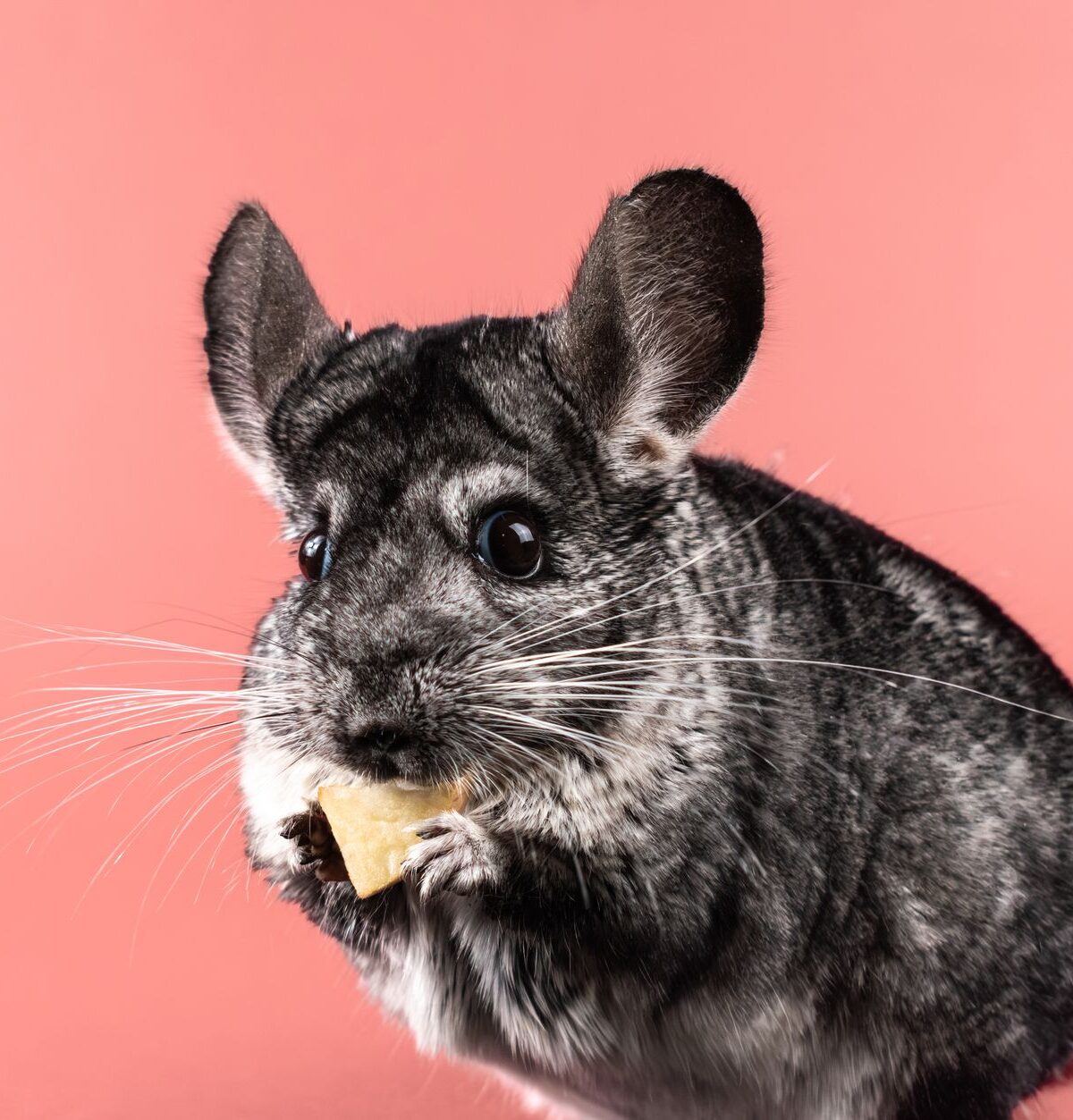
CHINCHILLA
Chinchilla lanigera
DESCRIPTION
Chinchilla (Chinchilla lanigera) is commonly known as the Long-tailed Chinchilla. This small rodent is characterized by its dense, soft fur, which is among the softest of any land mammal, and its large, round ears. Chinchillas are primarily nocturnal and are known for their playful and social behavior, often engaging in dust baths to maintain their fur and communicate with one another through a variety of vocalizations.
FUN FACTS
- Chinchillas are known for their unique bathing habits; instead of water, they take dust baths to keep their fur clean and healthy
- This behavior is essential because their dense fur can trap moisture, leading to skin issues if not properly maintained
- | Chinchillas have a very high metabolism and require a constant supply of food to maintain their energy levels
- They can eat up to 35% of their body weight in hay and pellets each day, making their dietary needs quite significant
QUICK INFO
Lifespan10-20 years in the wild, up to 30 years in captivi
Average Weight400-600 grams
Average Length23-38 cm
Diet TypeHerbivore
Social StructureChinchillas typically live in groups, often forming colonies of up to 100 individuals. They exhibit social behaviors such as grooming and playing.
Activity PatternNocturnal
Breeding SeasonYear-round, with peaks in spring and summer
- Habitat
- Chinchillas are native to the rocky, mountainous regions of the Andes in South America. They prefer habitats that provide plenty of hiding spots and are typically found at elevations between 3,000 and 5,000 meters.
- Biomes
- Mountain, Grassland
- Native Range
- Chinchillas are native to the Andes mountains in South America, particularly in countries like Chile and Peru.
- Continent
- South America
- Countries
- Chile, Peru, Bolivia
- Diet
- Chinchillas are herbivores, primarily feeding on grasses, seeds, and leaves. They require a high-fiber diet to maintain their digestive health.
- Diet Type
- Herbivore
- Favorite Food
- hay, pellets, and fresh vegetables
- Social Structure
- Chinchillas typically live in groups, often forming colonies of up to 100 individuals. They exhibit social behaviors such as grooming and playing.
- Activity Pattern
- Nocturnal
- Group Size
- 5-100
- Territorial
- 0
 LC
LC
 CR
CR
400-600 grams
Weight
23-38 cm
Length
- Coloration
- Chinchillas have a grayish-blue coloration with a lighter underbelly, which helps them blend into their rocky habitat.
- Sexual Dimorphism
- Males are generally larger than females.
- Lifespan
- 10-20 years in the wild, up to 30 years in captivi
- Gestation Period
- 111 days
- Offspring per Birth
- 1-6
- Sexual Maturity
- 8 months
- Breeding Season
- Year-round, with peaks in spring and summer
EN
Endangered
IUCN Red List Status
- Population Status
- Chinchilla populations have declined significantly due to habitat loss and hunting for their fur.
- Wild Population Estimate
- Less than 10,000
- Population Trend
- Decreasing
- Endangered
- 1
- Threats
- The main threats to Chinchillas include habitat destruction due to agriculture and urbanization, as well as poaching for their fur. These factors have led to a significant decline in their populations.
- Conservation Program
- Various conservation programs are in place to protect Chinchilla habitats and regulate hunting.
- Predators
- Eagles, hawks, and wild cats are known predators of Chinchillas.
- Defense Mechanisms
- Chinchillas can escape predators by jumping and running quickly, and they also use their agility to navigate rocky terrains.
- Compatible Animals
- Rabbits, guinea pigs
- Found in Zoos
- Common