


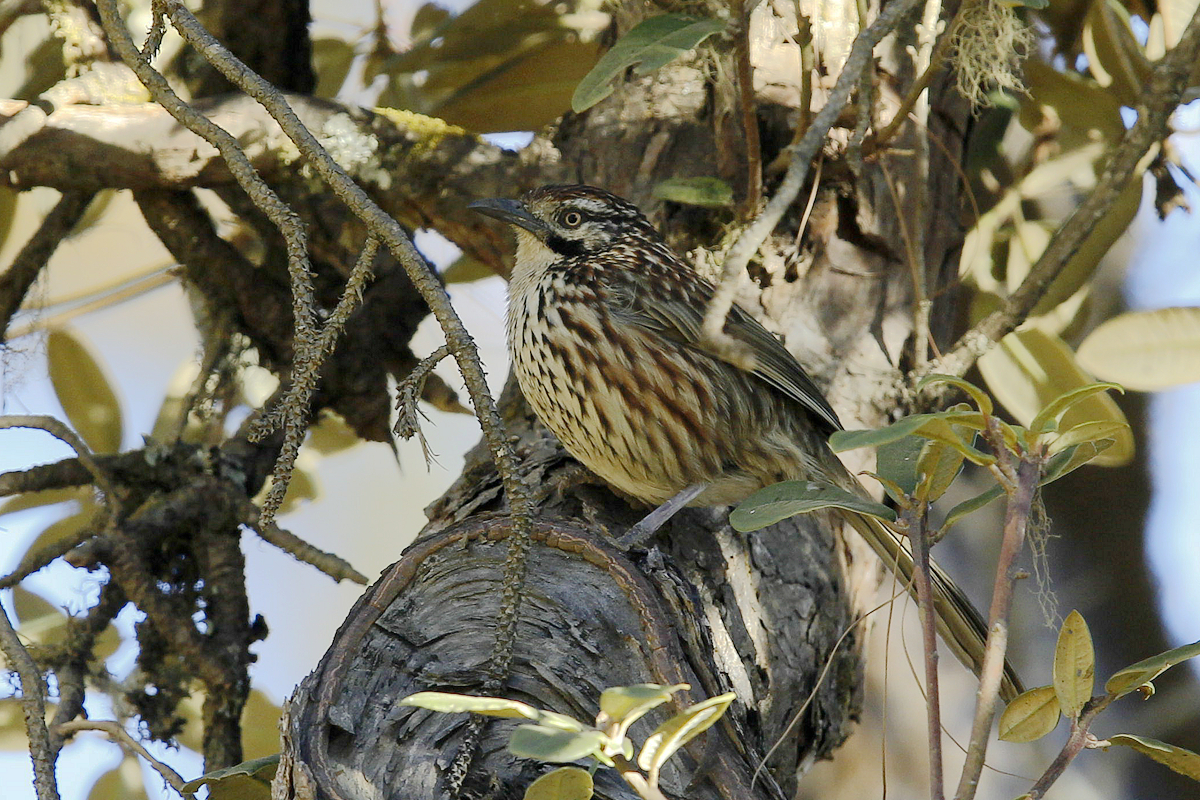
CHINESE BABAX
Garrulax lanceolatus
DESCRIPTION
Chinese babax (Garrulax lanceolatus) is a medium-sized bird known for its striking appearance, featuring a long tail and a distinctive black crown. It has a grayish-brown body with a lighter underbelly and a prominent white throat patch. This species is often found in pairs or small groups, exhibiting a lively and social behavior as they forage through dense underbrush in their natural habitat.
FUN FACTS
- Chinese babax is known for its playful behavior, often seen engaging in social activities with its group members, such as chasing each other through the underbrush
- Additionally, they have a unique vocalization that can be heard over long distances, making them one of the more vocal species in their habitat
QUICK INFO
Diet TypeOmnivore
Social StructureThey are typically found in small groups or pairs, often engaging in social interactions such as preening and calling.
Activity PatternDiurnal
- Habitat
- Chinese babax inhabits dense, shrubby areas, often in mountainous regions. They prefer habitats with thick undergrowth, which provides cover and foraging opportunities.
- Biomes
- Temperate Forest, Subtropical Forest
- Native Range
- The species is native to the mountainous regions of central and southern China.
- Continent
- Asia
- Countries
- China
- Diet
- The Chinese babax primarily feeds on insects, fruits, and seeds, foraging on the ground and in shrubs. Its diet is supplemented by various invertebrates, making it an opportunistic feeder.
- Diet Type
- Omnivore
- Favorite Food
- insects, fruits, seeds
- Social Structure
- They are typically found in small groups or pairs, often engaging in social interactions such as preening and calling.
- Activity Pattern
- Diurnal
- Group Size
- 2-10
- Territorial
- 0
 LC
LC
- Coloration
- Grayish-brown body with a lighter underbelly and a black crown.
LC
Least Concern
IUCN Red List Status
- Population Status
- The population status of the Chinese babax is not well-documented, but it is considered to be relatively stable in its native range.
- Population Trend
- Stable
- Endangered
- 0
- Threats
- Habitat loss due to deforestation and agricultural expansion poses a threat to the Chinese babax. However, it is currently not facing significant threats that would impact its population drastically.
- Predators
- Common predators include larger birds of prey and snakes.
- Defense Mechanisms
- They rely on their camouflage and dense habitat for protection from predators.
- Found in Zoos
- Uncommon